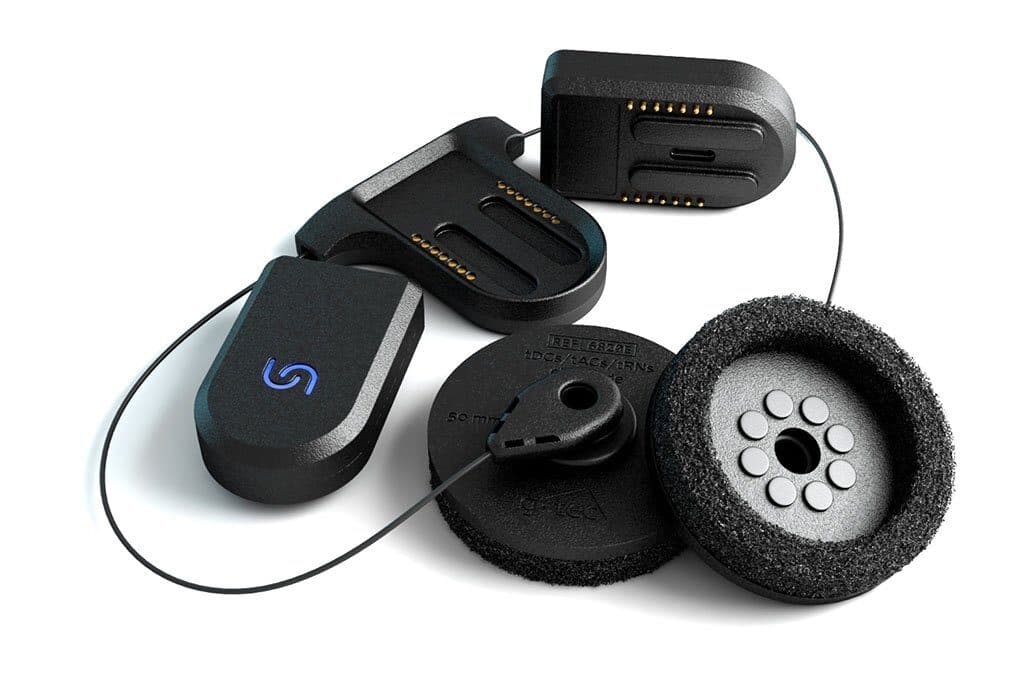
Neurotechnology research in Türkiye: 2026 indicators
Neurotechnology research in Türkiye: EEG, fNIRS, EMG, TMS, tDCS and eye-tracking papers and theses, growth rates and method, from OpenAlex and YÖK data.
Published
Neurotechnology research in Türkiye is growing, but unevenly: from 2017–2019 to 2022–2024, Türkiye-affiliated publications grew by about 32% a year in neuromarketing and in EEG with deep learning, 27% in virtual reality with EEG, 21% in electrodermal activity and 19% in tDCS, while brain-computer interface (BCI) and event-related potential (ERP) research stood still at 2% a year. This report traces 17 topics across EEG, fNIRS, biosignals, brain stimulation and applied fields in Türkiye, with counts from the open bibliographic index OpenAlex and from YÖK’s National Thesis Centre. Publications were counted on 2 November 2026 and theses on 1 November 2026. Every query is listed under the sources, so anyone can reproduce the numbers.
- All of Türkiye’s scientific output grew by 12% a year over the same period, while the world total stayed almost flat. A topic’s growth in Türkiye should be read against this general trend.
- EEG is by far the largest topic: in 2024, 372 Türkiye-affiliated works mention EEG in their title or abstract. Yearly growth is 11% in Türkiye and 6% worldwide.
- fNIRS papers numbered 11 in 2019 and 21 in 2024; yearly growth is 10% in Türkiye and 12% worldwide.
- Relative to the world average, Türkiye stands out most in neuromarketing, EMG and EEG with deep learning.
- The yearly average of graduate theses mentioning EEG rose from 94 in 2018–2020 to 163 in 2023–2025.
What was counted, and how
Publication counts come from OpenAlex, a free and open bibliographic database that indexes articles, conference papers, book chapters and preprints together with their authors’ institutions, years and topics. Each topic has one keyword query, searched in titles and abstracts only. The EEG query, for example, counts works that mention “EEG”, “electroencephalography” or “electroencephalogram”; the fNIRS query counts those that mention “fNIRS” or “functional near-infrared spectroscopy”. The queries use English terms, so works indexed only with a Turkish title and abstract may be missed.
- Türkiye-affiliated work
- A work with at least one author affiliated with an institution in Türkiye. International collaborations count in full, so the same work can count for Türkiye and for another country.
- World
- The same query without the country filter. Türkiye-affiliated works are included in it.
- Yearly growth
- The 2017–2019 total is compared with the 2022–2024 total and spread over the five years between them as compound growth. For EEG, a rise from 663 to 1,097 works is 1.65 times in five years, or about 11% a year. Three-year totals stop a single year’s ups and downs from deciding the result when numbers are small.
- Specialisation index
- Türkiye’s share of world output on a topic divided by its share of all world output (2022–2024). Explained further below.
Why does growth stop at 2024? OpenAlex’s world total is 11.0 million works in 2024, 14.7 million in 2025 and already 35.5 million in 2026 before the year is out. That jump is too large to be explained by real growth in research; it most likely comes from changes in indexing, such as new sources being added or some works being recorded with dates ahead of time. OpenAlex has not explained it in a data note. Growth is therefore measured on three-year windows ending in 2024. The tables show 2025 as indicative (*) but leave it out of the growth figures; 2026 is not used at all, being incomplete and affected by the same problem.
Türkiye-affiliated publications by method
The tables below give, for each topic, the number of Türkiye-affiliated works in 2019, 2022, 2024 and 2025, and the yearly growth of Türkiye and of the world from 2017–2019 to 2022–2024. Topics overlap: a paper on EEG with deep learning counts both in the “EEG” row and in the “EEG and deep learning” row, so rows must not be added up.
EEG, BCI and ERP
| Topic | 2019 | 2022 | 2024 | 2025* | Türkiye, yearly growth | World, yearly growth |
|---|---|---|---|---|---|---|
| EEG (all) | 239 | 364 | 372 | 495 | 11% | 6% |
| Brain-computer interface (BCI) | 36 | 36 | 40 | 42 | 2% | 7% |
| Event-related potentials (ERP) and P300 | 32 | 22 | 26 | 31 | 2% | 0% |
| Neurofeedback | 8 | 13 | 5 | 14 | 7% | 2% |
EEG grew by about 11% a year in Türkiye. That is close to the growth of Türkiye’s total output (12%): EEG papers multiplied at roughly the pace of Türkiye’s research as a whole, and faster than EEG papers worldwide. The keyword search also covers clinical EEG studies, epilepsy research for instance, so the count is not research EEG alone. BCI and ERP stayed almost flat over the same period. Neurofeedback papers number fewer than 15 a year and so swing from year to year.
Optical imaging: fNIRS
| fNIRS | 2019 | 2022 | 2024 | 2025* | Yearly growth |
|---|---|---|---|---|---|
| Türkiye-affiliated works | 11 | 20 | 21 | 36 | 10% |
| Works worldwide | 708 | 986 | 1,455 | 2,062 | 12% |
| Türkiye’s share | 1.6% | 2.0% | 1.4% | 1.7% | 1.7% → 1.6% (three-year) |
fNIRS is a small but steadily growing field in Türkiye: 11 papers in 2019, 21 in 2024. Its yearly growth of 10% is close to the world’s (12%), and Türkiye’s share of world output moves between 1.4% and 2.0% from year to year. The 36 papers of 2025 are about 1.9 times the 2023–2024 average. That may point to rising interest, but since the indexing effect cannot be separated out, it should be read as a single year’s figure.
Biosignals: EMG, EDA, ECG and eye tracking
| Topic | 2019 | 2022 | 2024 | 2025* | Türkiye, yearly growth | World, yearly growth |
|---|---|---|---|---|---|---|
| EMG (electromyography) | 121 | 157 | 178 | 237 | 9% | 1% |
| Electrodermal activity (EDA, GSR) | 8 | 24 | 17 | 42 | 21% | 5% |
| Wearable ECG and biosignals | 10 | 12 | 17 | 33 | 17% | 17% |
| Eye tracking | 24 | 48 | 67 | 88 | 12% | 4% |
EMG is the second-largest topic after EEG. It grew by 9% a year in Türkiye but only 1% worldwide, so Türkiye’s share of world EMG output rose from 1.9% to 2.7%. Electrodermal activity grew fast from a small base (21%). Wearable ECG and biosignal studies rose at the same pace in Türkiye and in the world, about 17% a year. Eye-tracking papers went from 24 in 2019 to 67 in 2024, with yearly growth of 12% in Türkiye and 4% worldwide.
Brain stimulation: TMS and tDCS
| Topic | 2019 | 2022 | 2024 | 2025* | Türkiye, yearly growth | World, yearly growth |
|---|---|---|---|---|---|---|
| TMS (transcranial magnetic stimulation) | 25 | 29 | 41 | 60 | 10% | 2% |
| tDCS (transcranial direct current stimulation) | 15 | 44 | 40 | 40 | 19% | 1% |
In stimulation, tDCS stands out: its three-year total rose from 47 to 114 works, about 19% a year, while tDCS papers worldwide stayed almost flat over the same period (1%). TMS papers grew by 10% a year in Türkiye and 2% worldwide. These counts are research publications and include clinical studies; the clinical use of any method is always a physician’s decision, and publication counts say nothing about it.
Applied and multimodal fields
| Topic | 2019 | 2022 | 2024 | 2025* | Türkiye, yearly growth | World, yearly growth |
|---|---|---|---|---|---|---|
| Neuromarketing and consumer neuroscience | 3 | 12 | 29 | 24 | 32% | 1% |
| Virtual reality and EEG | 2 | 3 | 11 | 10 | 27% | 19% |
| EEG and deep learning | 25 | 42 | 50 | 69 | 32% | 41% |
| Driver fatigue and EEG | 1 | 2 | 3 | 7 | not calculated (too few works) | 11% |
| Sport science and EEG, fNIRS, stimulation | 3 | 1 | 3 | 12 | 3% | 8% |
| Hyperscanning (several brains recorded at once) | 0 | 0 | 2 | 1 | cannot be calculated | 23% |
Growth is fastest in applied topics that combine several methods. Neuromarketing papers rose from 13 to 52 in three-year totals (32% a year), while worldwide they stood still (1%). EEG with deep learning grew by 32% a year in Türkiye, but even faster worldwide (41%). Studies combining virtual reality and EEG reached 11 in 2024. Driver fatigue, sport science and hyperscanning have single-digit yearly counts, so their rates can shift with one or two papers. Hyperscanning had no Türkiye-affiliated works at all from 2014 to 2023 and its first two in 2024, so its growth cannot be calculated.
Graduate theses: YÖK National Thesis Centre
Theses can show how widely a method is spreading among new researchers earlier than publications do. The counts come from the search of YÖK’s National Thesis Centre (Ulusal Tez Merkezi): each term was searched as an exact match across all fields of a thesis. Because the centre’s year filter does not answer automated queries, each thesis’s year was inferred from its thesis number, which is issued in sequence. The inference was calibrated with the numbers of the first theses on events of known date; it places a year to within about ±3 months, so a thesis close to a year boundary may have fallen into the neighbouring year.
| Term (all fields, exact match) | Total theses (all years) | 2019 | 2022 | 2024 | 2025 | Yearly average, 2018–2020 → 2023–2025 |
|---|---|---|---|---|---|---|
| EEG | 2,143 | 71 | 123 | 165 | 179 | 94 → 163 |
| Elektroensefalografi (electroencephalography) | 1,071 | 27 | 92 | 77 | 87 | 52 → 82 |
| EMG | 1,272 | 36 | 57 | 87 | 92 | 58 → 88 |
| Göz izleme (eye tracking) | 384 | 25 | 31 | 41 | 39 | 26 → 38 |
| Eye tracking | 489 | 30 | 38 | 58 | 51 | 33 → 51 |
| Nörobilim (neuroscience) | 316 | 16 | 32 | 45 | 51 | 18 → 45 |
| Nöropazarlama (neuromarketing) | 265 | 21 | 23 | 31 | 34 | 22 → 27 |
| P300 | 221 | 9 | 16 | 7 | 15 | 9 → 11 |
| Transkraniyal manyetik (transcranial magnetic) | 168 | 9 | 11 | 11 | 13 | 13 → 13 |
| Beyin bilgisayar arayüzü (brain-computer interface) | 156 | 8 | 10 | 14 | 19 | 10 → 14 |
| fNIRS | 145 | 3 | 16 | 7 | 16 | 7 → 12 |
| Yakın kızılötesi spektroskopi (near-infrared spectroscopy) | 87 | 2 | 7 | 5 | 15 | 2 → 11 |
| tDCS | 76 | 2 | 3 | 10 | 14 | 4 → 11 |
| Transkraniyal doğru akım (transcranial direct current) | 44 | 0 | 1 | 9 | 10 | 2 → 8 |
| Elektrodermal (electrodermal) | 64 | 2 | 5 | 6 | 5 | 2 → 5 |
| Neurofeedback | 28 | 3 | 2 | 2 | 2 | 3 → 2 |
| Hyperscanning | 6 | 0 | 1 | 1 | 0 | one a year or fewer |
The yearly average of theses mentioning EEG rose from 94 in 2018–2020 to 163 in 2023–2025. All registered theses rose over the same period too, from about 50,000–55,000 a year to 65,000 judging by thesis numbers. Allowing for that, theses mentioning EEG went from 182 to 251 per 100,000 theses. “Yakın kızılötesi spektroskopi” (near-infrared spectroscopy, 2 → 11), “transkraniyal doğru akım” (transcranial direct current, 2 → 8) and tDCS (4 → 11) are the terms that grew most from small bases; “transkraniyal manyetik” is flat and “neurofeedback” is falling.
Turkish and English terms overlap, because theses carry abstracts in both languages: the “göz izleme” and “eye tracking” rows largely count the same theses and must not be added together. Some neuromarketing theses may be conceptual or survey-based work with no instrument measurement; that distinction was not made.
What grows fastest, and what stands still
All of Türkiye’s scientific publications grew by 12% a year from 2017–2019 to 2022–2024, and Türkiye’s share of world output rose from 0.78% to 1.35%. A topic’s growth should therefore be read on two measures: against the same topic worldwide, and against Türkiye’s general growth. The topics clearly above Türkiye’s general growth are:
- Neuromarketing: 32% a year (world 1%).
- EEG and deep learning: 32% a year (world 41%, so slower than the world).
- Virtual reality and EEG: 27% a year (world 19%).
- Electrodermal activity: 21% a year (world 5%).
- tDCS: 19% a year (world 1%).
- Wearable ECG and biosignals: 17% a year (world 17%).
Moving at roughly the general pace are eye tracking (12%), EEG (11%), TMS (10%), fNIRS (10%) and EMG (9%). These are established fields growing along with Türkiye’s research output; all of them except fNIRS grew faster than their counterparts worldwide.
Standing still are BCI and ERP. Türkiye-affiliated BCI papers numbered 36 in 2019, 36 in 2022, 40 in 2024 and 42 in 2025: yearly growth of 2%, against 7% worldwide. Türkiye’s share of world BCI output fell from 1.7% to 1.3%. ERP and P300 papers are flat at 2% a year as well; here the world stands still too (0%). This does not mean research in these fields has stopped: every year from 2016 to 2025 saw 25 to 48 BCI papers and 17 to 34 ERP papers, a steady base. They simply have not kept pace with Türkiye’s general growth.
A separate note on 2025: Türkiye’s total output in 2025 is 1.13 times its 2023–2024 average. Some topics rose well above that: sport science (4.0 times), driver fatigue (3.5 times), neurofeedback (3.1 times), electrodermal activity (2.5 times), fNIRS and wearable ECG (1.9 times) and TMS (1.7 times). Most of these are small numbers and the indexing effect cannot be separated out; whether they mark the start of a trend can only be judged from later years’ data.
Where does Türkiye stand out?
The specialisation index answers a simple question: does Türkiye publish more or less on a topic than its weight in research overall would suggest? In 2022–2024, Türkiye-affiliated works are 1.35% of all works in the world. If Türkiye’s share of a topic is also 1.35%, the index is 1; if it is 2.7%, the index is 2. Above 1, Türkiye gives the topic more weight than average; below 1, less.
| Topic | Türkiye’s world share, 2017–2019 | Türkiye’s world share, 2022–2024 | Specialisation index, 2022–2024 |
|---|---|---|---|
| Neuromarketing | 1.1% | 4.0% | 2.96 |
| EMG | 1.9% | 2.7% | 1.97 |
| EEG and deep learning | 3.2% | 2.3% | 1.72 |
| Virtual reality and EEG | 1.5% | 2.2% | 1.60 |
| EEG (all) | 1.7% | 2.1% | 1.55 |
| tDCS | 0.7% | 1.7% | 1.26 |
| fNIRS | 1.7% | 1.6% | 1.16 |
| Electrodermal activity | 0.8% | 1.5% | 1.15 |
| Eye tracking | 0.9% | 1.4% | 1.04 |
| BCI | 1.7% | 1.3% | 1.00 |
| Driver fatigue and EEG | 0.3% | 1.2% | 0.93 |
| Neurofeedback | 0.9% | 1.1% | 0.85 |
| Sport science | 1.4% | 1.1% | 0.82 |
| Wearable ECG and biosignals | 1.1% | 1.1% | 0.80 |
| TMS | 0.7% | 1.1% | 0.79 |
| ERP and P300 | 0.9% | 1.0% | 0.78 |
| Hyperscanning | 0.0% | 0.5% | 0.35 |
| Baseline: all of Türkiye’s output | 0.78% | 1.35% | 1.00 |
In neuromarketing, Türkiye’s world share of 4.0% is about three times its share of all output, but the figure rests on 52 papers over three years. In EMG (1.97) and EEG (1.55) the index is high and the counts are large, so it is sturdier. In EEG with deep learning the index is 1.72, yet Türkiye’s share is falling (from 3.2% to 2.3%) because the world is growing faster in this field. In TMS, ERP and wearable ECG Türkiye is below average, and hyperscanning still has very few papers.
Limits of the data
- Keyword search over-counts: a clinical paper that mentions EEG in its title or abstract counts even if EEG is only mentioned in passing. Abbreviations may also clash with other terms.
- It under-counts too: studies that do not use the query terms, for example those described only by a device name or a general term, and works indexed only with a Turkish title and abstract, can be missed.
- OpenAlex does not cover every journal: papers in Turkish journals it does not cover, or covers only in part, are not counted.
- The country comes from authors’ institutional affiliations; works whose institution is matched wrongly or not at all affect Türkiye’s count.
- Numbers are small: in topics with fewer than 10 papers a year (driver fatigue, sport science, hyperscanning, the early years of virtual reality with EEG), a few papers change the rates a great deal.
- The 2025 and 2026 counts are affected by indexing changes and are left out of the growth figures.
- Thesis years were inferred from thesis numbers (about ±3 months). The “EEG” search returns only the newest 2,000 of its 2,143 theses, so the oldest EEG theses could not be assigned to years.
- Publication and thesis counts show research activity; they do not show a field’s quality, its impact or the size of a market.
Using and citing these data
When you use these numbers, state the date of the data (2 November 2026 for OpenAlex, 1 November 2026 for YÖK) and the query used. Each topic’s OpenAlex query is listed under the sources with its full address; opened in a browser, the address returns that day’s counts by year. Removing the country filter (institutions.country_code:TR) turns the same query into the world count. Because OpenAlex is updated continuously, a query run at a later date may return slightly different numbers; the YÖK counts can be searched again with the same term at the National Thesis Centre.
Research systems for the methods named in this report are listed in the site’s devices section under EEG, fNIRS, biosignals and stimulation.
Frequently asked questions
How many EEG papers does Türkiye publish a year?
According to OpenAlex, 372 works with at least one author at an institution in Türkiye mentioned EEG in their title or abstract in 2024; 495 were indexed for 2025, but that year is affected by indexing changes. From 2017–2019 to 2022–2024, Türkiye-affiliated EEG papers grew by about 11% a year and EEG papers worldwide by 6%. The count includes clinical EEG studies (data of 2 November 2026).
Is fNIRS research growing in Türkiye?
Yes, from a small base. Türkiye-affiliated fNIRS papers numbered 11 in 2019 and 21 in 2024; yearly growth from 2017–2019 to 2022–2024 is 10%, against 12% worldwide, and 36 papers were indexed for 2025. At YÖK’s National Thesis Centre, the yearly average of theses mentioning “yakın kızılötesi spektroskopi” (near-infrared spectroscopy) rose from 2 in 2018–2020 to 11 in 2023–2025.
Which neurotechnology field is growing fastest in Türkiye?
From 2017–2019 to 2022–2024, the fastest-growing Türkiye-affiliated topics were neuromarketing and EEG with deep learning (about 32% a year), followed by virtual reality with EEG (27%), electrodermal activity (21%) and tDCS (19%). Türkiye’s total output grew by 12% a year over the same period. Yearly counts are small in most of these topics, so the rates can shift with a few papers.
Is brain-computer interface (BCI) research growing in Türkiye?
Publication counts are flat: Türkiye-affiliated BCI papers numbered 36 in 2019, 36 in 2022, 40 in 2024 and 42 in 2025. Yearly growth from 2017–2019 to 2022–2024 is 2%, against 7% worldwide, and Türkiye’s share of world output fell from 1.7% to 1.3%. The yearly average of YÖK theses mentioning “beyin bilgisayar arayüzü” rose from 10 to 14.
Where does Türkiye stand out in neurotechnology?
On the specialisation index, Türkiye’s share of world output on a topic divided by its share of all output, the highest values in 2022–2024 are neuromarketing (2.96), EMG (1.97), EEG with deep learning (1.72), virtual reality with EEG (1.60) and EEG (1.55). A value above 1 means Türkiye publishes more on the topic than its weight in research overall. The neuromarketing figure rests on 52 papers over three years and should be read with care.
How were these indicators calculated?
Publications were counted in OpenAlex on 2 November 2026 with keyword searches in titles and abstracts, limited to works with at least one author at an institution in Türkiye; every query’s address is listed in the sources. Theses were counted at YÖK’s National Thesis Centre with exact-match searches, and their years were inferred from thesis numbers to within about ±3 months. Because of OpenAlex’s indexing changes in 2025, growth was calculated by comparing the 2017–2019 and 2022–2024 totals.
References and further reading
- OpenAlex · Search works: title and abstract search (title_and_abstract.search) · API documentation
- YÖK National Thesis Centre · thesis search (thesis counts; years inferred from thesis numbers)
- OpenAlex query · all Türkiye-affiliated works, by year (baseline)
- OpenAlex query · EEG · Türkiye-affiliated works, by year
- OpenAlex query · brain-computer interface (BCI) · Türkiye-affiliated works, by year
- OpenAlex query · event-related potentials (ERP) and P300 · Türkiye-affiliated works, by year
- OpenAlex query · neurofeedback · Türkiye-affiliated works, by year
- OpenAlex query · fNIRS · Türkiye-affiliated works, by year
- OpenAlex query · EMG · Türkiye-affiliated works, by year
- OpenAlex query · electrodermal activity (EDA, GSR) · Türkiye-affiliated works, by year
- OpenAlex query · wearable ECG and biosignals · Türkiye-affiliated works, by year
- OpenAlex query · eye tracking · Türkiye-affiliated works, by year
- OpenAlex query · TMS · Türkiye-affiliated works, by year
- OpenAlex query · tDCS · Türkiye-affiliated works, by year
- OpenAlex query · neuromarketing and consumer neuroscience · Türkiye-affiliated works, by year
- OpenAlex query · virtual reality and EEG · Türkiye-affiliated works, by year
- OpenAlex query · EEG and deep learning · Türkiye-affiliated works, by year
- OpenAlex query · driver fatigue and EEG · Türkiye-affiliated works, by year
- OpenAlex query · sport science and EEG, fNIRS, stimulation · Türkiye-affiliated works, by year
- OpenAlex query · hyperscanning · Türkiye-affiliated works, by year