
A UX lab that measures the reactions people do not report.
We build laboratories that record the response to an advert, an interface or a product on the shelf with gaze, EEG, skin conductance and heart rate together. We bring g.tec, PLUX and Gowerlabs devices onto one timeline; with g.Nautilus + Tobii Pro Glasses 3 and wearable PLUX devices, recording is not tied to the screen: it also happens in the shop, in the car or while the product is used.
- 01
Gaze, EEG and body signals are recorded on one clock, so the analysis runs on one timeline.
- 02
Recording is not confined to the lab: with wireless g.Nautilus and Tobii Pro Glasses 3, in the shop, in the car, in the field.
- 03
We advise from experiment design through to data analysis.
The parts that make a laboratory.
What each part does and the devices that do it; device names lead to their product pages.
- 01
Eye tracking
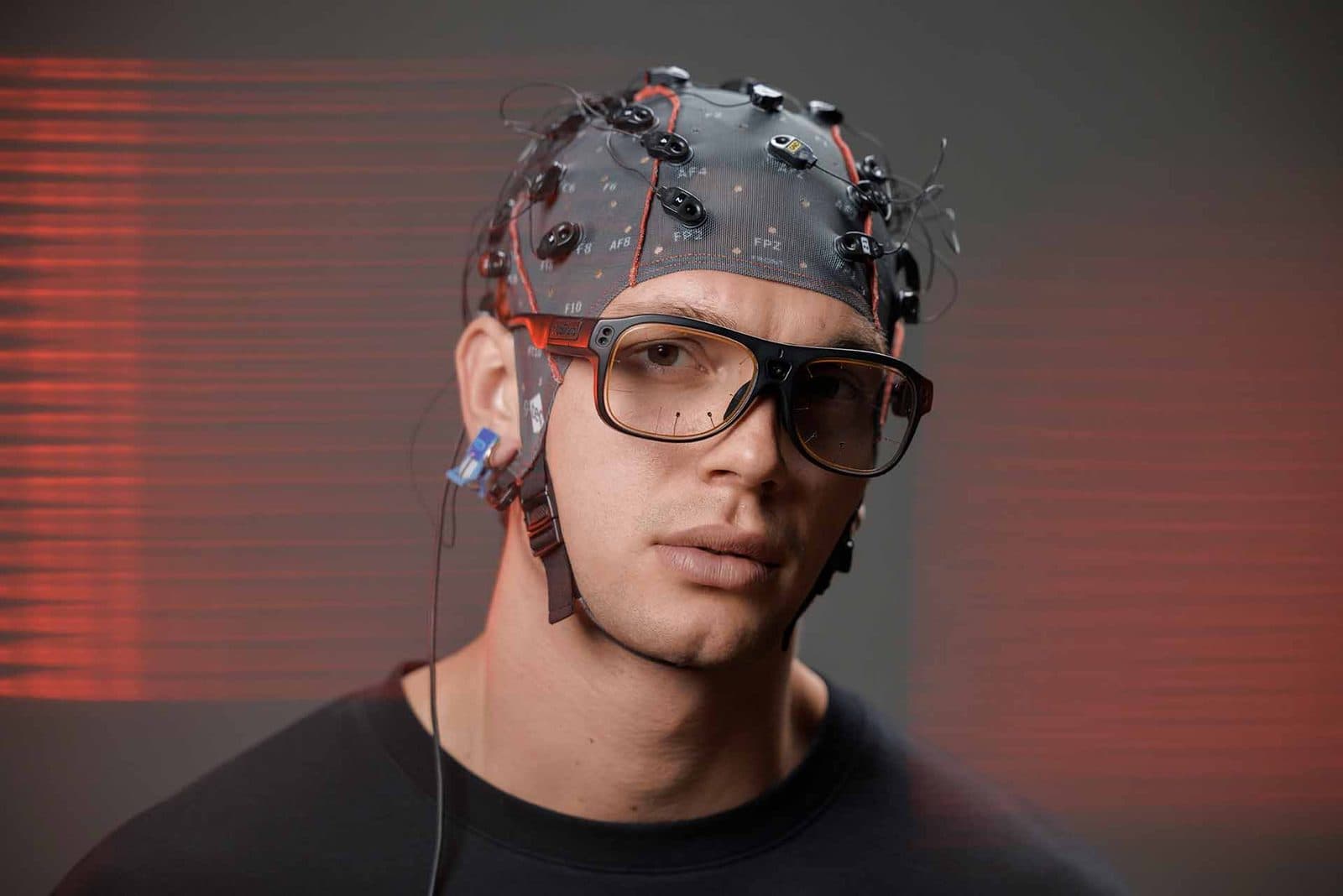
Tobii Pro Glasses 3's scene camera records what the participant sees and its eye cameras where they look: what was looked at, for how long, and what was missed.
 02
EEG
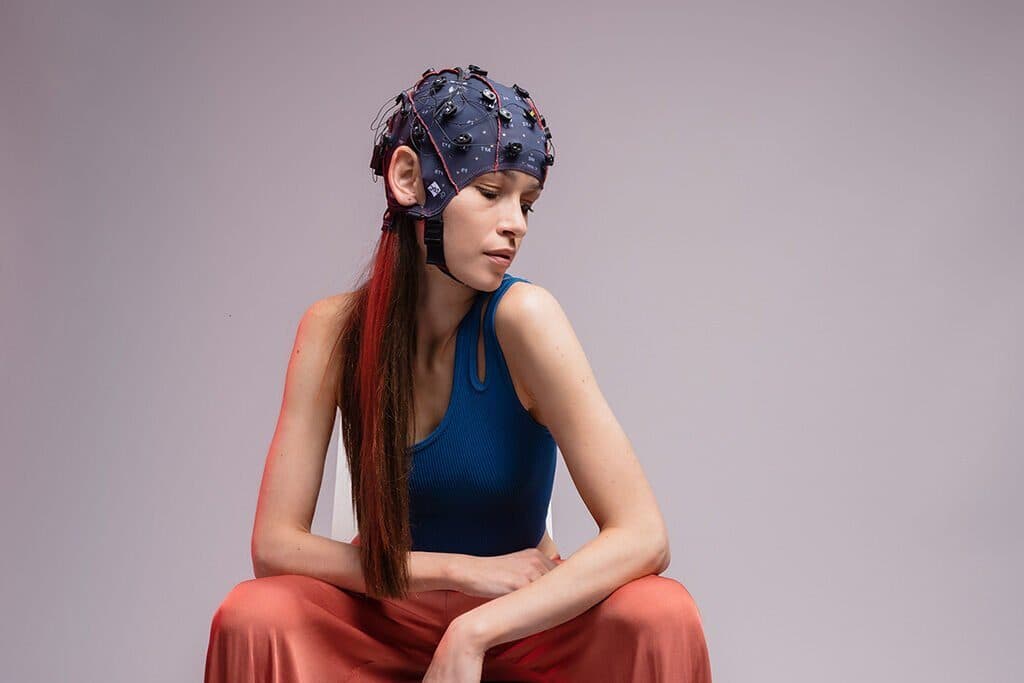
The brain's electrical activity, for measures such as attention, cognitive workload and engagement. Wireless g.Nautilus in the field, Unicorn for quick, budget-friendly set-ups.
 03
Optical brain imaging
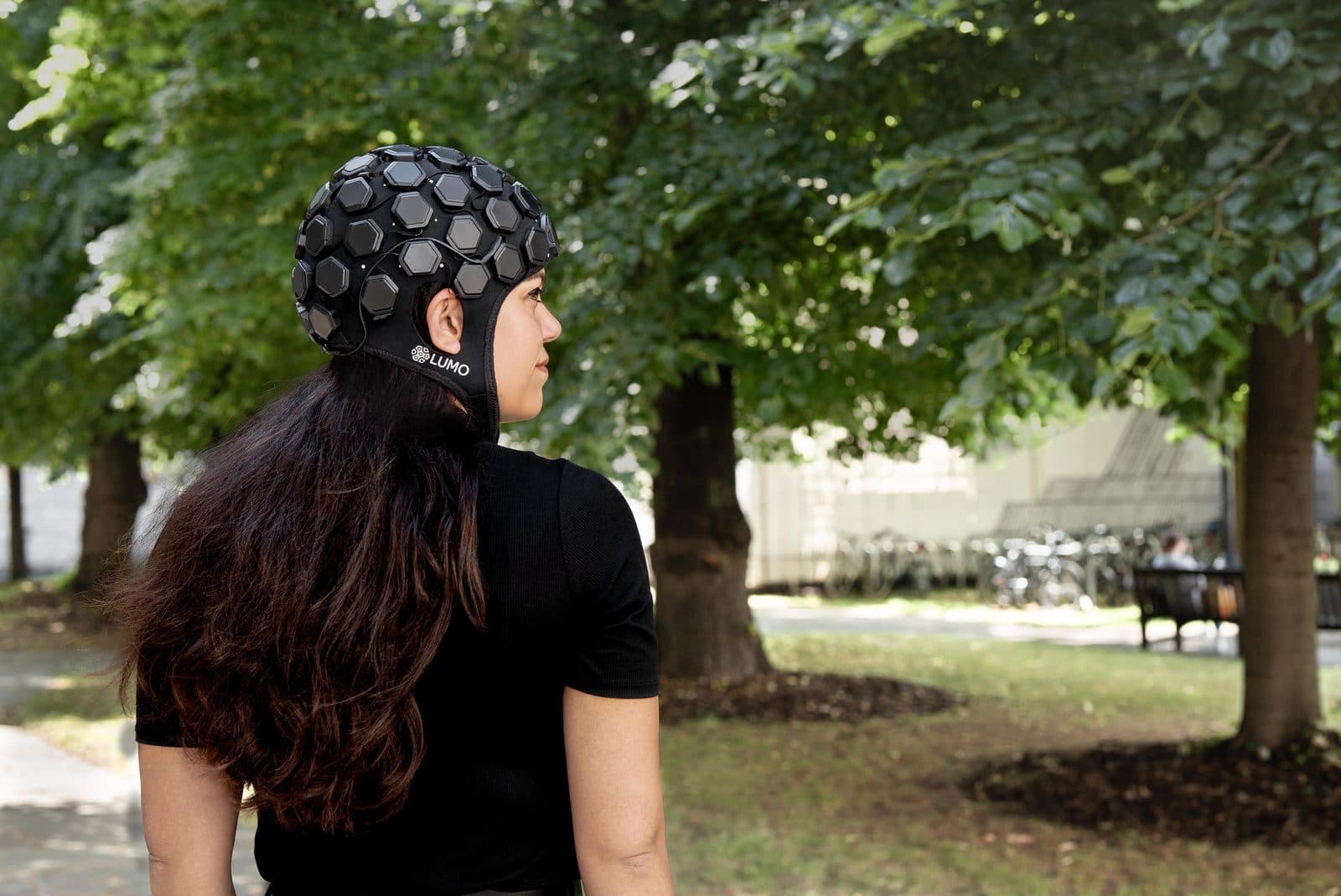
Gowerlabs LUMO measures changes in blood oxygenation with light; being fibreless and wearable, it is used in simulators and real settings. An IMU in every tile also records head movement.
 04
Body signals
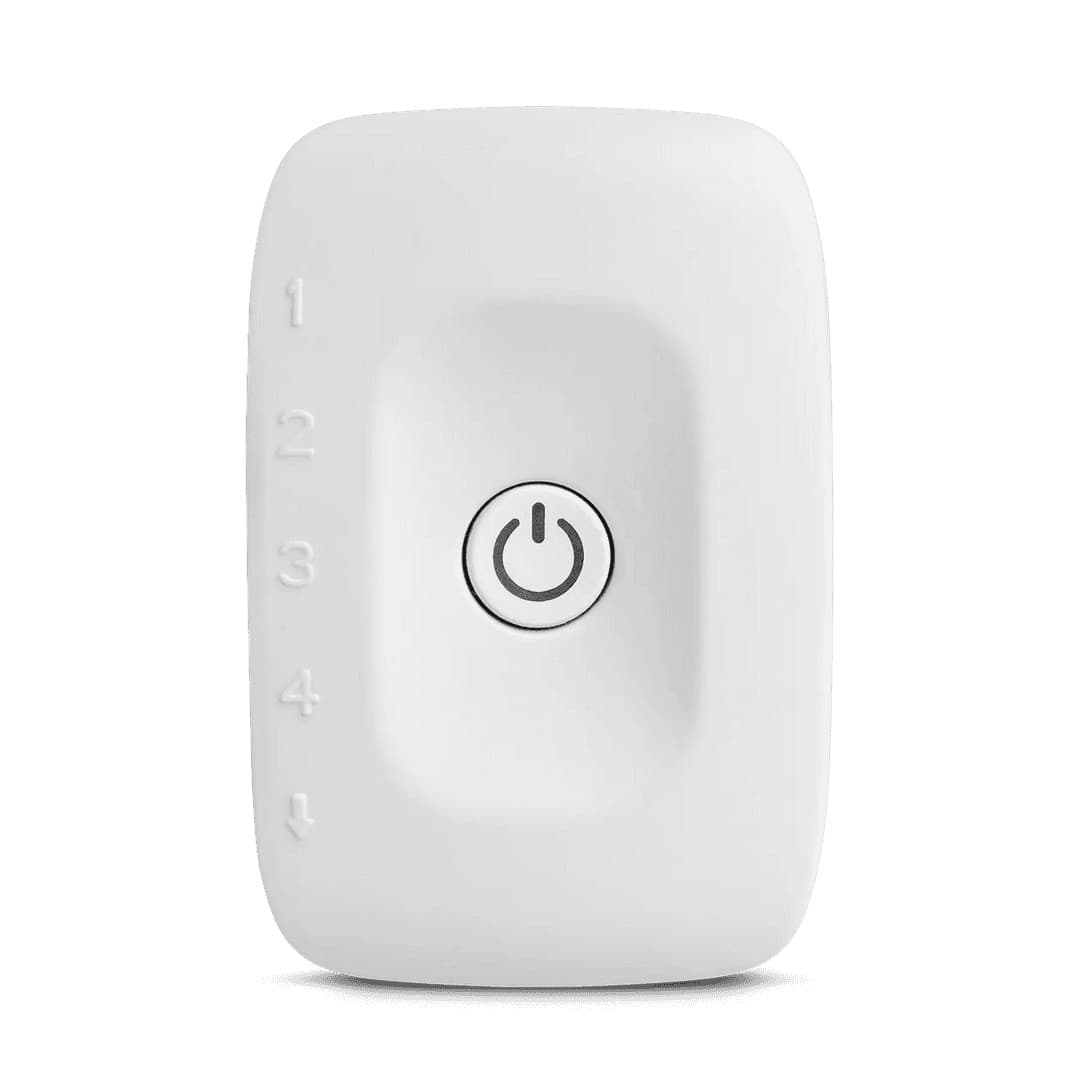
Skin conductance (EDA) shows arousal, heart rate and its variability show stress; heart rate comes from ECG or from a BVP sensor on the finger, and respiration can be added. PLUX's biosignalsplux hub takes the sensors you need.
 05
Wearable body signals
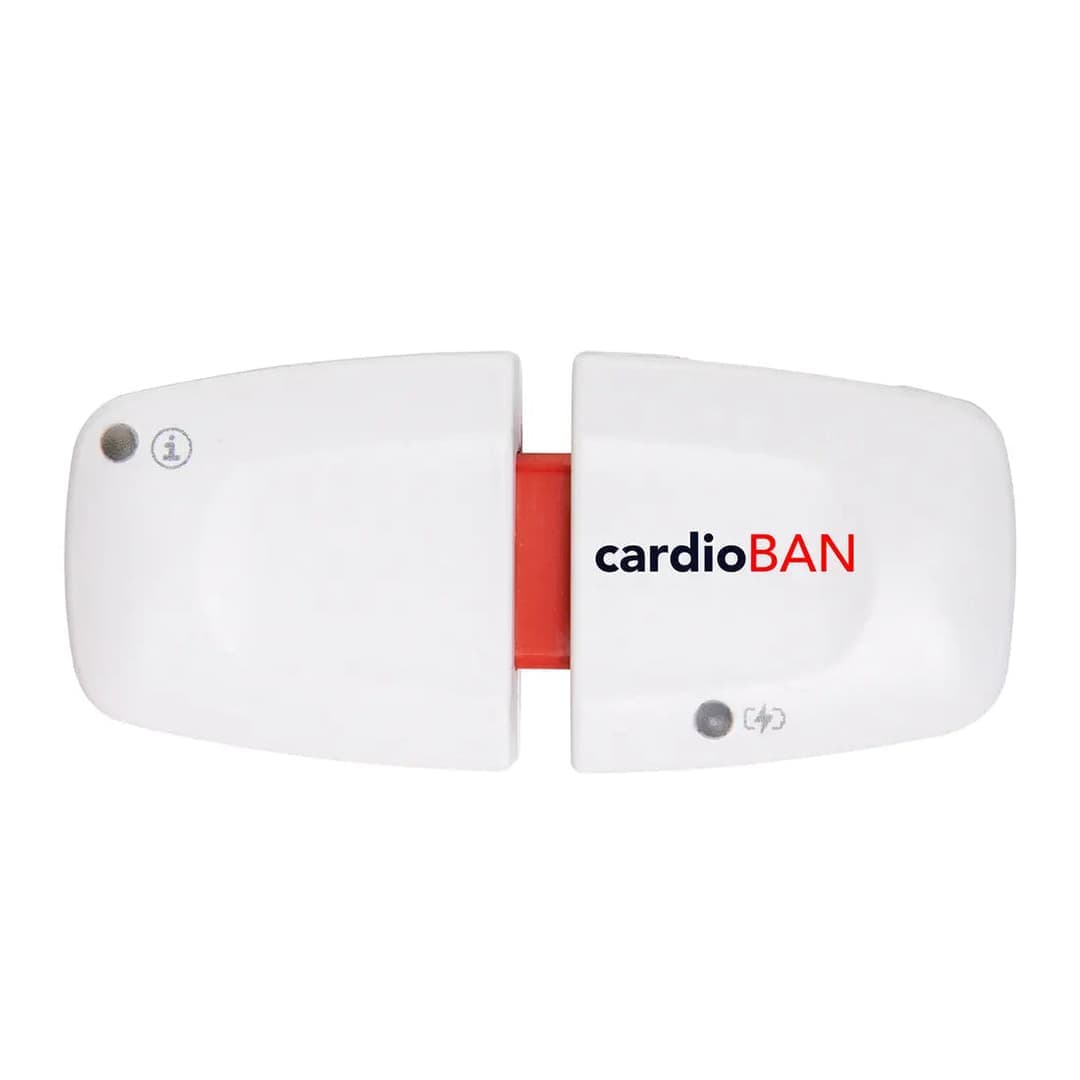
In the field, wearable PLUX devices instead of a wired hub: cardioBAN records ECG, respiBAN respiration and muscleBAN muscle activity, each with motion data; Biosignals PRO collects up to 10 sensors in the field onto a 32 GB microSD.
 06
Multimodal in one device
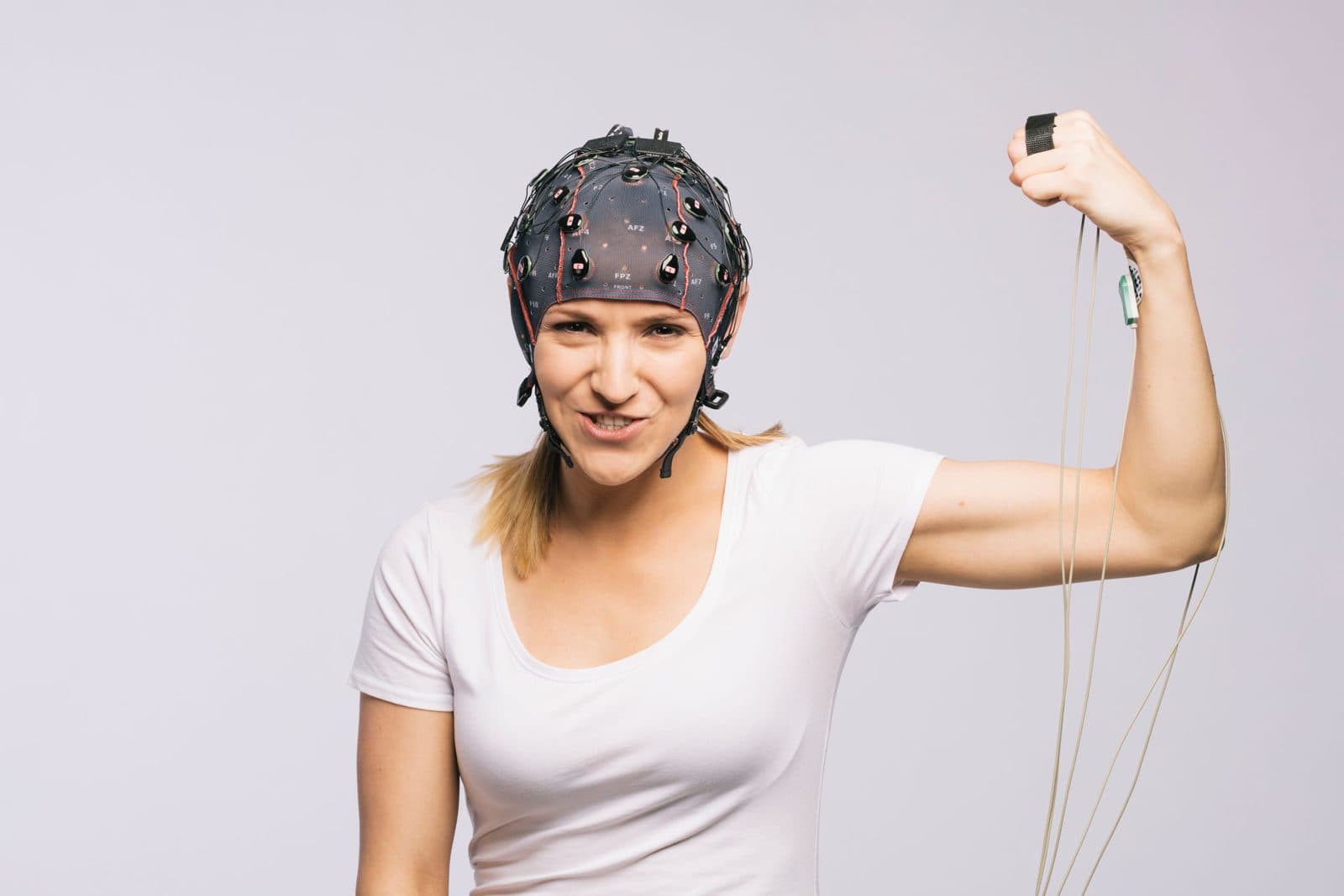
g.Nautilus Multi-purpose records EEG together with ECG, EMG, EOG and GSR in one device, which cuts the cables in driving and ergonomics studies.
 07
Stimulation and triggers
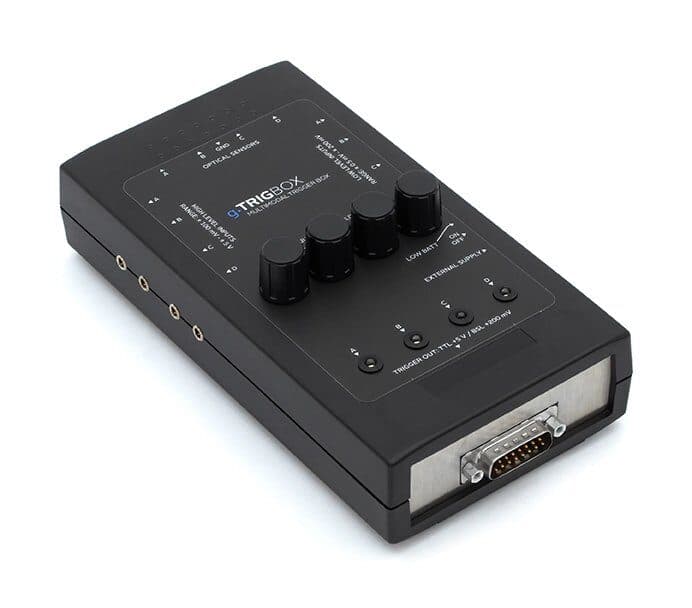
Events such as the start of an advert or a page opening are marked with a trigger, so gaze, EEG and body signals are compared against the same moment. PLUX's LUX sensor detects the change of light on the screen and ties the moment a visual stimulus appears to the biosignal recording.
 08
Recording and analysis
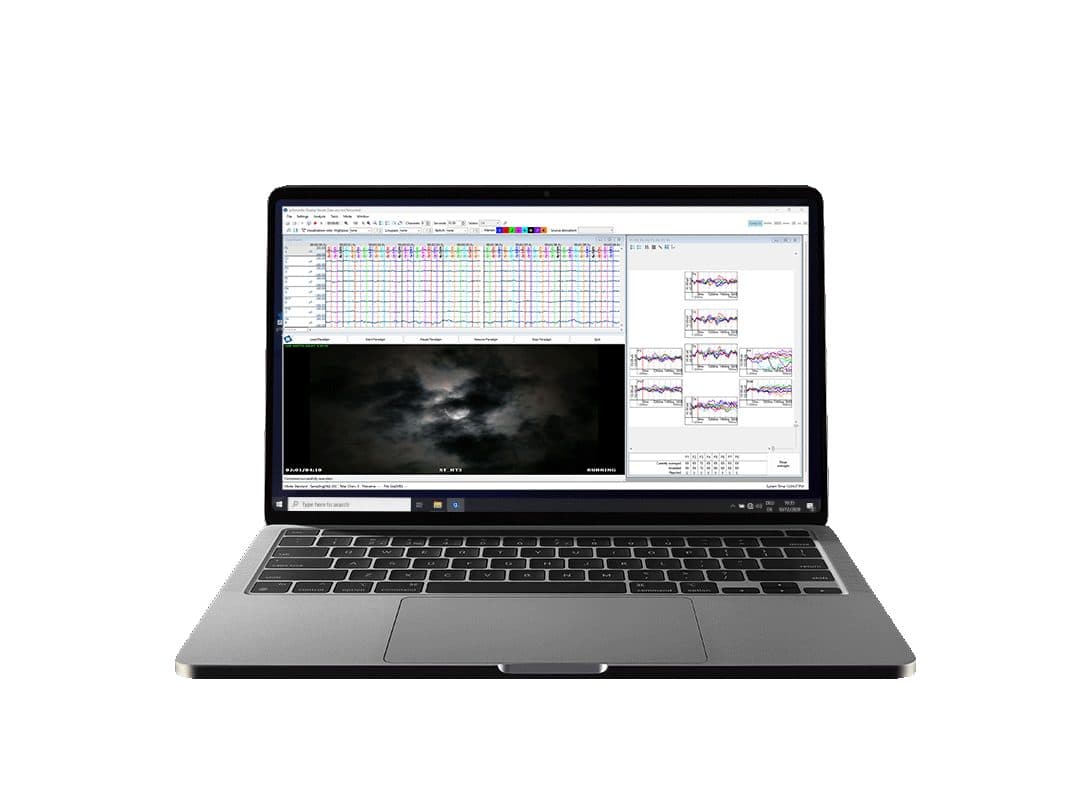
Records and displays the streams together; you analyse with g.tec's software or your own tools.
The signal's path, step by step.
From participant to recording, from recording to decision: how the devices connect.
Stimulus
An advert, an interface, a product on the shelf or a traffic situation on the road.
Gaze
The glasses record what the participant looks at and for how long.
In this stepBrain
EEG follows attention and cognitive workload; the brain's response after each fixation (the fixation-related potential) can be extracted.
In this stepBody
Skin conductance and heart rate show the arousal and stress the participant does not report.
In this stepOne timeline
All streams are aligned to the same moment: what was looked at when, and what the brain and body did then.
In this step
Everything on one clock
With g.Nautilus + Tobii, gaze and EEG are recorded on the same clock. Separate devices and the stimulus computer are aligned through shared trigger marks; PLUX's LUX sensor catches the moment a stimulus reaches the screen, and biosignalsplux and LUMO data stream over Lab Streaming Layer (LSL). We check this timing together at installation.
Three brands, one laboratory.
g.tec, PLUX and Gowerlabs each take on their own job in the lab; their data meet on one timeline.
- Brain and gaze
g.tec
g.Nautilus + Tobii Pro Glasses 3 records gaze and EEG on the same clock; g.Nautilus Multi-purpose takes ECG, EMG and GSR beside the EEG in one device; g.TRIGbox marks the stimuli in the recording.
- Body signals, at the screen and in the field
PLUX Biosignals
EDA, BVP, ECG and respiration sensors plug into a biosignalsplux hub; the LUX sensor ties the moment a visual stimulus appears on screen to the recording. In the field, wearable cardioBAN and respiBAN; there are ready-made kits too: the Gaming and E-sports kit with its Unity API for game tests, the Automotive Human Performance kit for driving and simulation.
- Optical brain imaging, in real settings
Gowerlabs
Being fibreless and wearable, LUMO leaves the screen behind: researchers used it to follow pilot fatigue in a Cessna 172 flight simulator and surgeons' cognitive workload during real operations; the studies are on the LUMO page. It adds the brain's oxygenation response to neuroergonomics and driving set-ups.
In this lab
Recommended set-ups.
- 01 · Entry
Biosignal station
An easy-to-install station that catches moments of excitement and stress through skin conductance (EDA) and heart rate, with EEG band power from Unicorn as an option. As PLUX points out, biosignals do not measure emotion directly; they are read together with behaviour and self-report. For game and app tests, PLUX's Gaming and E-sports kit ties game events to the signals through its Unity API.
- Used for
- EDA
- ECG and heart rate variability
- EEG band power
- Game tests
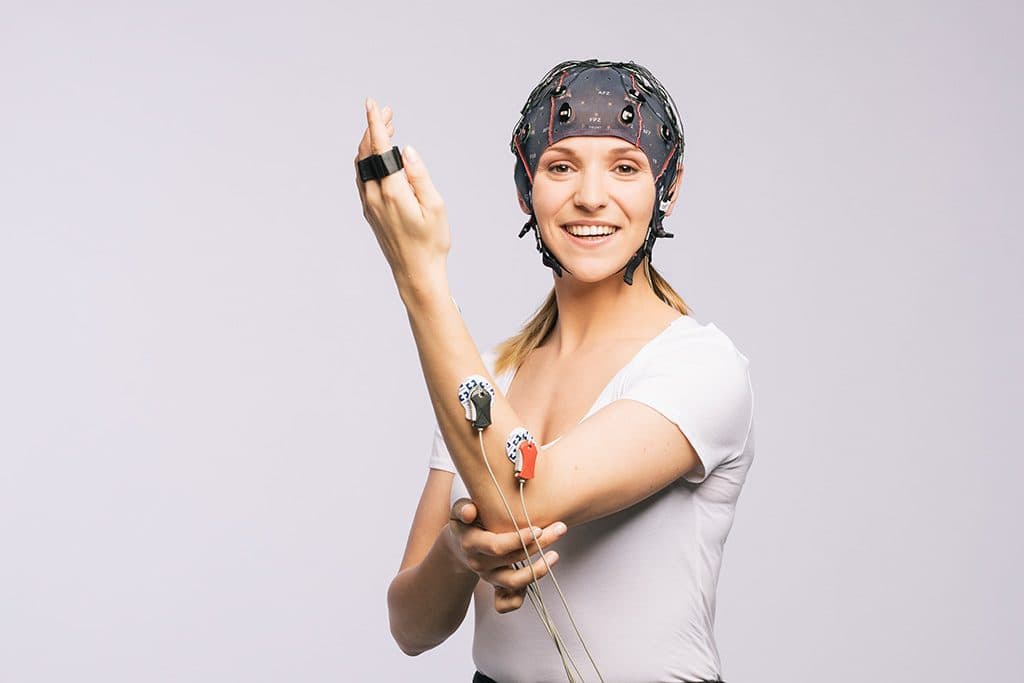 02 · Intermediate
EEG and biosignal lab
Research-grade EEG for attention, cognitive workload and engagement, on the same clock as the biosignals, with stimuli marked by g.TRIGbox and the moment an image reaches the screen by PLUX's LUX sensor. For comparing alternative adverts, packaging and interfaces.
- Used for
- Attention
- Cognitive workload
- Comparing alternatives
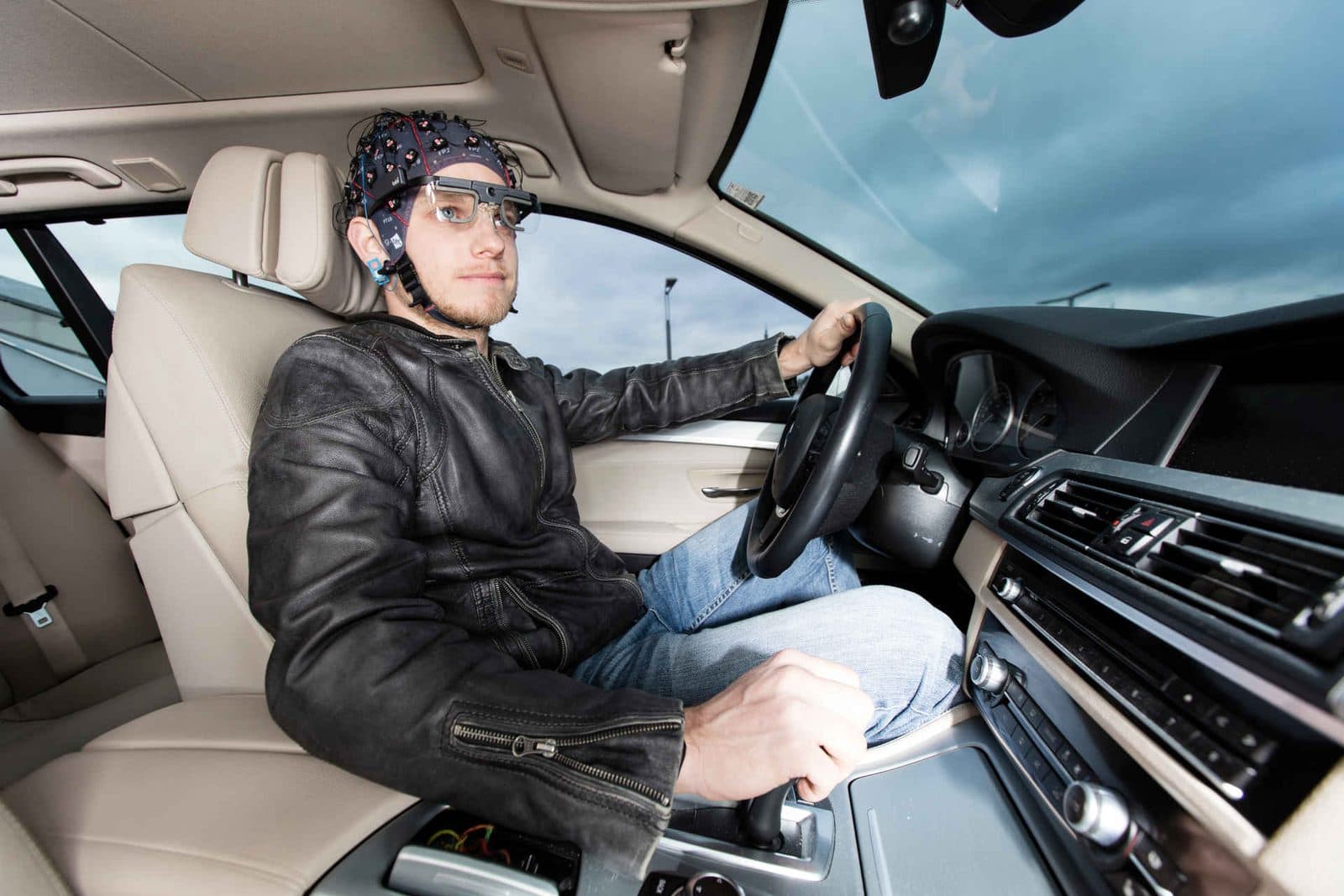 03 · Advanced
Real-world lab
With g.Nautilus + Tobii Pro Glasses 3 the participant is recorded in the shop, in the car or while using the product: what was looked at, what was missed and the brain's response to each fixation (the fixation-related potential) come out together. Body signals come from wearable PLUX devices, wirelessly.
- Used for
- Shelf and shop
- Product use
- Fixation-related potential
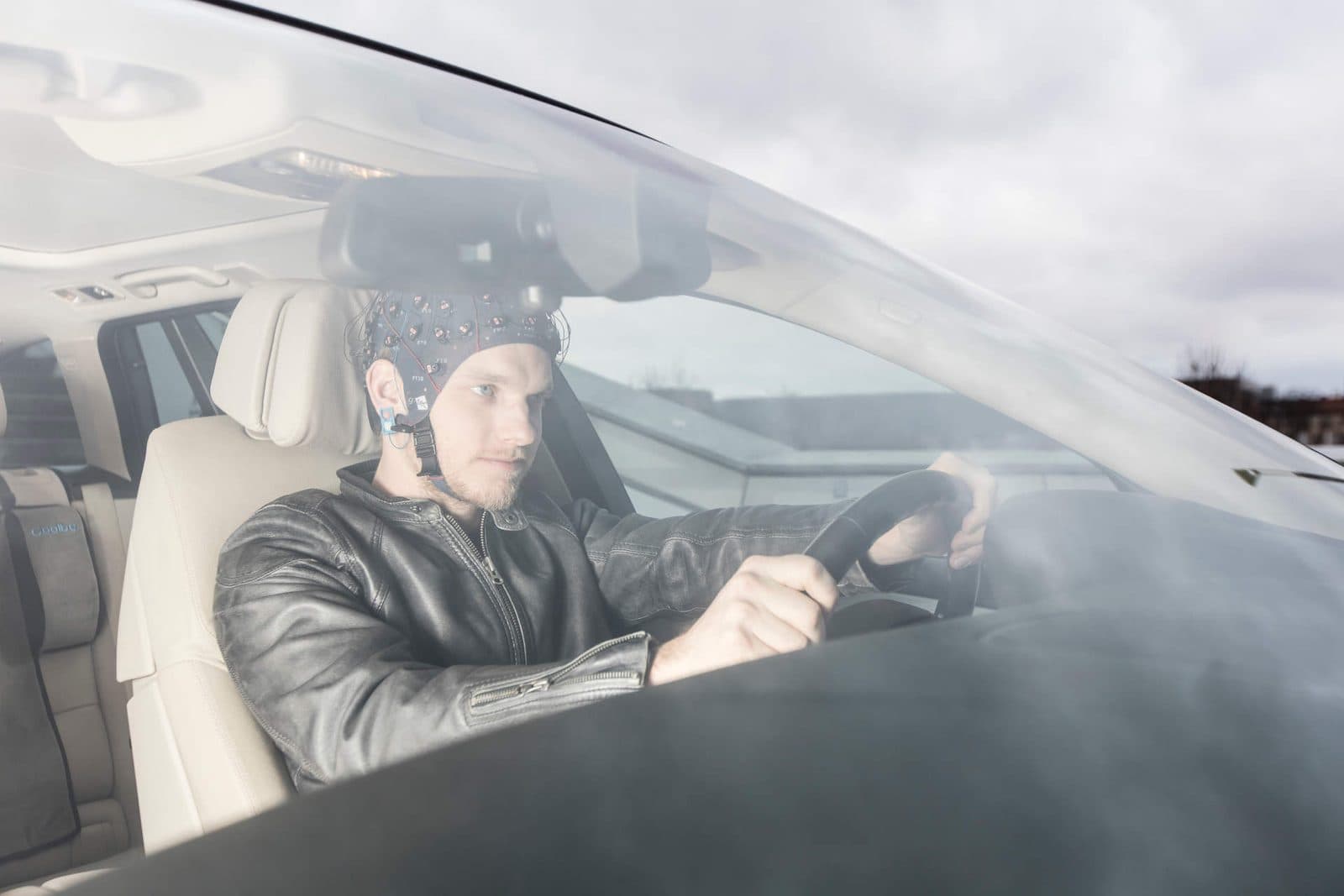 04 · Human factors
Neuroergonomics and driving lab
Cognitive workload, fatigue and attention in driving and flight simulators or in a real vehicle: EEG, muscle, heart and eye data together. It rests on the same basis as g.tec's applied neurophysiology lab. For the brain's oxygenation response, Gowerlabs LUMO, the system researchers used to follow pilot fatigue in a flight simulator; for physiological responses, PLUX's automotive and stress-and-fatigue kits.
- Used for
- Cognitive workload
- Fatigue
- Driving and flight
- fNIRS / HD-DOT
- Devices
- Also
- A driving or flight simulator, depending on the project
We stay with you after installation.
Discovery and planning
We look at your research goals, paradigms and space together and work out the configuration and how it can grow.
Demo and installation
A device demo at your institution; after delivery, installation of the hardware, software and licences.
Timing check
At installation we check together that the chain of stimulus, recording and feedback works as it should.
Training
Device and software training for your team; hands-on workshops on request.
Support and analysis
A reply within 24 hours on working days, across Türkiye; consulting on experiment design and data analysis.
A working laboratory in six steps.
- 01
Set your goals
Your research questions, paradigms, number of participants and recording methods.
- 02
Choose a configuration
We start from one of the recommended set-ups and adapt it to your needs.
- 03
Quote and plan
Devices, software and accessories in one plan, together with the space and infrastructure they need.
- 04
Installation
Delivery, installation and a timing check of the whole workflow.
- 05
Training
Device and software training gets your team ready for its first experiments.
- 06
Grow
As your research develops, add channels, participants and modules to the laboratory.
Fields this laboratory serves.
- Eye Tracking, Neuromarketing and UXStudy visual attention, user experience and consumer behaviour through gaze, fixations and EEG responses.
- Automotive ResearchReal-time EEG in vehicles and driving simulators: monitoring driver attention, fatigue and cognitive load.
- Aviation and Flight Simulation ResearchStudy pilot attention, mental workload, stress and fatigue in flight simulators using EEG, eye tracking, fNIRS and biosignals.
- Stress and PsychophysiologyRelate skin conductance, heart rate variability and respiration to task performance in stress, affect and fatigue studies.
- Cognitive Performance and Mental WorkloadExplore attention, working memory, decision-making and mental fatigue through EEG, fNIRS and autonomic responses.
Frequently asked questions
Does a UX lab need EEG?
No. You can start with a biosignal station built on EDA and ECG and add EEG when you want to measure attention and cognitive workload. The lab grows on the same synchronisation infrastructure.
Can we record outside the lab?
Yes. g.Nautilus is wireless; with Tobii Pro Glasses 3 the participant is recorded in the shop, in the car or while using the product, with gaze and EEG on the same clock.
Do biosignals measure emotion?
Not directly. Skin conductance and heart rate show arousal and stress; to be interpreted they must be read together with behaviour, gaze and self-report.
How are recordings from different devices combined?
Stimuli and events are marked with g.TRIGbox; with g.Nautilus + Tobii, gaze and EEG are recorded on the same clock. You can analyse with g.tec's software or your own tools, and we offer consulting on experiment design and data analysis.
What do PLUX and Gowerlabs do in this lab?
PLUX records body signals, that is skin conductance, heart, respiration and muscle, both in the lab and in the field with wearable devices; its LUX sensor catches the moment a stimulus appears on screen. Gowerlabs LUMO measures the brain's oxygenation response with a wearable cap, for simulator and real-world studies. We bring them onto one timeline with the g.tec recordings.
Which departments and organisations is it for?
Business, communication and design faculties, psychology departments, advertising and research agencies, and automotive and retail R&D teams.
Let's plan your laboratory together.
Tell us your research goals, number of participants and recording methods, and we will work out the right configuration and how it can grow.
Call us +90 554 381 46 20Serving all of Türkiye · reply within 24 hours on working days