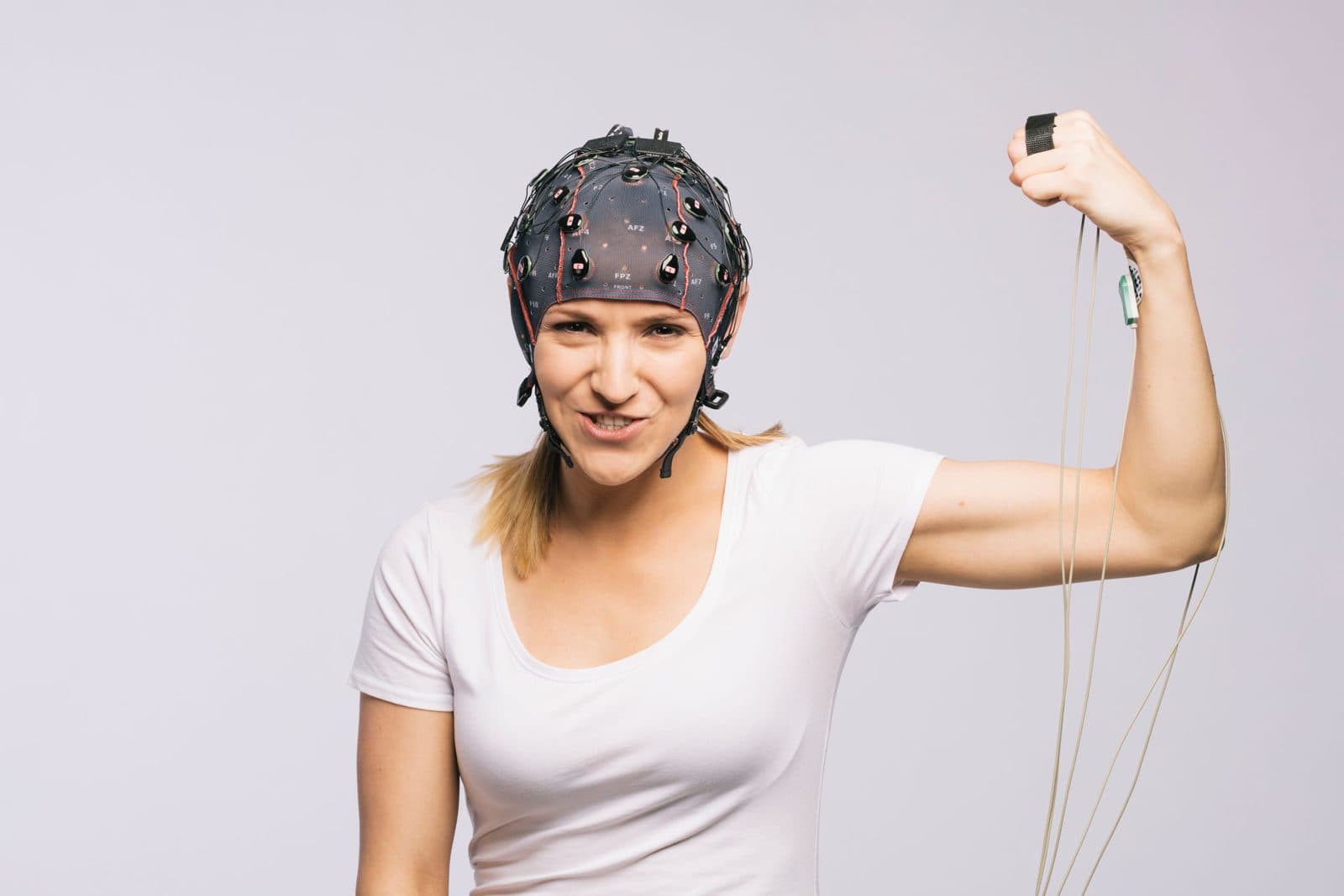
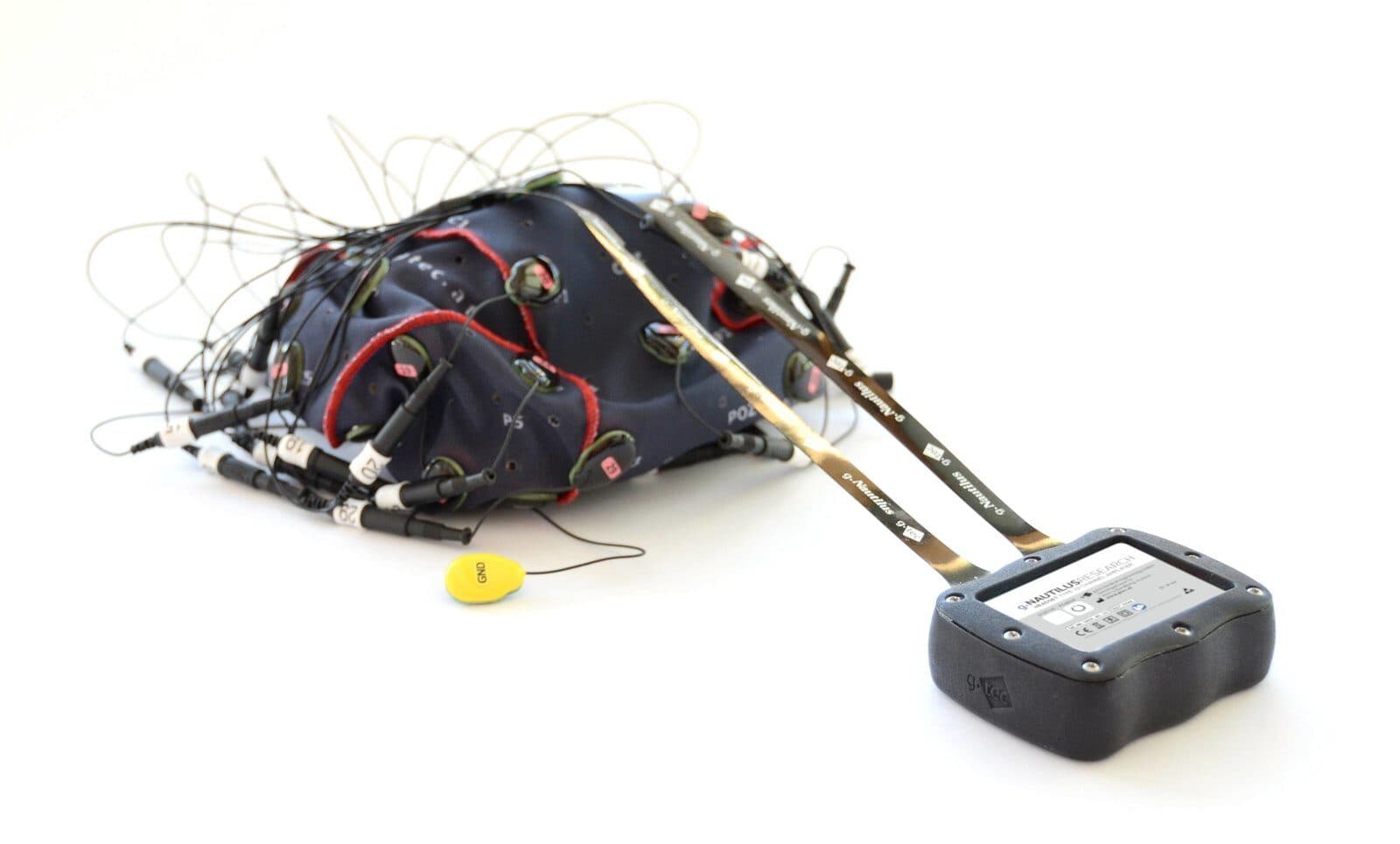
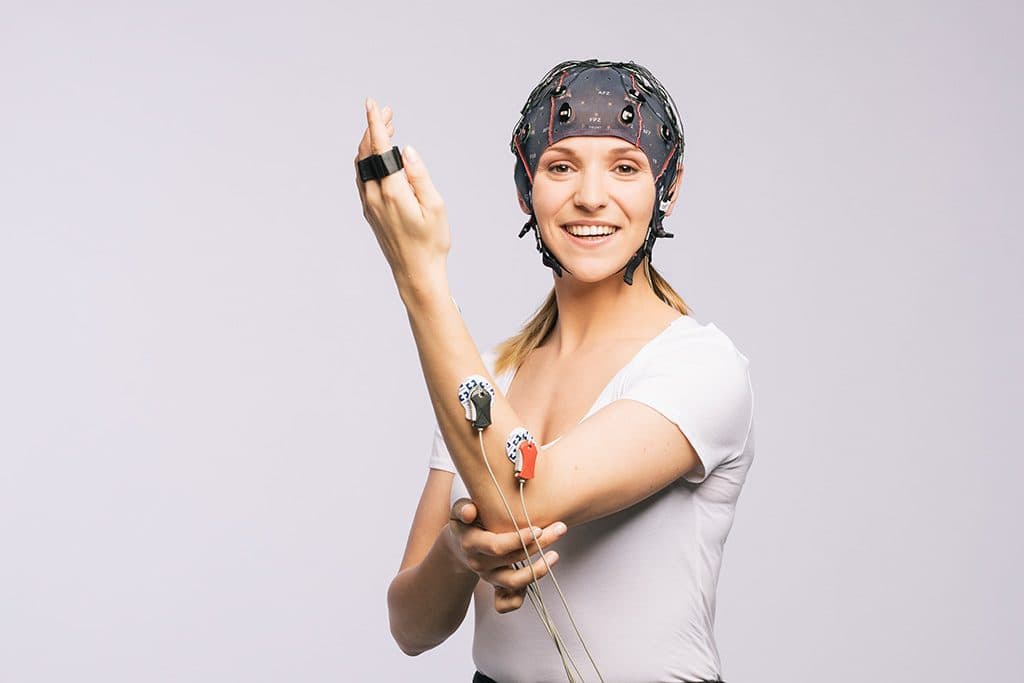
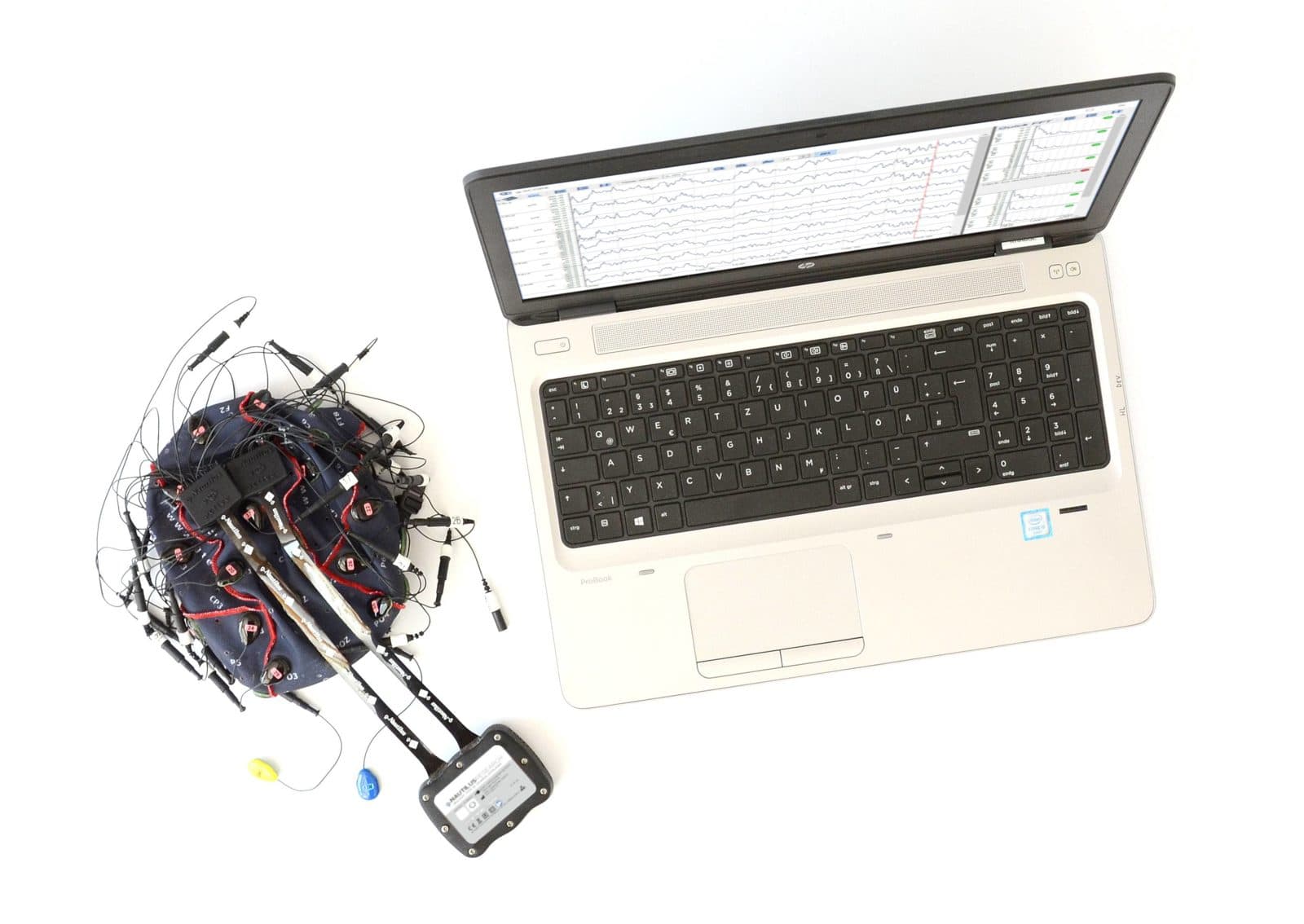
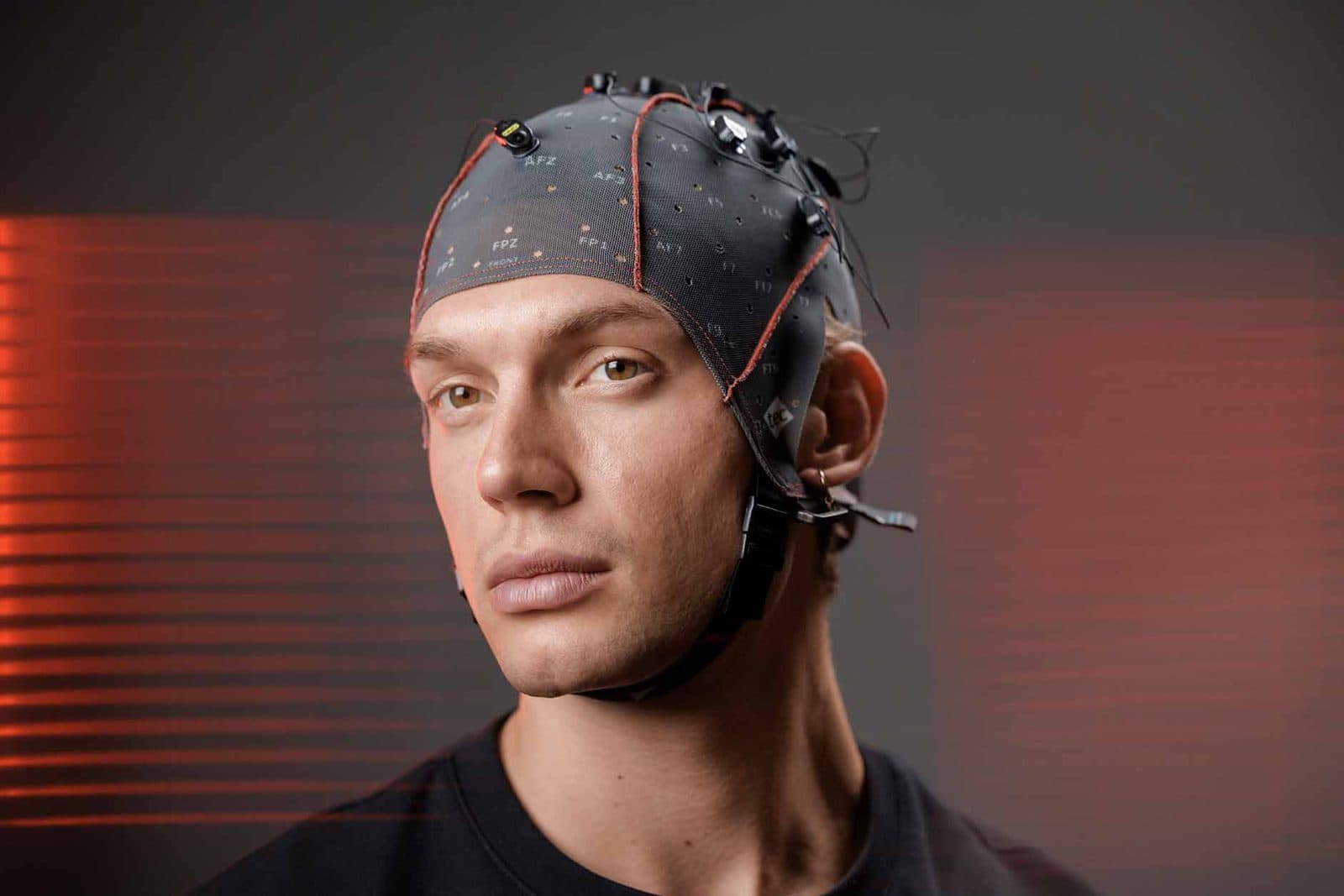
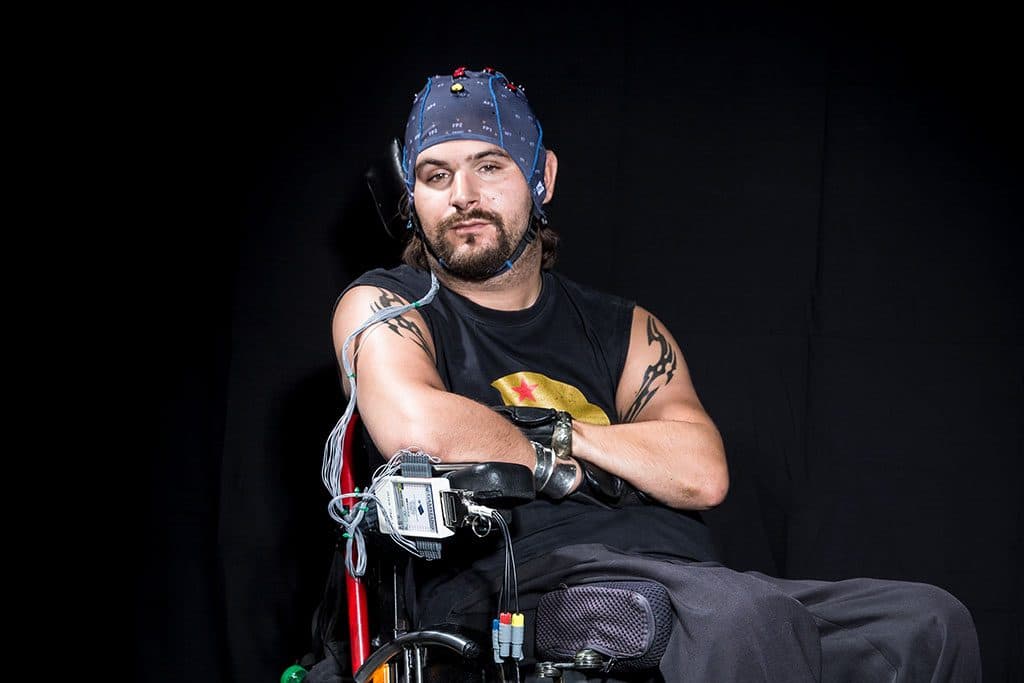
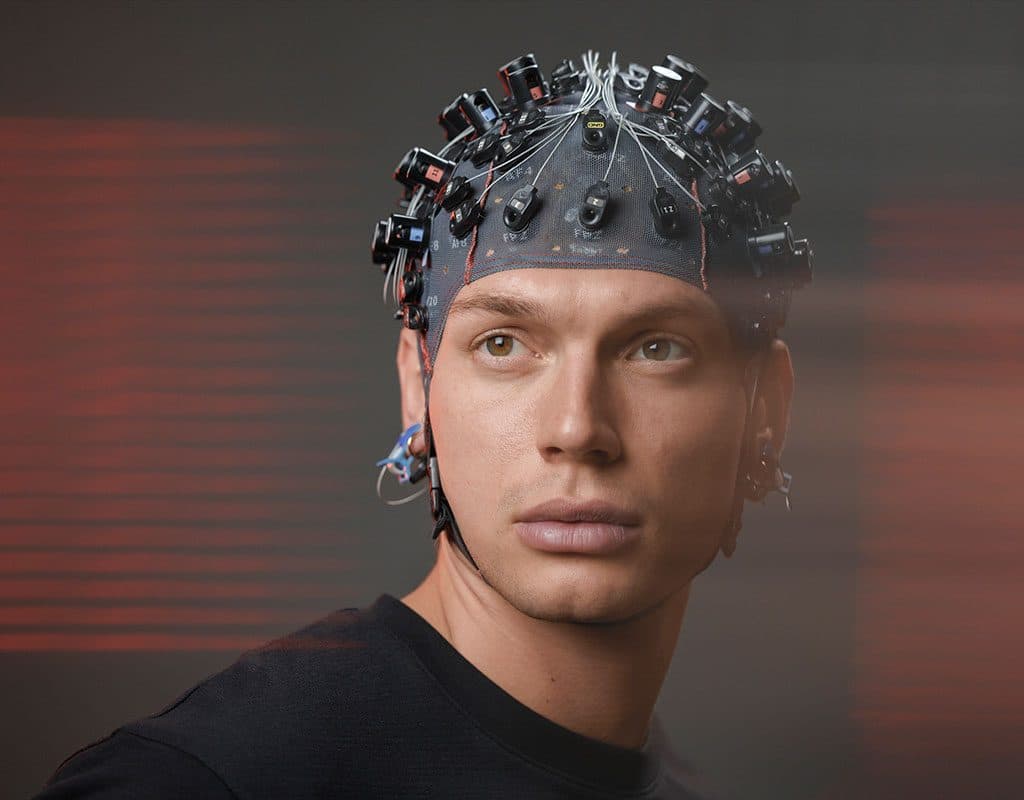
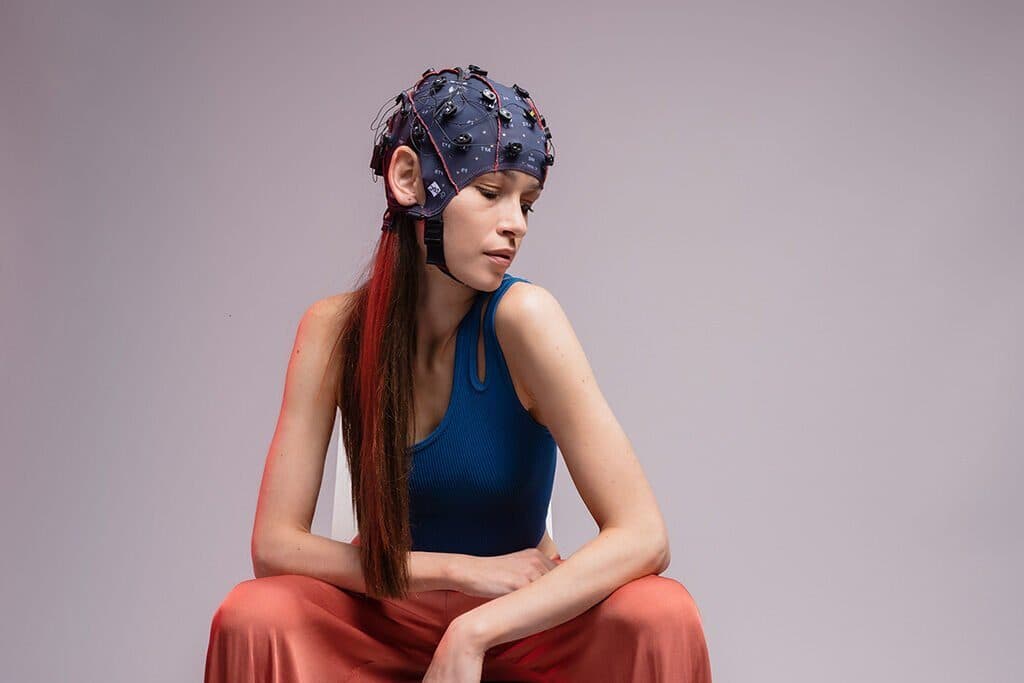
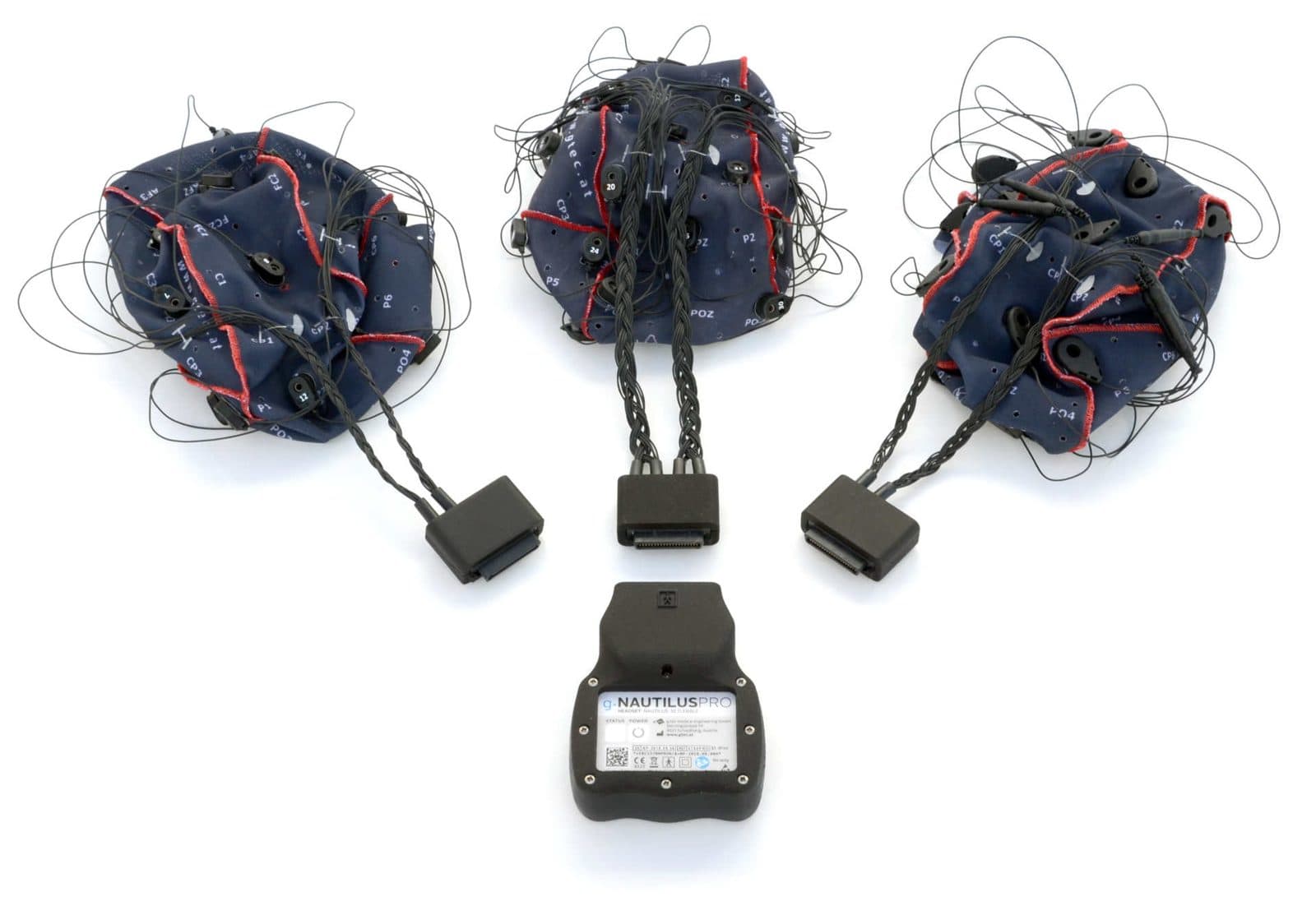
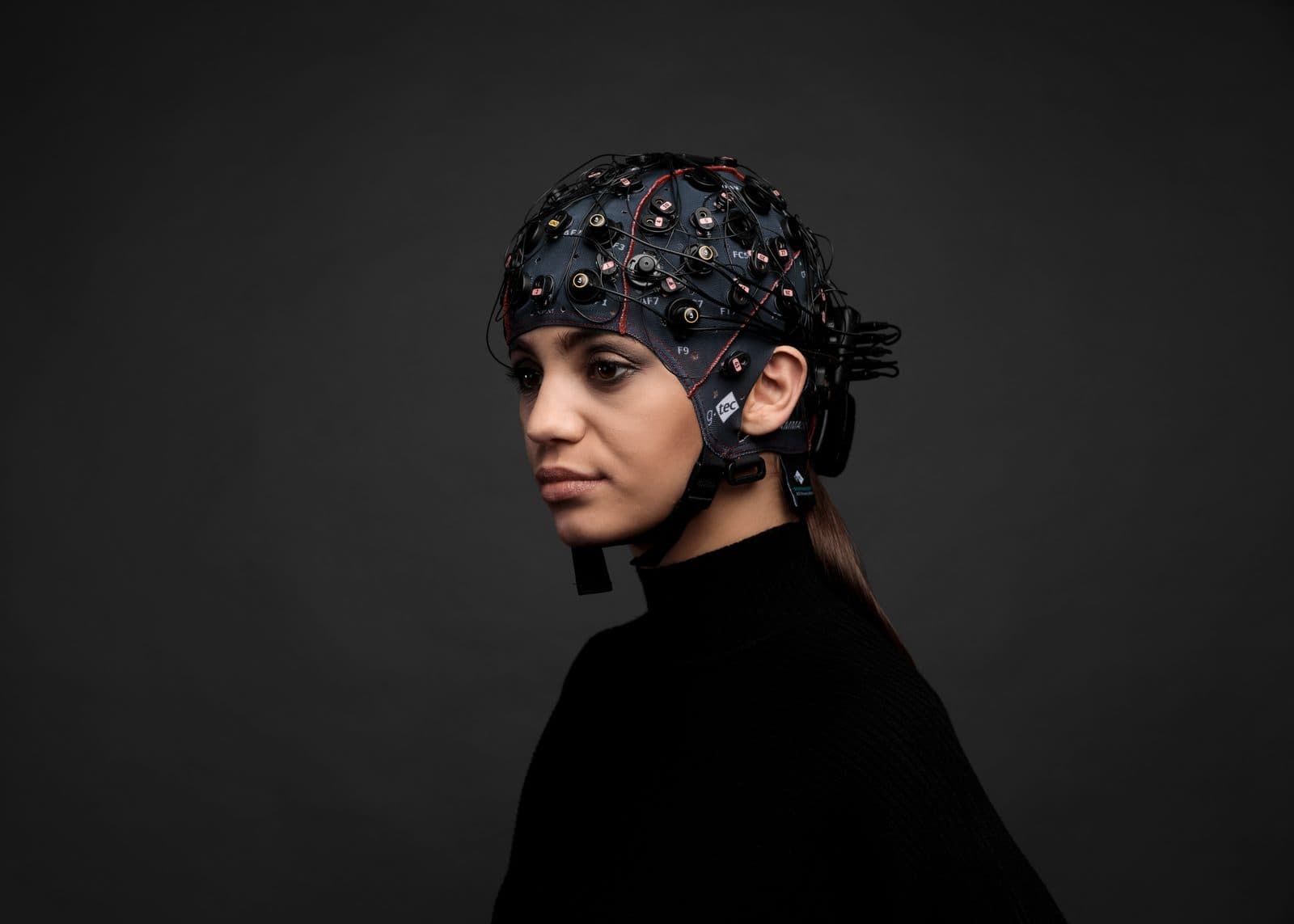
g.Nautilus Multi-purpose records high-quality wireless EEG simultaneously with ECG, EMG, EOG, GSR, respiration, SpO2, pulse, temperature and other physiological signals, to study how the brain interacts with the body. It is one wearable system for psychology, psychophysiology, cognitive neuroscience, human-computer interaction, sports science, neurotechnology and biomedical engineering. Unlike conventional systems with fixed physiological channel layouts, the balance between EEG and multi-purpose channels is configured for each study.
A wireless multimodal EEG and physiology platform for psychology, cognitive neuroscience, sports science, neurotechnology and human performance research
Simultaneous recording of EEG, ECG, EMG, EOG, GSR, respiration, SpO2, pulse, temperature and other physiological signals
8, 16, 32 or 64 EEG channels; 4 detachable biosignal channels for synchronised multimodal recordings
A configurable number of multi-purpose channels: for example 4, 8, 16, 32 or 64 physiological channels
Compatible with g.SAHARA Hybrid and g.SCARABEO active EEG electrodes; flexible electrode placement for custom paradigms
Simultaneous EEG-fNIRS recordings with g.SENSOR fNIRS
A research-grade 24-bit, true DC-coupled amplifier architecture
Wireless 2.4 GHz digital transmission, 10 metres indoors
Waterproof design and Qi-standard contactless charging
The complete g.tec software ecosystem with g.Recorder, g.HIsys, g.BSanalyze, g.Pype and g.NEEDaccess; Python, MATLAB, Simulink and LSL support
Technical specifications
EEG channels
8 / 16 / 32 / 64
Extra biosignal channels
4 detachable, for physiological sensors
Input configuration
Up to 64 monopolar or 32 bipolar channels (software selectable)
Electrode compatibility
g.SAHARA Hybrid and g.SCARABEO active EEG electrodes
Electrode placement
Flexible, for custom montages
Resolution
A dedicated 24-bit ADC per channel (1.024 MHz internal sampling)
Sampling rate
500 Hz (8/16/32) · 250 Hz (64 channels)
Noise
< 0.6 µV RMS (1–30 Hz, at the highest sensitivity)
Modern neuroscience relies more and more on measuring brain activity together with physiological responses, at the same time. Studying cognition, emotion, stress, fatigue, engagement, decision making, speech or human performance, researchers combine EEG with cardiovascular, muscular, respiratory and autonomic signals to understand brain-body interaction better. Many questions cannot be answered by EEG alone: simultaneous physiological recording lets neural, physical and emotional responses be told apart.
Cognition and emotion
Stress and fatigue
Brain-body interaction
Signals
EEG and physiology in one system
The four detachable physiological channels are configured for ECG (heart rhythm and heart rate variability), EMG (muscle activity), EOG (eye movements), GSR (stress, arousal and emotional response), respiration, SpO2, pulse, temperature and other analog physiological sensors. They are recorded on the same time base as the EEG, so the timing between brain activity and physiological responses matches precisely. Within the 8, 16, 32 or 64-channel hardware, multi-purpose channels can be allocated freely; the standard 4 can be raised to 8 or more without additional hardware.
ECG
EMG
EOG
GSR
Respiration, SpO2, pulse, temperature
Electrode technology
g.SAHARA Hybrid or g.SCARABEO
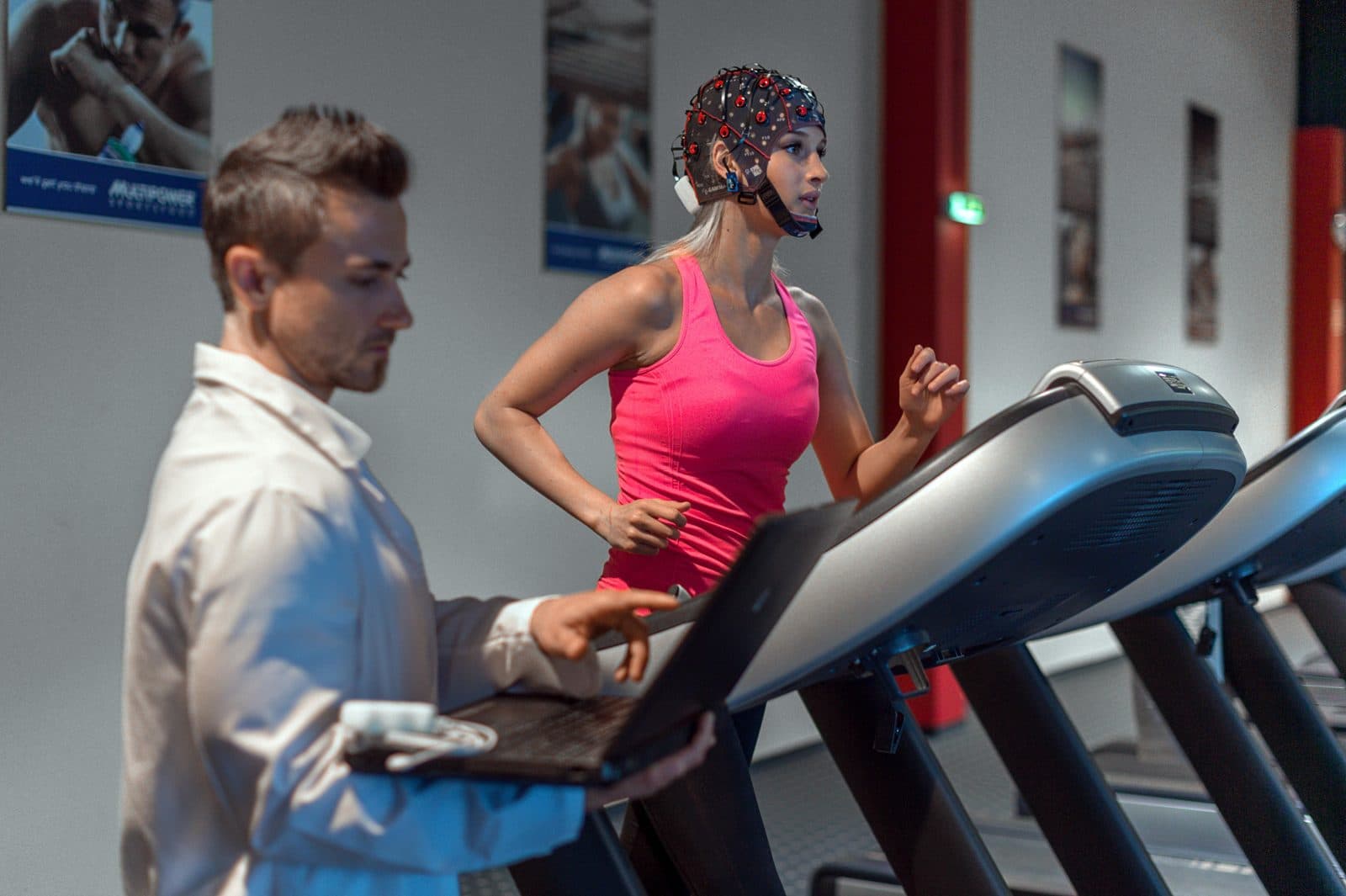
g.SAHARA Hybrid is a hybrid active electrode used dry or with gel; it needs no hair washing and suits remote and demanding field conditions. g.SCARABEO is a gel-based active electrode with an internal impedance check, giving high signal quality in sports applications with intense movement such as running and jumping. Both let the EEG channels be placed freely to suit the study design.
g.SAHARA Hybrid
g.SCARABEO
Flexible placement
Research ecosystem
From synchronised data to machine learning
Artificial intelligence relies more and more on multimodal physiological data rather than single sensors. Synchronised EEG and physiological recordings give data suited to building machine-learning models for stress detection, fatigue monitoring, emotion recognition, biometric identification, cognitive workload estimation, adaptive brain-computer interfaces and intelligent human-machine interaction. g.Recorder handles multimodal acquisition, g.HIsys real-time processing and BCI, g.BSanalyze offline analysis and artefact processing; the g.Pype Python SDK and the g.tec Suite APIs let you build custom software. Digital trigger inputs and Lab Streaming Layer (LSL) synchronise with eye trackers, motion capture, virtual reality, stimulation devices and robotics.
g.Recorder
g.HIsys
g.BSanalyze
g.Pype
LSL
Applications
01
Psychology, human factors and neuroergonomics
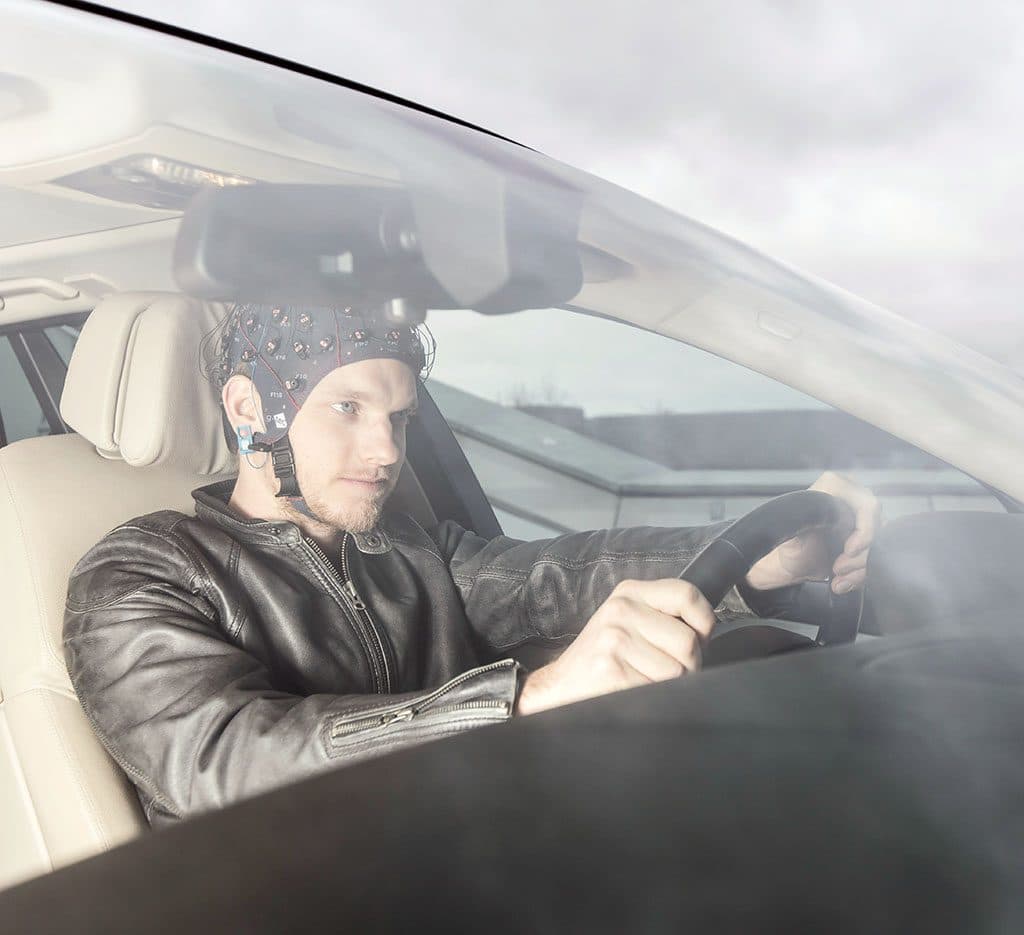
EEG is combined with ECG, EMG, EOG, GSR, respiration, SpO2, pulse and temperature to study attention, emotion, stress, cognitive workload, decision making, fatigue, situational awareness and human performance. The light design supports ecologically valid experiments in laboratories, simulators and real-world settings.
02
Aviation, aerospace and demanding environments
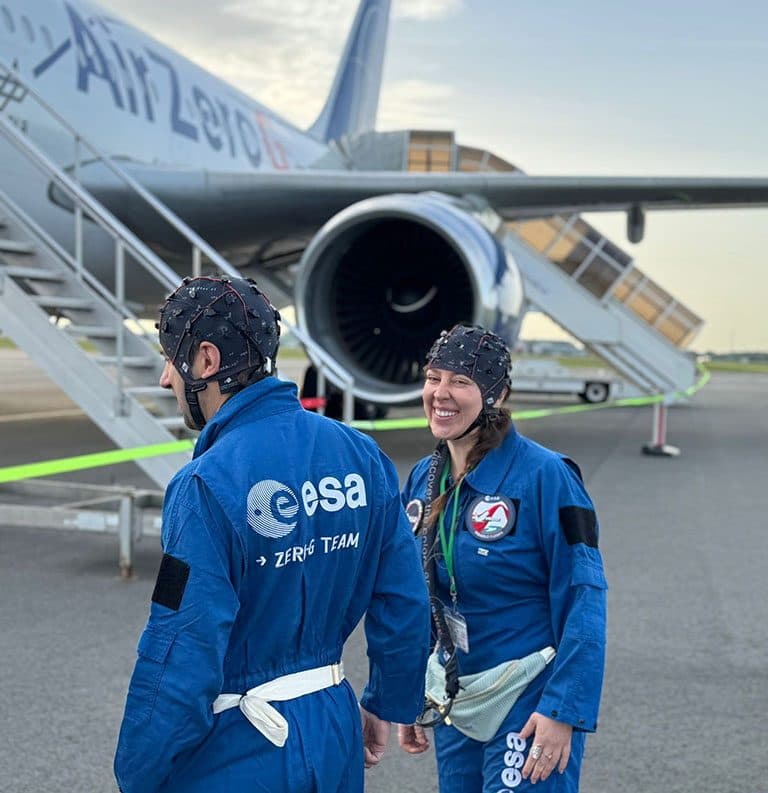
Pilots, astronauts, military personnel and first responders work under extreme cognitive and physiological stress. Wireless EEG with synchronised physiological monitoring lets researchers study cognitive performance, stress, fatigue, workload and situational awareness in flight simulation, altitude research, aerospace medicine and military training.
03
Performance under extreme conditions
How brain and body respond to hypoxia, high altitude, acceleration, thermal stress, sleep deprivation and prolonged cognitive workload is recorded simultaneously in laboratories, flight simulators, altitude chambers and the field. The data support machine-learning algorithms for fatigue detection, workload assessment and stress monitoring.
04
Multimedia and user experience
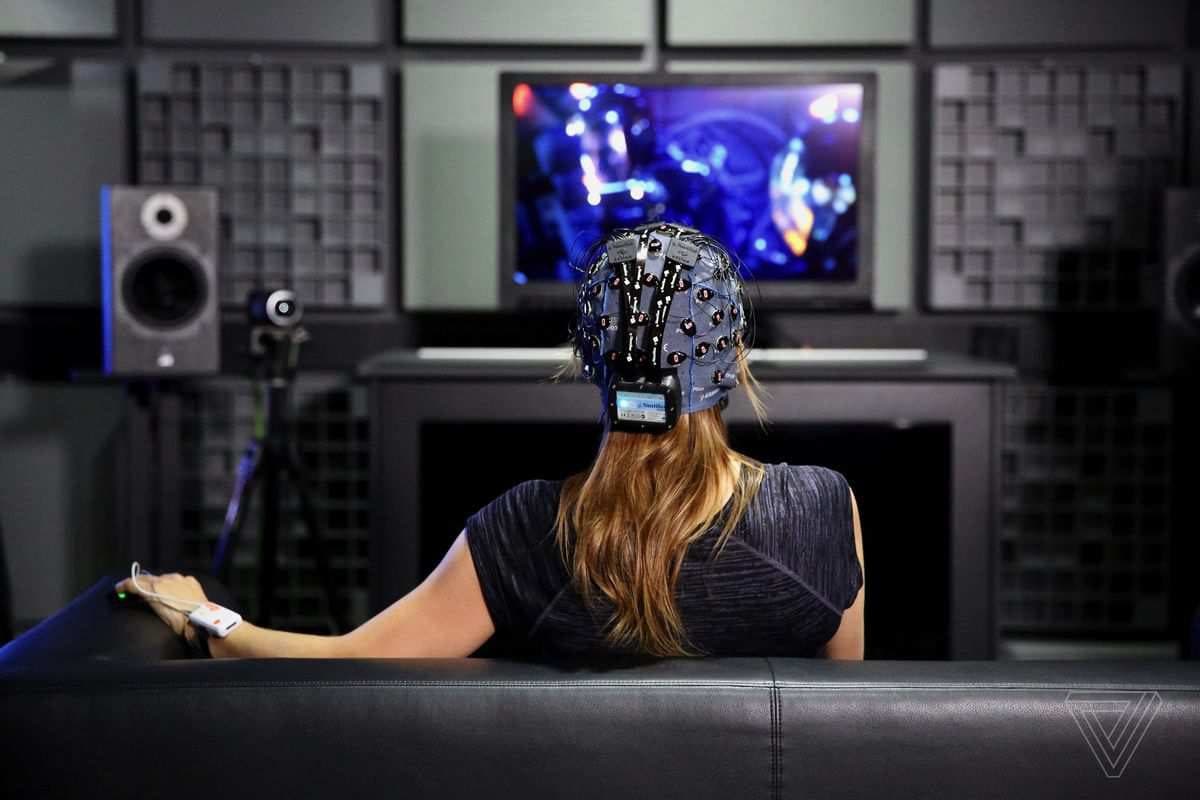
How people respond to music, films, virtual reality, games, advertisements and digital interfaces is measured objectively with EEG and autonomic physiological signals, as attention, emotional engagement, cognitive workload, immersion and Quality of Experience (QoE). Suited to user experience research, affective computing and neuromarketing.
05
Speech, communication and assistive technologies
Speech production is a complex interaction of neural, muscular and physiological processes. Combining EEG with EMG and other physiological signals supports research into speech disorders, assistive communication technologies, pathological speech assessment, hearing and adaptive human-machine interfaces.
06
Simultaneous EEG and fNIRS
Synchronised recording with g.SENSOR fNIRS, with 8, 16, 32 or 64 g.SCARABEO active EEG channels and 8 fNIRS channels. Measuring electrical activity and cerebral oxygenation together lets neurovascular coupling, brain function and cognitive processes be studied with complementary temporal and spatial information.
07
Human performance and natural behaviour
EEG is recorded with EMG, ECG, respiration and pulse to study motor control, fatigue, reaction time, recovery and workload during natural movement. The light wireless design records without restriction during running, cycling, rehabilitation, sports performance testing and field studies.
Video
g.tec's official video on recording biosignals from different and multiple amplifiers.
Frequently asked questions
Why choose g.Nautilus Multi-purpose instead of a conventional EEG system?
g.Nautilus Multi-purpose is designed for researchers who need to measure more than brain activity. Alongside high-quality EEG it records physiological signals such as ECG, EMG, EOG, GSR, respiration, SpO2, pulse and temperature simultaneously, so brain and body are monitored from one wearable platform. That makes it ideal for psychophysiology, human factors, sports science, cognitive neuroscience and multimodal human performance research.
Why combine EEG with physiological signals?
Many neuroscience questions cannot be answered by EEG alone. Recording cardiovascular, muscular, respiratory and autonomic physiology at the same time lets researchers tell neural, physical and emotional responses apart while studying stress, fatigue, cognitive workload, emotion, decision making, attention and human performance. Synchronised multimodal recordings describe human behaviour far more completely than EEG measurements alone.
Which physiological signals can be recorded?
The four detachable physiological channels can be configured for a wide range of biosignals, including ECG, EMG, EOG, GSR, respiration, SpO2, pulse, temperature and other analog physiological sensors. They are acquired synchronously with the EEG, giving precise temporal alignment between brain activity and physiological responses.
Can I combine EEG and fNIRS?
Yes. g.Nautilus Multi-purpose works seamlessly with g.SENSOR fNIRS for synchronised EEG-fNIRS recordings in multimodal neuroimaging. Researchers can study neuronal activity and cerebral haemodynamics together to investigate neurovascular coupling, cognitive processing, motor control, rehabilitation and brain-computer interface applications.
Why is synchronised multimodal acquisition important?
Simultaneous acquisition makes EEG and physiological signals share the same time base, so neural activity can be related accurately to cardiovascular, muscular, respiratory and autonomic responses. This synchronisation is essential for multimodal signal analysis, biosensor fusion, machine learning and predictive models of human performance and cognitive state.
Which research applications is it designed for?
Research that needs brain activity measured together with physiological responses: psychology and psychophysiology, cognitive neuroscience, human factors and neuroergonomics, sports science and human performance, aviation, aerospace and military research, brain-computer interfaces, human-computer interaction, multimedia and Quality of Experience (QoE) research, machine learning and multimodal neuroscience.
Can I study human performance under extreme conditions?
Yes. The system suits studies involving hypoxia, high altitude, thermal stress, prolonged workload, fatigue, acceleration and sleep deprivation. Synchronised brain and body monitoring lets researchers study cognitive resilience, stress responses and physiological adaptation in aviation, aerospace, military and emergency response research.
Can I build machine-learning models from multimodal recordings?
Yes. Synchronised EEG and physiological recordings give high-quality data for machine learning, biosensor fusion and artificial intelligence. Researchers can build predictive models for cognitive workload estimation, fatigue detection, stress monitoring, emotion recognition, adaptive brain-computer interfaces and intelligent human-machine interaction.
Can I develop my own neuroscience software?
Yes. The system gives an open development environment with real-time access to synchronised EEG and physiological data. Custom acquisition, preprocessing, signal processing, feature extraction, machine learning, visualisation and brain-computer interface applications can be built with Python, MATLAB, Simulink, Lab Streaming Layer (LSL), g.Pype and the g.NEEDaccess APIs. g.tec Suite 2024 includes g.Recorder, g.HIsys, g.BSanalyze and g.Pype, with ready-to-use applications that speed up development.
Can I synchronise with external devices?
Yes. Through digital trigger inputs and Lab Streaming Layer (LSL), it synchronises precisely with eye trackers, motion capture systems, virtual reality environments, physiological sensors, stimulation devices, robotics and other external hardware.
What makes g.Nautilus Multi-purpose different?
Unlike conventional wearable EEG systems that focus on brain activity alone, it is a wireless brain and body monitoring platform that records EEG together with ECG, EMG, EOG, GSR, respiration, SpO2, pulse, temperature and other biosignals. The light wireless design allows unrestricted movement and ecologically valid experiments while keeping precise timing between all recorded signals.
Can the number of multi-purpose channels be customised?
Yes. Unlike many biosignal systems with fixed channel allocations, multi-purpose channels can be allocated freely within the 8, 16, 32 or 64-channel hardware configurations; the standard 4 can be raised to 8 or more without additional hardware cost. The balance between EEG and physiological recording is set to suit the experimental design.
Talk to our team about device selection, protocol design, installation and software integration. We will work out the technical configuration that best fits your research or clinical goal.