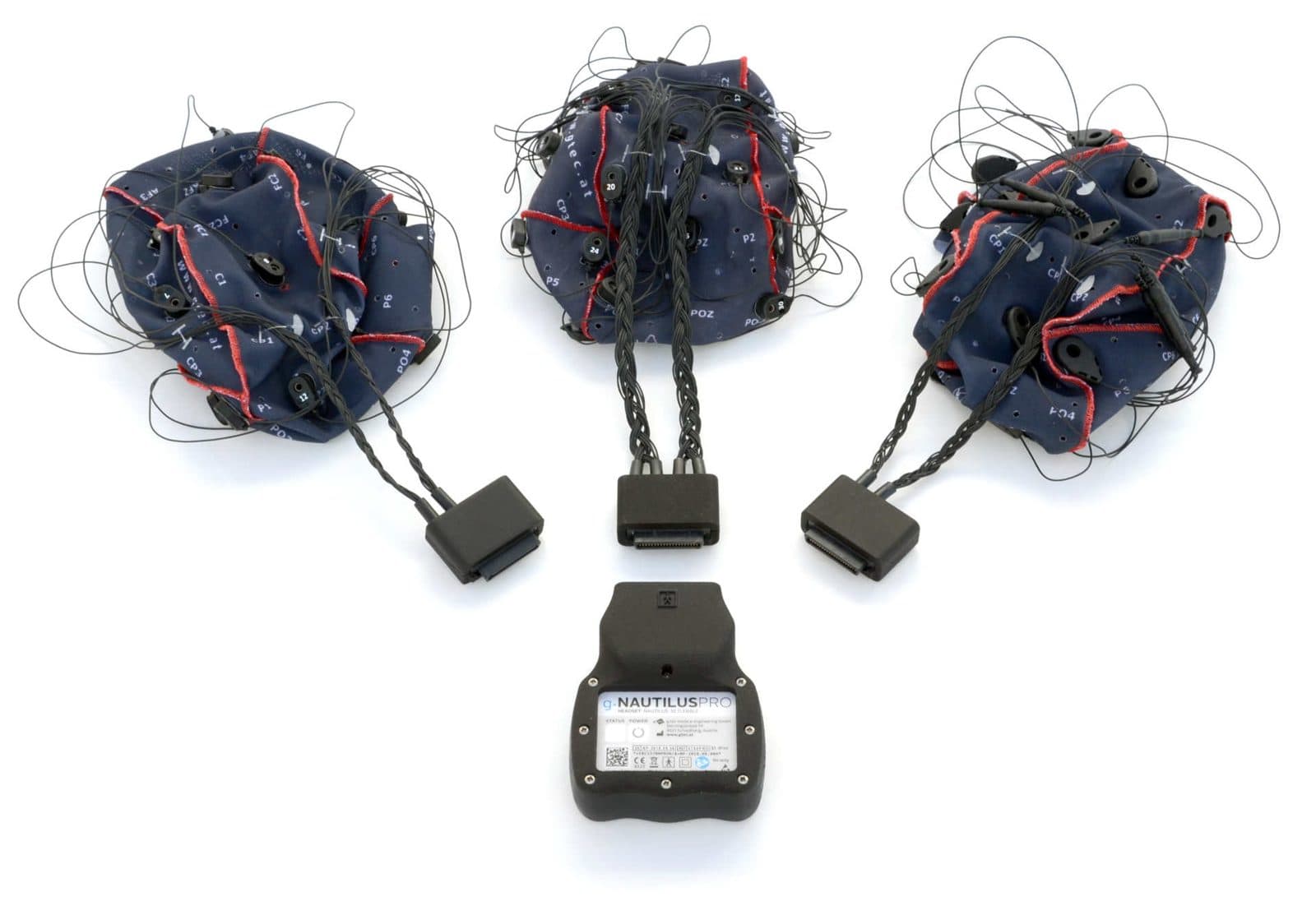
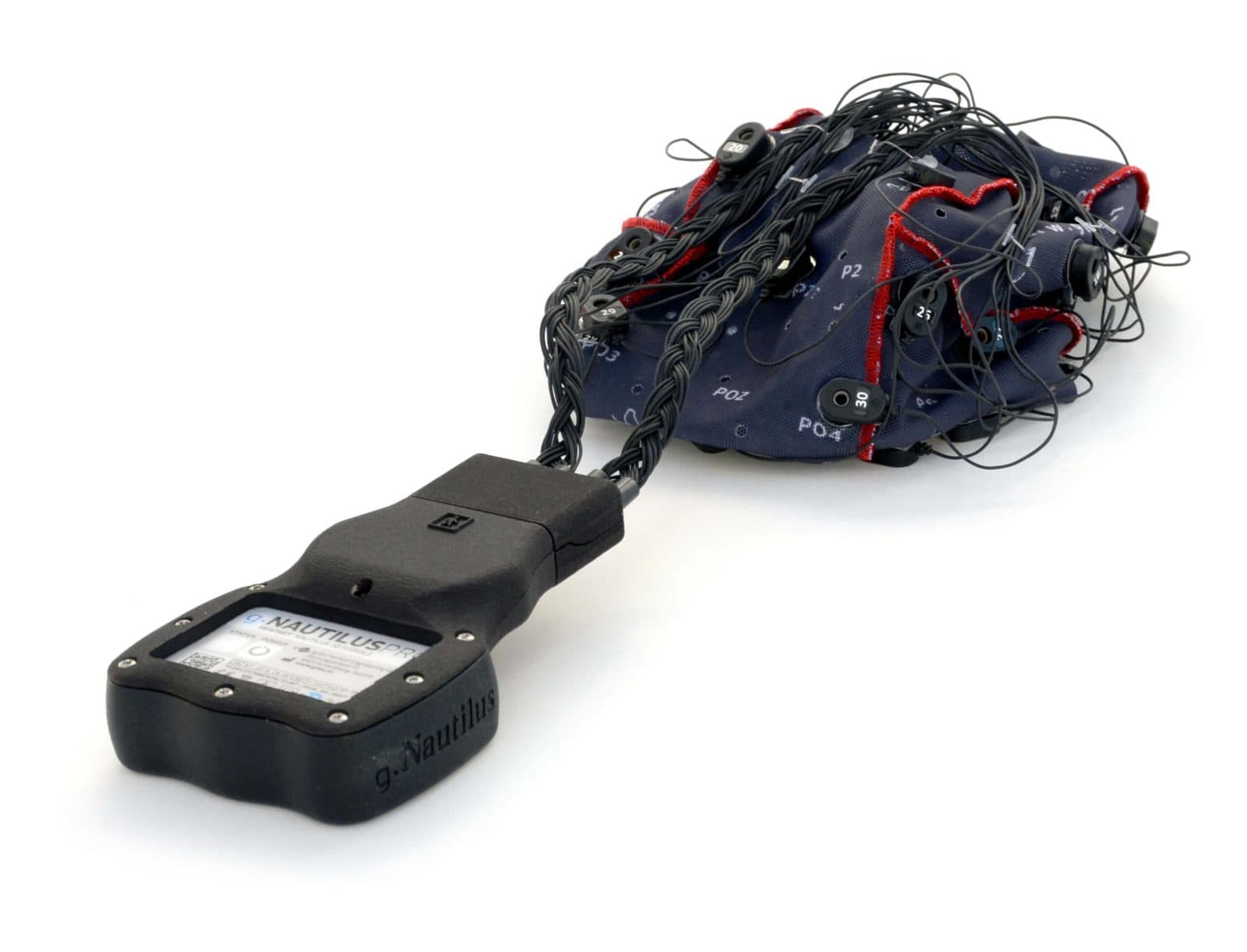
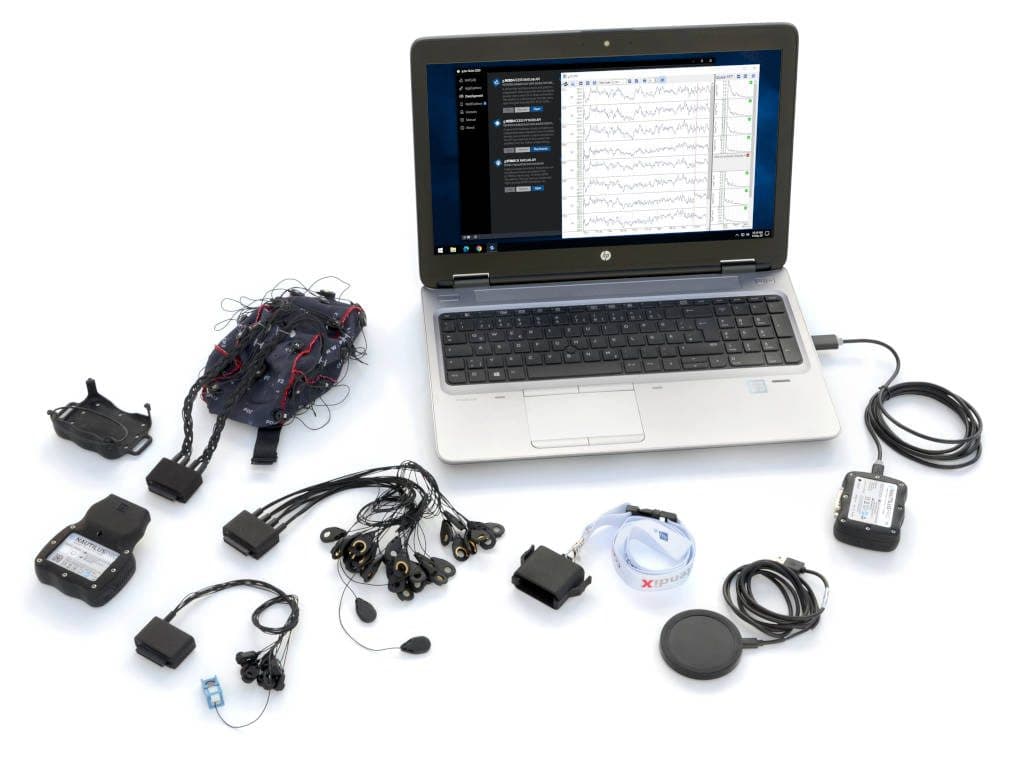
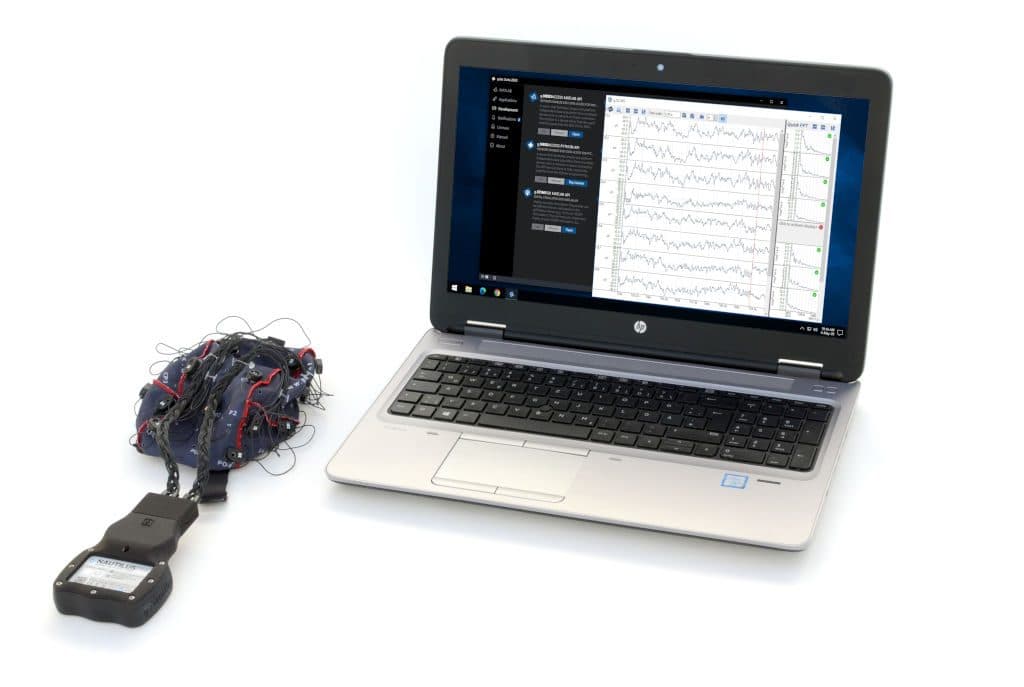
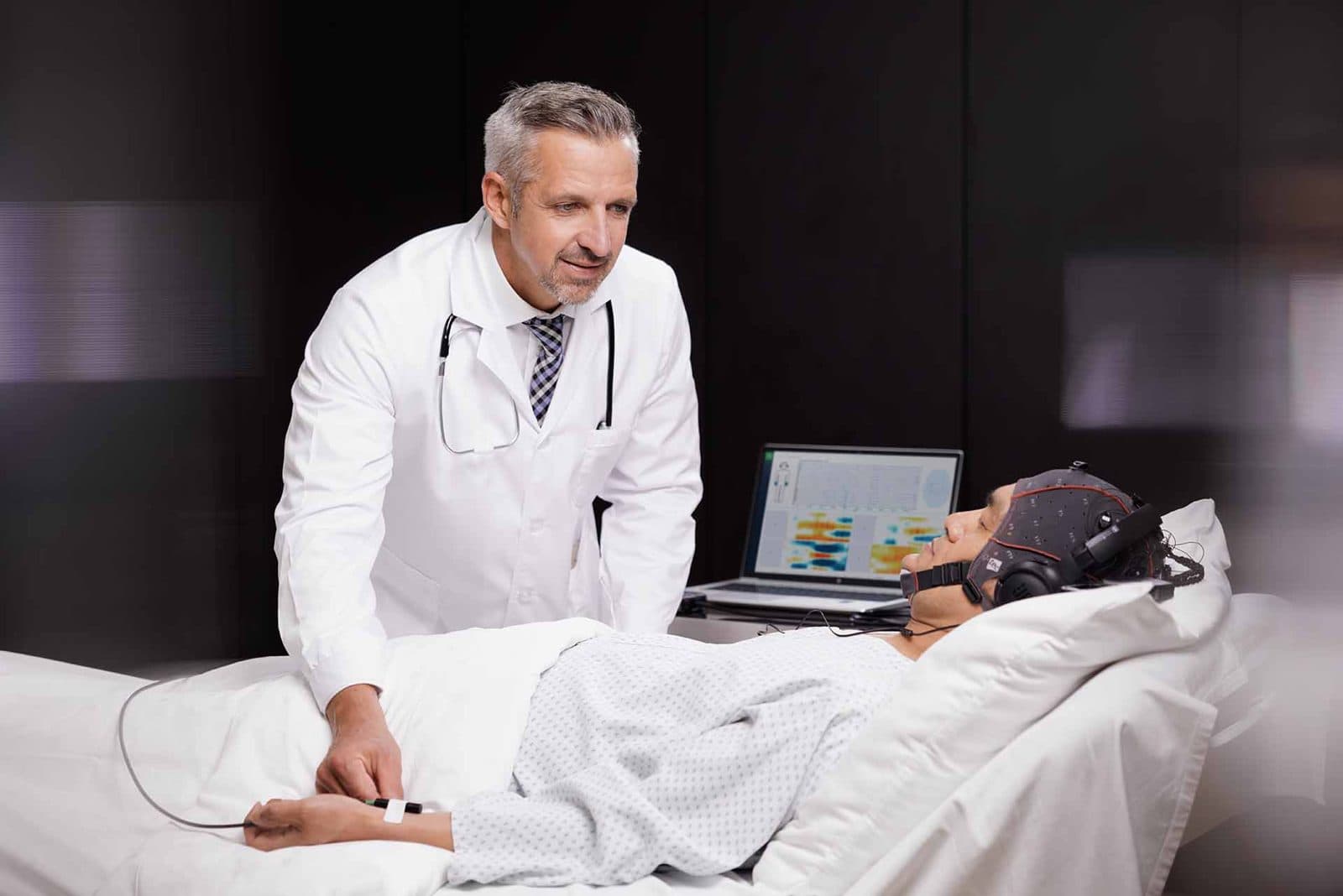
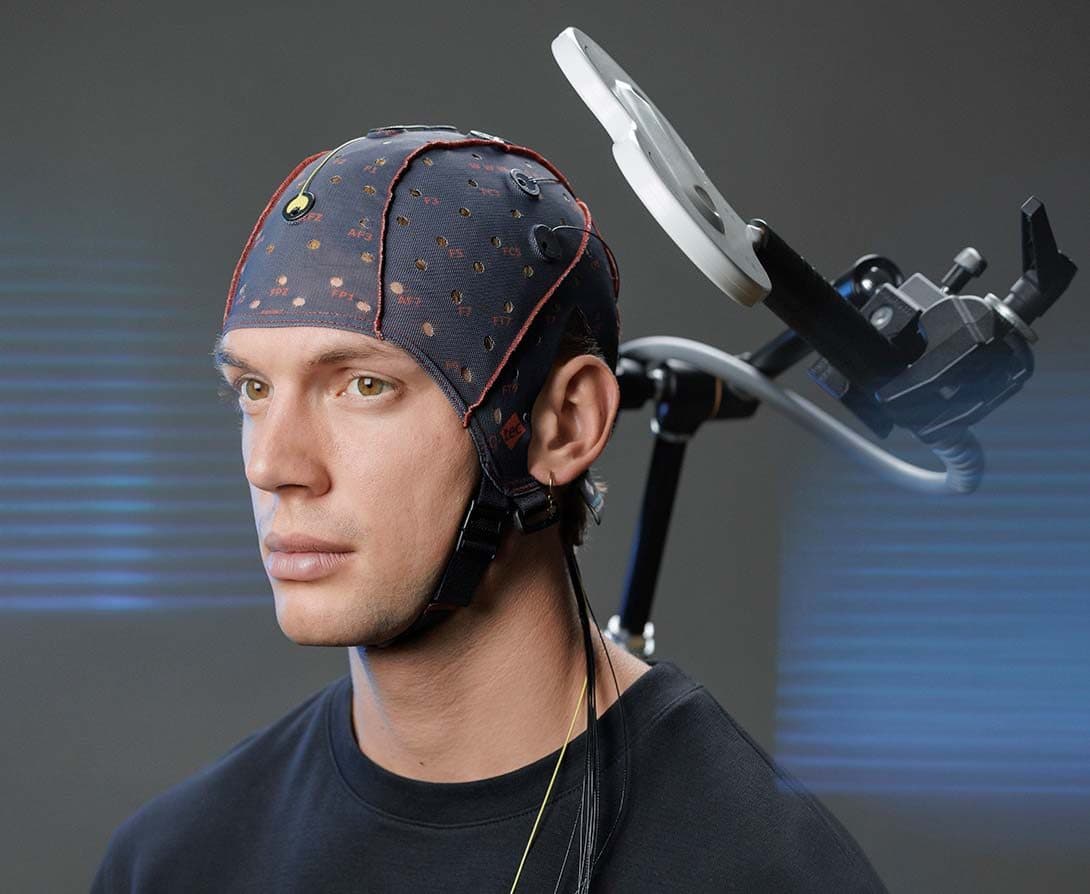
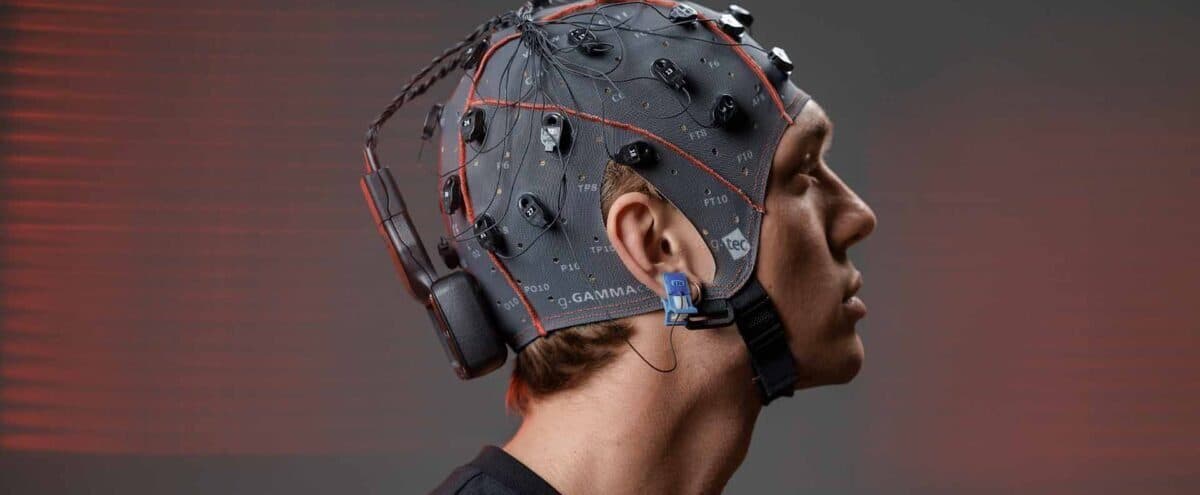
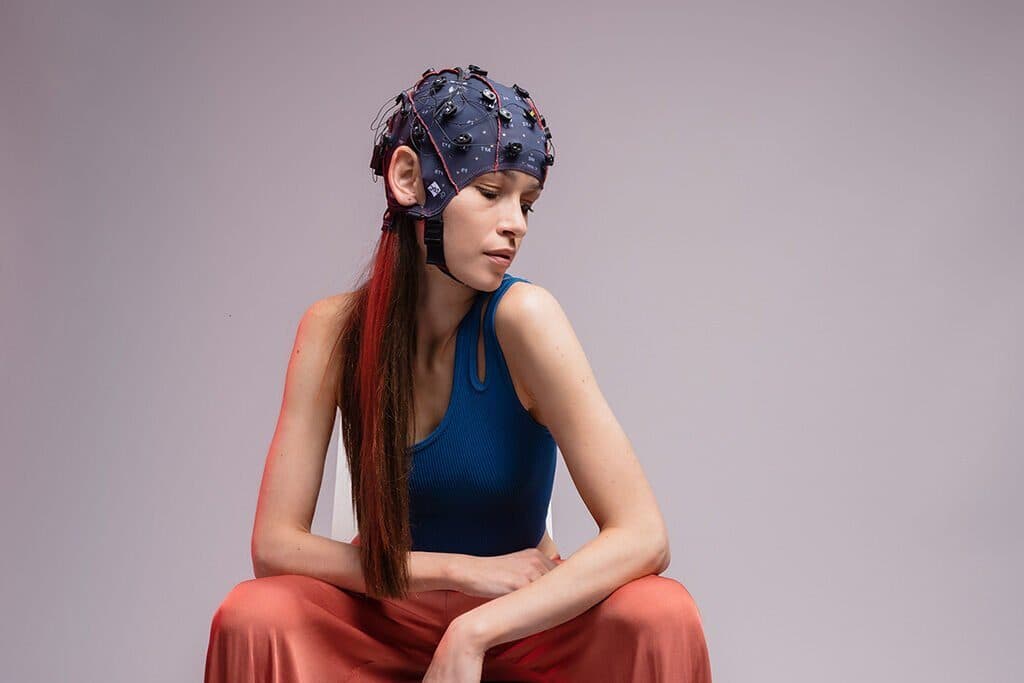
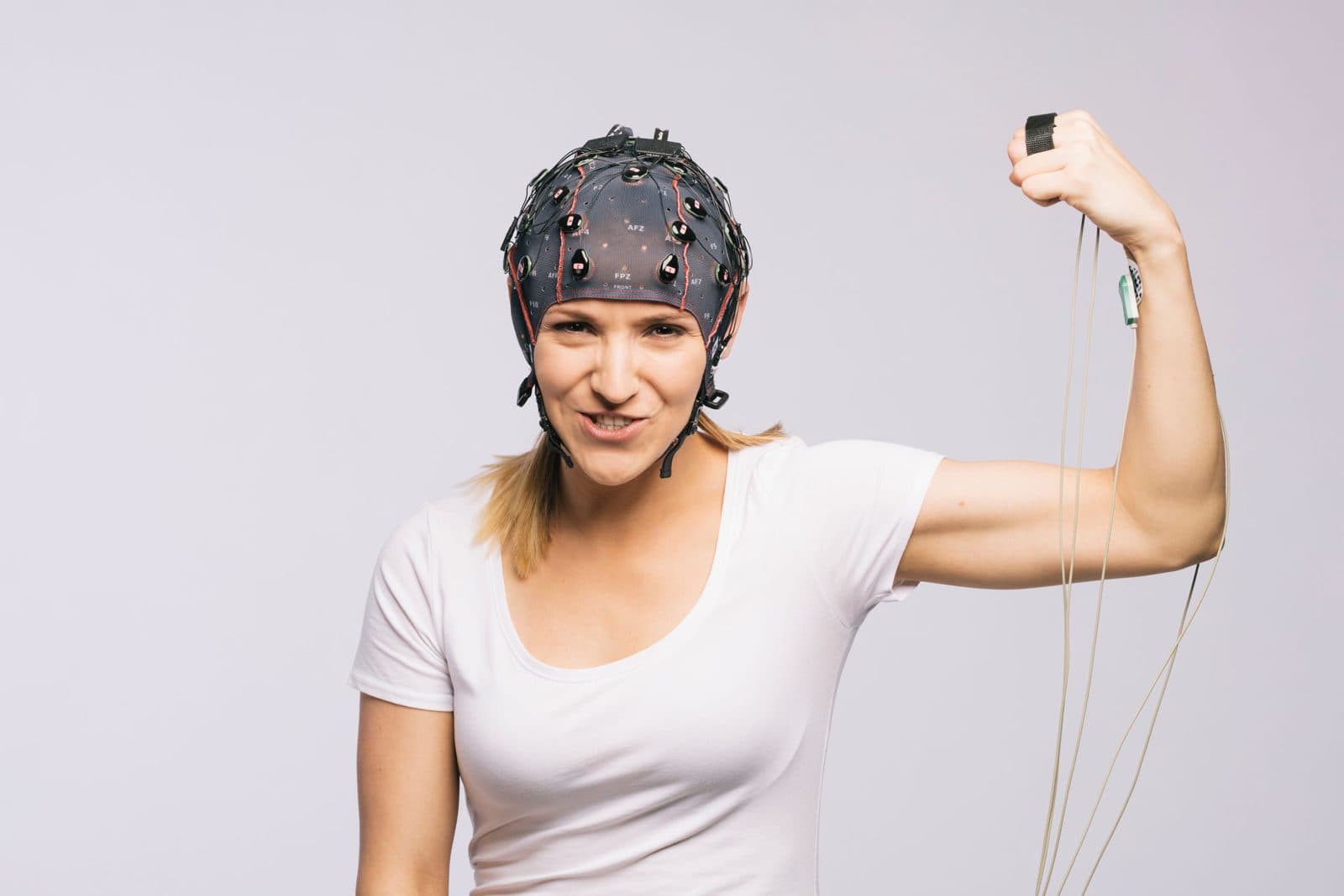
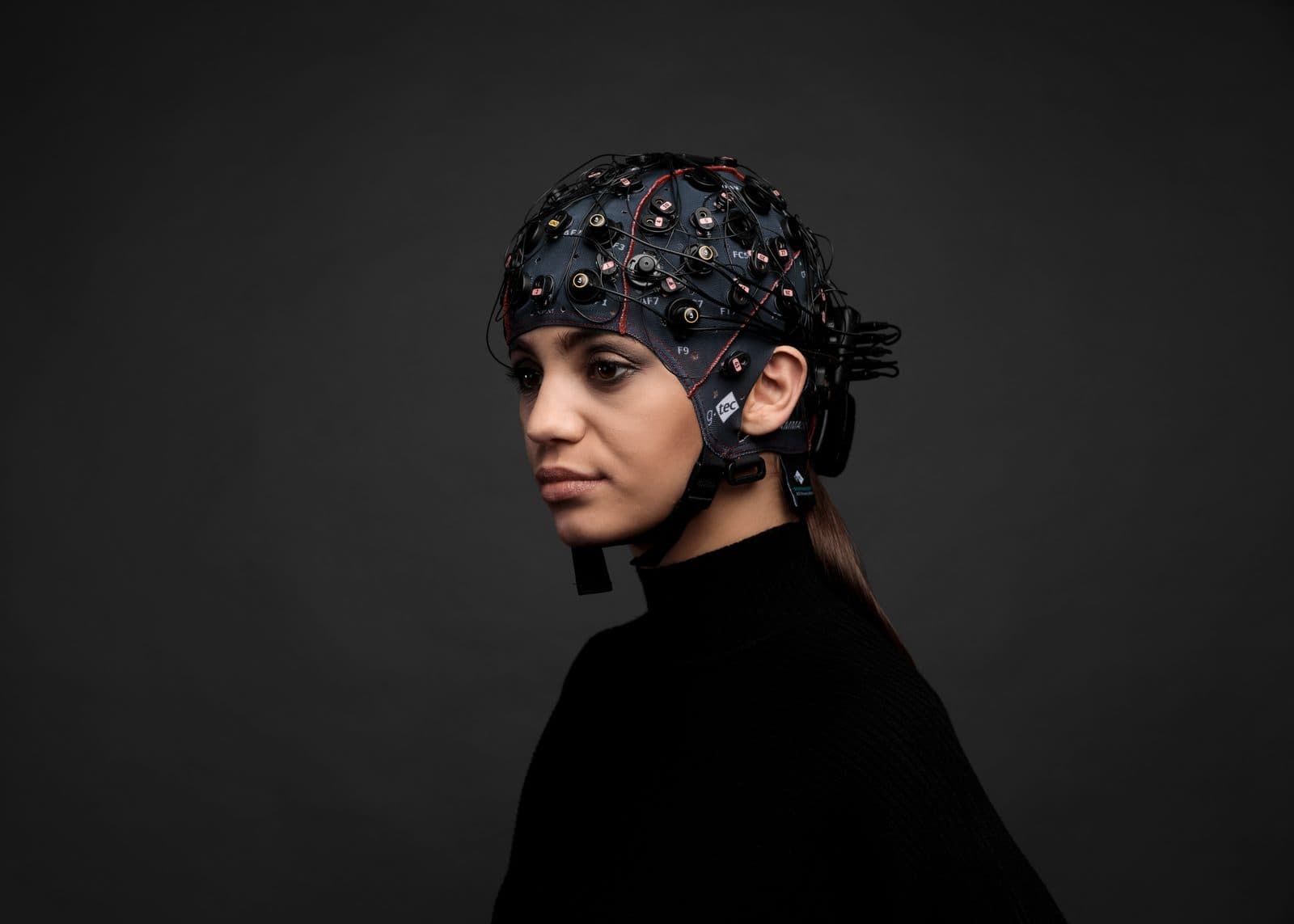
g.Nautilus Pro Flexible is a CE-marked and FDA-cleared wireless EEG headset designed for reliable recording of brain activity in medical and clinical settings. Its modular design pairs one reusable amplifier with dry or gel g.SAHARA Hybrid, wet g.SCARABEO and Safety Connector strands for additional biosignals. The strands swap within seconds on the same amplifier and are cleaned and disinfected apart from it, which makes hygiene easier and lets the same device adapt quickly to different patients, cap sizes and protocols: one device, many patients, quick set-up.
Complete electrode strands swap within seconds on the same amplifier. Clinicians choose g.SAHARA Hybrid dry electrodes, g.SCARABEO wet electrodes or Safety Connector strands for additional biosignals, as the application needs. Unlike conventional systems, the removable electrode strands are cleaned and disinfected independently of the amplifier.
Strands swap in seconds
Same amplifier
Separate cleaning and disinfection
Clinical workflows
Beyond signal acquisition, for clinical needs
Clinical EEG needs more than signal acquisition: fast patient preparation, reliable recordings, flexible electrode configurations and efficient cleaning between examinations. The system supports 8, 16, 19 or 32 channels; different electrode types are configured for different applications without changing the acquisition hardware. Removable strands simplify hygiene management and shorten turnaround between patients, which matters most in clinical settings with many recordings a day. It is a CE-marked and FDA-cleared medical device meeting IEC 60601-1 3rd edition, IEC 60601-1-2 electromagnetic compatibility, IEC 60601-2-26 for EEG devices, IEC 62304 medical software, ISO 14971 risk management, ISO 10993-1 biocompatibility and IEC 62366 usability.
8 / 16 / 19 / 32 channels
CE-marked
FDA cleared
IEC 60601-2-26
Electrode strands
Dry, wet or multimodal: five configurations
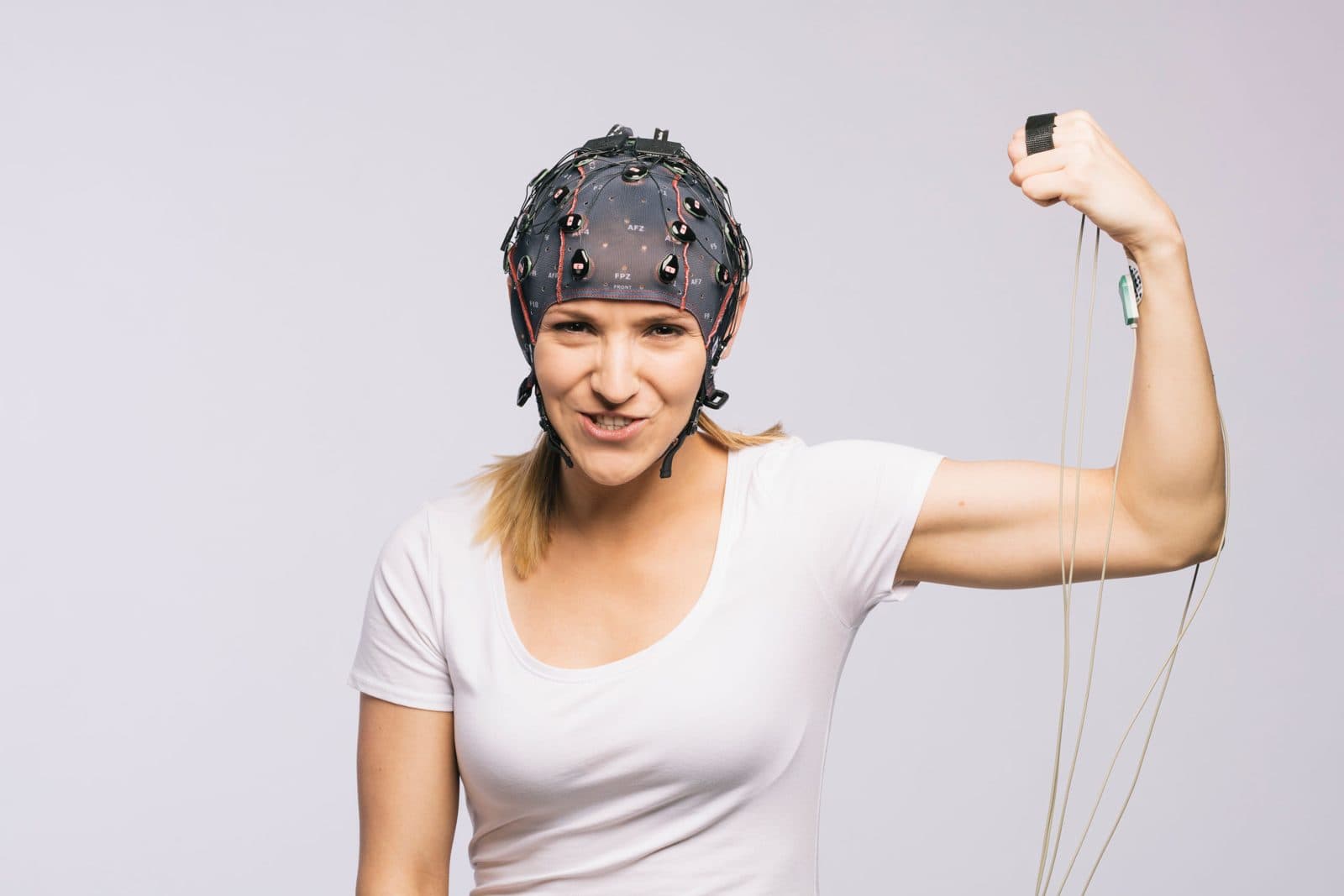
Every electrode strand carries 8, 16, 19 or 32 EEG electrodes. g.SAHARA Hybrid is a hybrid active strand used dry or with gel; it needs no hair washing and suits remote and demanding clinical conditions. g.SCARABEO is a gel-based active strand with an internal impedance check; good scalp contact gives low artefacts and high signal quality. The Safety Connector strand connects g.SCARABEO and g.SAHARA Hybrid electrodes and g.Sensors body sensors. There are five configurations: a g.SCARABEO strand; a g.SAHARA Hybrid strand; g.SCARABEO with 4 Safety Connectors; g.SAHARA Hybrid with 4 Safety Connectors; the Safety Connector module only. We can work out together which strand and configuration best fit your clinical needs.
g.SAHARA Hybrid
g.SCARABEO
Safety Connector
5 configurations
Recording performance
Wireless, light, without data loss
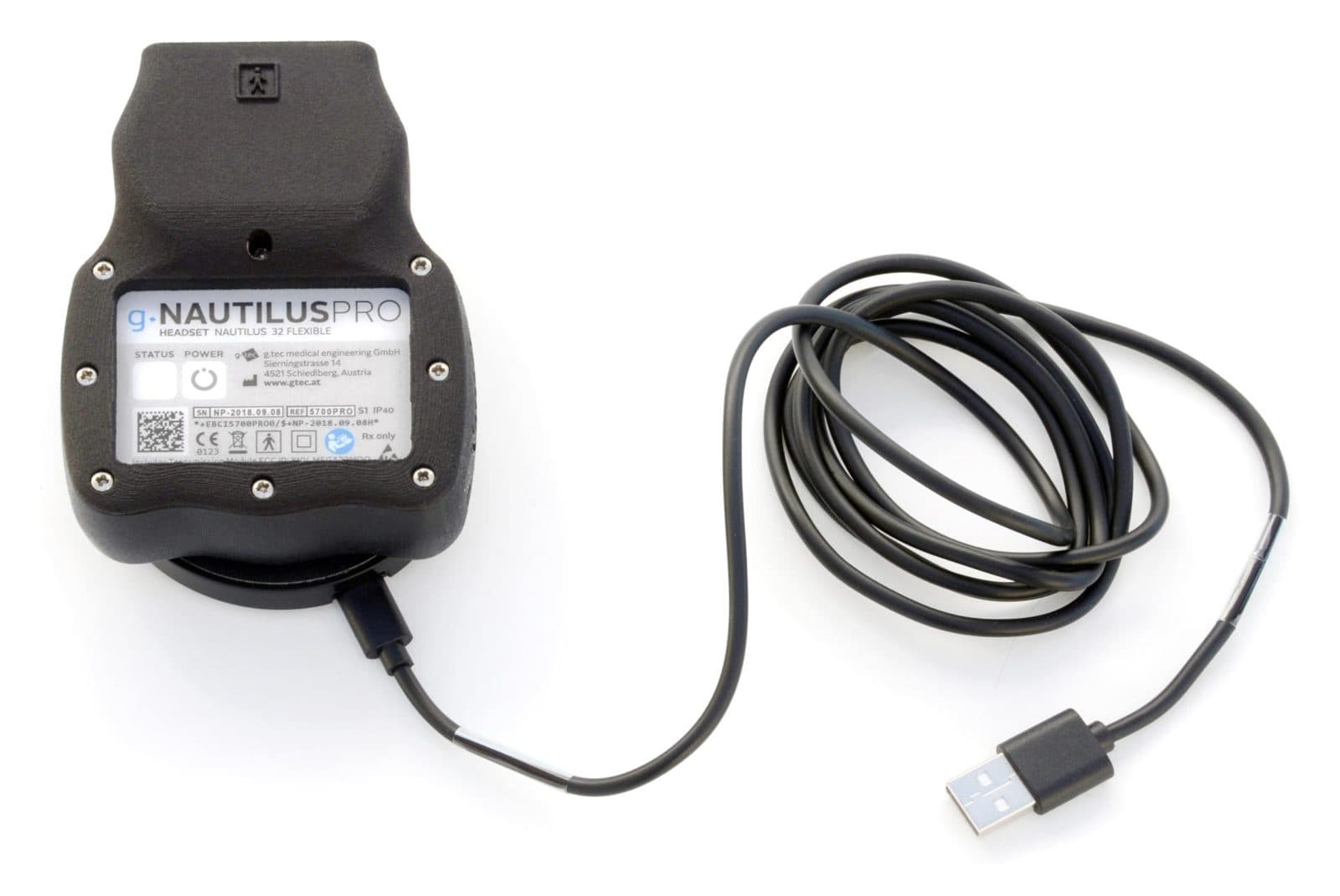
Wearable EEG headsets are becoming increasingly important in medical and clinical settings as more and more studies are conducted in the field. With g.SAHARA Hybrid or g.SCARABEO and g.LADYbird wet electrode technology, g.Nautilus Pro Flexible records at high quality without data loss. The signal travels digitally in the 2.4 GHz band, up to 10 metres indoors; a built-in 3-axis accelerometer records movement. The built-in lithium-ion battery runs for more than 10 hours with 32 channels and recharges in 2–3 hours on Qi-standard contactless inductive charging.
2.4 GHz, 10 m
> 10 hours
Qi charging
3-axis accelerometer
Software ecosystem
From recording to real-time analysis
g.Recorder records EEG, g.HIsys processes it in real time and g.BSanalyze analyses it offline, with dedicated algorithms that remove TMS and tDCS artefacts. The g.Pype SDK for Python, the g.tec Suite 2024 APIs and g.NEEDaccess, with MATLAB, Simulink, Python and Lab Streaming Layer (LSL) support, let you build custom applications. OSCAR LIVE, which corrects movement artefacts in real time, is included in g.HIsys Professional; OSCAR PRO, which corrects them offline, in g.BSanalyze Professional.
g.Recorder
g.HIsys
g.BSanalyze
g.Pype
Advanced BCI applications
Recording from several amplifiers at once
Simultaneous recording from several g.Nautilus Pro Flexible devices is essential for developing advanced BCI systems. In applications such as neuroprostheses, communication aids for people with paralysis and brain-controlled devices, it lets complex neural signals be decoded more accurately. Data from several amplifiers decode the user's intention more precisely and reliably, improving the performance, accuracy and usability of BCI technology.
Neuroprostheses
Communication aids
Brain-controlled devices
Applications
01
Multimodal physiological monitoring
The Safety Connector strand records EMG, ECG, EOG, GSR, respiration, temperature, pulse, blood pressure and other biosignals alongside the EEG. The modular design lets each study be configured without changing the amplifier.
02
Neurorehabilitation
The light wireless design reduces cable-related artefacts and lets patients move naturally during therapies such as upper-limb rehabilitation, gait training, motor imagery and brain-computer interface training. Pre-mounted g.GAMMAcaps give fast preparation and consistent electrode placement; removable strands make cleaning between therapy sessions easier. Stroke rehabilitation, motor recovery research and real-time neurorehabilitation.
03
Brain assessment in disorders of consciousness, ALS and more
Patients with disorders of consciousness, ALS, ADHD and other neurological conditions may show involuntary movements, short attention spans, fatigue or limited recording time, so fast preparation and reliable EEG acquisition are essential. Pre-mounted g.GAMMAcaps connect within seconds; the light wireless design improves patient comfort, reduces cable artefacts and makes reliable bedside assessments possible.
04
Simultaneous EEG, TMS and tDCS
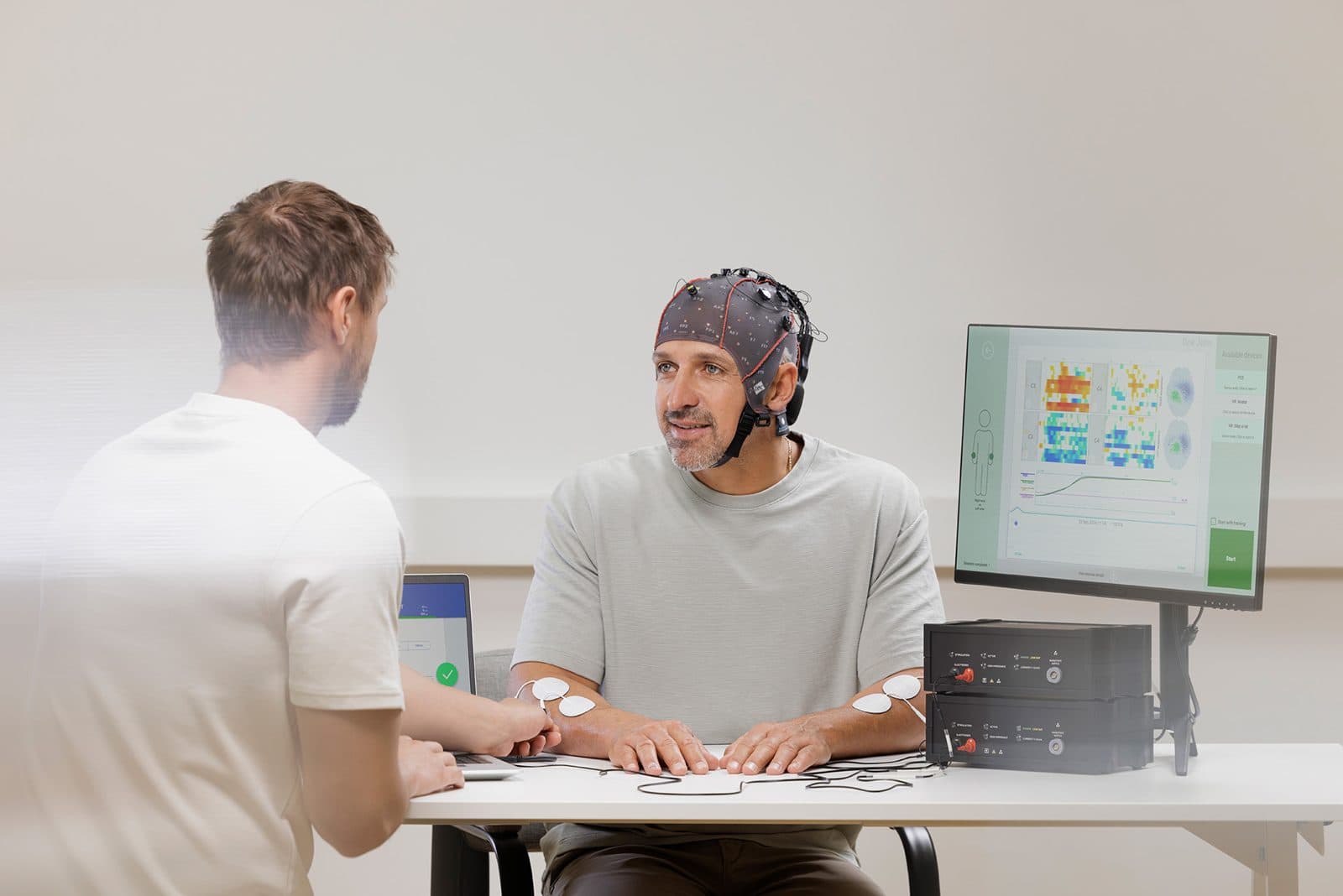
Recording EEG simultaneously with transcranial magnetic stimulation (TMS) and transcranial direct current stimulation (tDCS) lets researchers study cortical excitability, functional connectivity, neuroplasticity and the immediate effects of non-invasive brain stimulation at millisecond resolution. Dedicated algorithms in g.BSanalyze remove TMS and tDCS stimulation artefacts automatically within milliseconds.
05
Neuromarketing and audience research
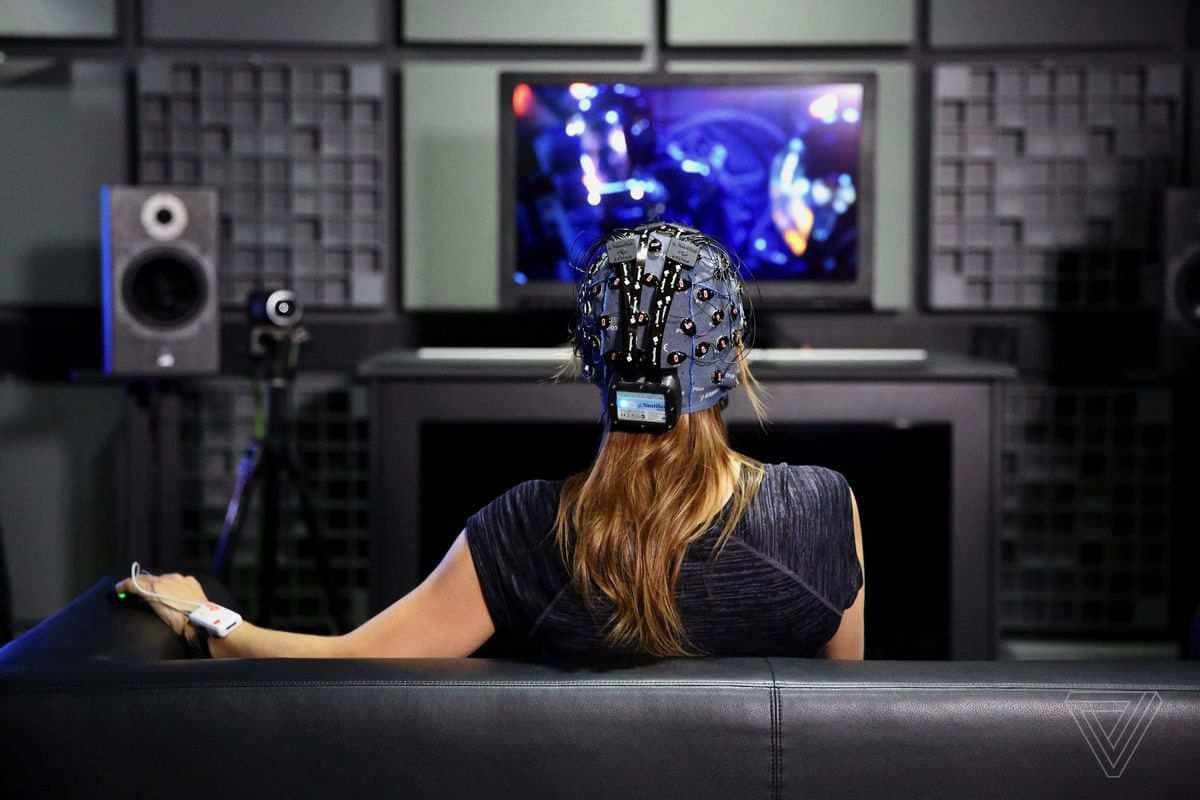
Understanding audience engagement takes objective data beyond questionnaires; EEG measures attention, emotional engagement, cognitive workload and user experience at millisecond resolution. According to g.tec, Dolby Laboratories uses g.Nautilus Pro Flexible, combining wireless EEG with heart rate and skin conductance, to study audience responses to audiovisual content.
Video
OSCAR LIVE: dry EEG in sports and high-movement recordings
OSCAR LIVE demonstrates real-time artefact correction with g.Nautilus Pro Flexible and g.SAHARA Hybrid electrodes in dry mode: during increasingly demanding exercises, 16-channel wireless EEG is recorded while strong EMG, EOG and movement artefacts affect the raw signal, and the software corrects them in real time while keeping the relevant EEG information. OSCAR LIVE is included in g.HIsys Professional; OSCAR PRO, for offline correction, in g.BSanalyze Professional.
Eyes closed, blinking, head shaking, jumping, arm raising, push-ups, handstands, running and backflips: real-time artefact correction as the movement grows more intense.
Video guide: how to clean the cap
Cleaning the cap correctly maintains clinical hygiene standards and extends the device's life. g.tec's official step-by-step guide to cleaning the EEG cap safely.
Frequently asked questions
Why is the modular design useful in clinical workflows?
The modular architecture separates the reusable wireless amplifier from interchangeable electrode strands. Each strand carries 8, 16, 19 or 32 EEG electrodes configured with g.SAHARA Hybrid dry electrodes, g.SCARABEO wet electrodes or Safety Connectors for additional physiological sensors. Clinicians disconnect one strand and attach another, so one system supports different electrode technologies, patient groups, cap sizes and multimodal set-ups. That shortens preparation, simplifies cleaning and improves efficiency across patient groups and cap sizes.
Can you switch between dry, wet and hybrid electrodes?
Yes. The system supports interchangeable g.SAHARA Hybrid, wet g.SCARABEO and Safety Connector strands; the same amplifier is combined with different electrode technologies depending on the application. The electrode strand, channel count and accessories for dry EEG, wet EEG or multimodal physiological recording are chosen when the system is configured.
Can one amplifier work with several caps?
Yes. A single g.Nautilus Pro Flexible can be combined with several g.GAMMAcaps and interchangeable electrode strands to fit different head sizes and protocols.
Is it suitable for hospitals and clinical research?
Yes. CE marking and FDA clearance support medical use in hospitals, rehabilitation centres and clinical neuroscience research that needs fast preparation, reliable recordings and efficient cleaning.
Can EEG be recorded while the patient moves?
Yes. The wireless design minimises cable artefacts, so recordings can be made during neurorehabilitation, gait analysis, motor imagery and movement-based experiments.
Does it support simultaneous EEG-TMS or EEG-tDCS?
Yes. The system supports concurrent EEG recording during TMS and tDCS; g.BSanalyze provides dedicated artefact removal algorithms for reliable post-stimulation analysis.
Can it be combined with fNIRS and other neuroimaging?
Yes. Integration with g.SENSOR fNIRS and other multimodal technologies gives synchronised recordings for neurovascular coupling and cognitive neuroscience.
Can additional physiological signals be recorded?
Yes. The Safety Connector strand records EMG, ECG, EOG, GSR, respiration, temperature, pulse, blood pressure and other signals alongside the EEG.
Which clinical applications is it designed for?
Neurorehabilitation, disorders of consciousness, ALS, epilepsy research, ADHD, brain-computer interfaces, EEG-TMS, EEG-fNIRS, cognitive neuroscience, human factors and clinical brain monitoring.
Can custom applications be developed?
Yes. Integration with g.Pype, g.HIsys, g.tec Suite 2024, g.Recorder and g.BSanalyze supports custom acquisition, processing, machine learning and brain-computer interface applications.
Why is it well suited to neurorehabilitation?
The wireless design lets patients move naturally and reduces cable artefacts; pre-mounted caps make preparation quick, and interchangeable electrode strands keep the daily workflow efficient.
How does it compare with conventional clinical EEG systems?
Its modular architecture with interchangeable dry, wet and multimodal strands shortens preparation, simplifies cleaning, adapts to different workflows and gives hospitals and rehabilitation centres a flexible platform.
Talk to our team about device selection, protocol design, installation and software integration. We will work out the technical configuration that best fits your research or clinical goal.