g.tecmedicalengineering · Amplifiers and electrodes
g.Pangolin
Ultra-high-density EEG / EMG / ECG
Conventional EEG, EMG and ECG systems are limited in spatial resolution. g.Pangolin's flexible, ultra-high-density electrode grids scale with g.HIamp to up to 1,024 synchronised channels: an 8.6 mm centre-to-centre electrode distance, 24-bit resolution and sampling up to 38.4 kHz per channel, for brain mapping, source localisation, neural decoding, motor control and cardiac electrophysiology.
Ultra-high-density EEG, EMG and ECG recording platform
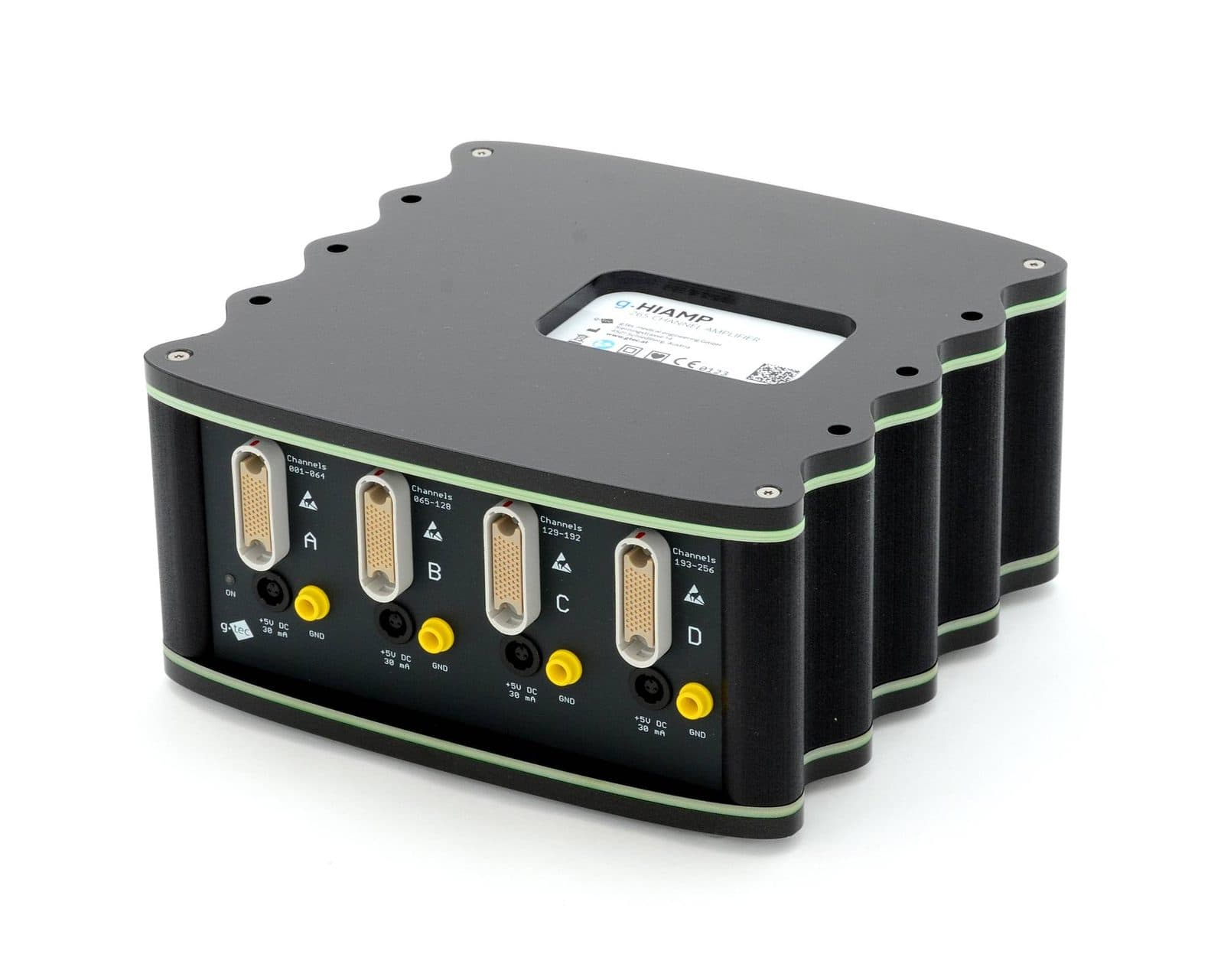
Up to 1,024 synchronised recording channels with four g.HIamp
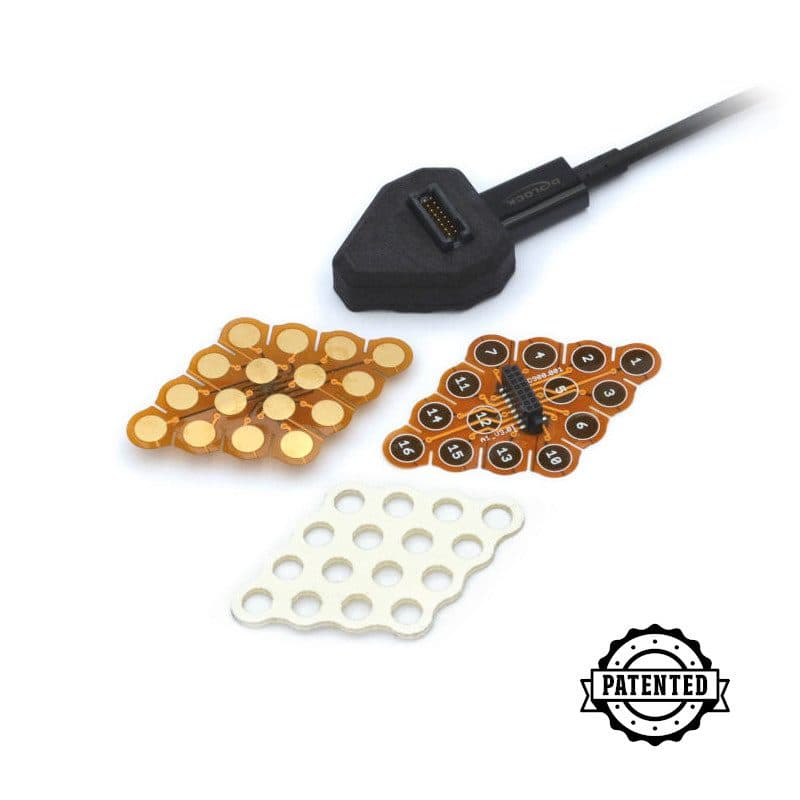
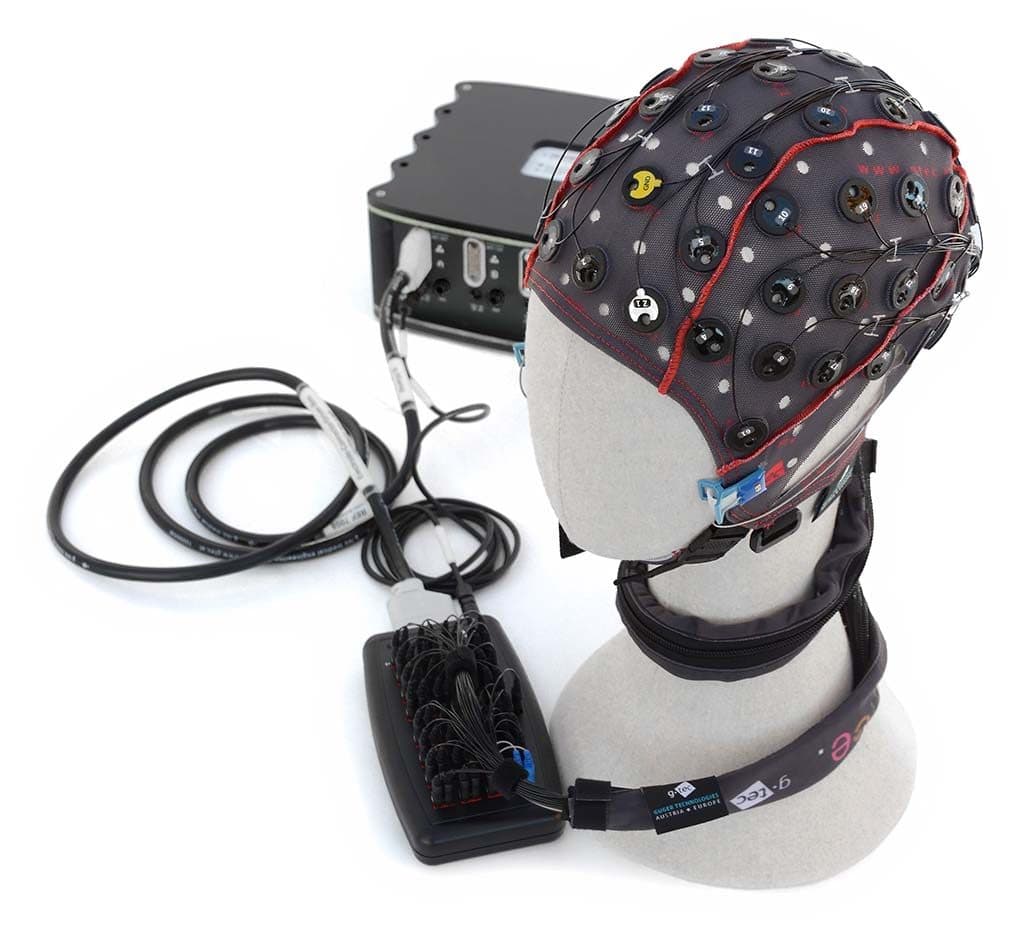
Flexible 16-channel active electrode grids with integrated headstage amplifiers
24-bit resolution, sampling up to 38.4 kHz per channel
8.6 mm centre-to-centre electrode spacing for reproducible high-density recordings
Optimised for brain mapping, source localisation, neural decoding and high-density physiology
Active electrode technology for excellent signal quality and low noise
Rapid placement with adhesive electrode grids
Real-time acquisition, visualisation and processing with g.HIsys
Modular, scalable architecture for custom recording layouts
Technical specifications
Recording modalities
EEG, EMG, ECG and other biopotentials
Amplifier
g.HIamp
Max. channels
Up to 1,024 (configurations of 16 – 1,024 channels)
Electrode grid
16 active electrodes, polygonal
Resolution
24 bit
Sampling rate
Up to 38.4 kHz per channel
Electrode spacing
8.6 mm, centre to centre
Electrode diameter
5.9 mm
Electrode technology
Active wet electrodes
Headstage gain
10×
High-pass filter
0.2 Hz
Input voltage range
±300 mV
Input impedance
> 100 MΩ
Power supply
5 V, battery-powered
Software
g.HIsys
Applied part
BF
Safety class
II
Spatial resolution
Beyond the limits of conventional EEG
Conventional EEG, EMG and ECG systems are limited by their spatial resolution. g.Pangolin's flexible, ultra-high-density electrode grids enable scalable recordings with unprecedented spatial detail. In the precisely made 16-channel grids the electrodes are 8.6 mm apart, centre to centre; with four 256-channel g.HIamp, up to 1,024 channels are recorded simultaneously. Recent studies show that ultra-high-density EEG improves brain mapping, functional localisation and neural decoding, and captures cortical activity patterns conventional EEG often misses.
8.6 mm spacing
1,024 channels
Brain mapping
Neural decoding
Technology
Flexible grids, active headstages
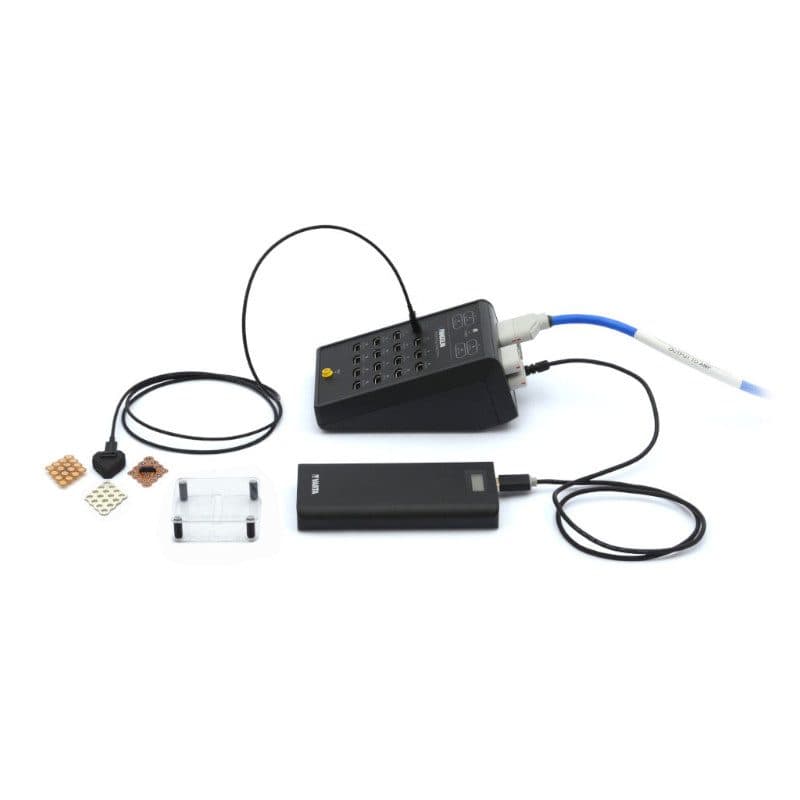
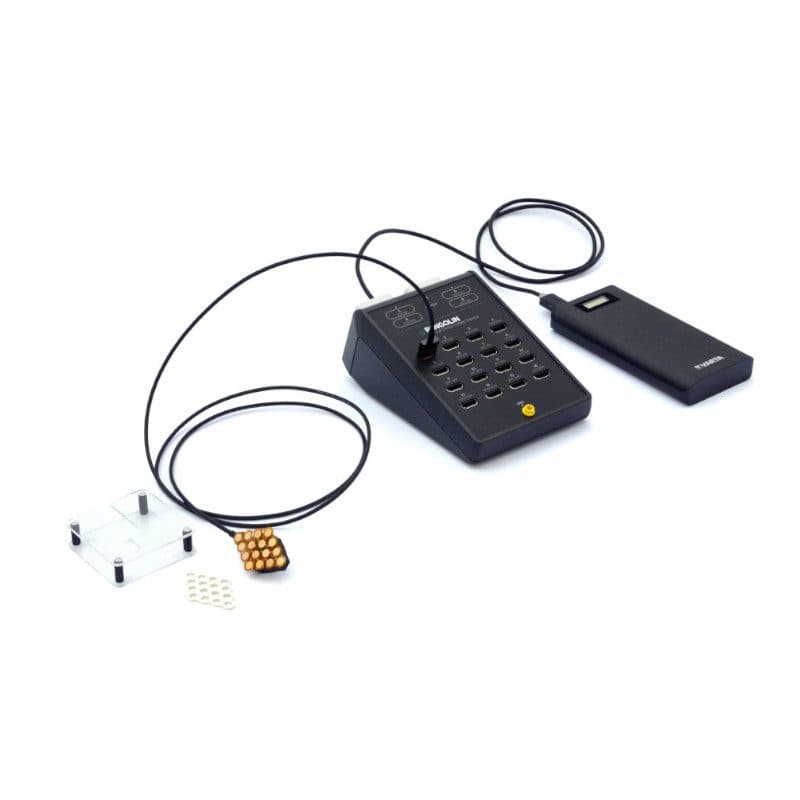
g.Pangolin consists of flexible EEG grids with 16 electrodes each. The grids connect through active headstages to g.HIamp biosignal amplifiers, recording from hundreds to over 1,000 synchronised channels with high signal quality and precise timing. Real-time processing, machine learning, closed-loop experiments, multimodal recordings and advanced source localisation are supported.
16 electrodes per grid
Active headstage
Closed loop
Source localisation
Existing studies
Reproduce and extend earlier EEG studies
Almost every neuroscience lab has decades of paradigms built on 10-20, 10-10 or high-density EEG. g.Pangolin lets researchers run those established experiments again with ultra-high-density recording: earlier findings are validated directly, conventional and ultra-high-density EEG are compared, and researchers can test whether denser spatial sampling reveals cortical activity that traditional layouts cannot see. It extends existing workflows with much higher spatial resolution rather than replacing them.
P300 · SSVEP · motor imagery
Compared with 10-20 / 10-10
High-density ECG
For cardiovascular research
Conventional ECG gives a limited view of the heart's electrical activity. g.Pangolin increases the spatial sampling of ECG signals for detailed studies of cardiac electrophysiology, autonomic regulation, heart-brain interactions, stress responses and human performance. Flexible 16-channel grids give reproducible high-density placement; with g.HIamp, 24-bit resolution and precise hardware synchronisation scale from a single grid to hundreds of channels.
Cardiac electrophysiology
Heart-brain interaction
Stress responses
High-density EMG
For human movement research
Understanding movement requires measuring both neural and muscular activity. g.Pangolin captures activation patterns across large muscle areas at a spatial resolution traditional EMG electrodes cannot reach; with g.HIamp, EMG and EEG are recorded in sync, so brain and muscle activity are studied together during complex tasks. For studies of motor planning, movement execution, muscle coordination, fatigue, rehabilitation and neurotechnology.
Motor control
Rehabilitation
Neuromuscular disorders
BCI
Software
An end-to-end research ecosystem
With g.HIamp and g.tec's software, g.Pangolin supports end-to-end workflows from synchronised acquisition to source localisation, machine learning and BCI development: 1,024 synchronised channels, real-time closed-loop experiments, hardware synchronisation with external devices, Python and MATLAB, Lab Streaming Layer (LSL) and offline analysis. Surface Activity Scope 3D in g.HIsys projects ultra-high-density EEG onto a realistic three-dimensional head model in real time. Studies grow from proof of concept to large-scale experiments without changing hardware or software.
g.tec Suite 2024
g.Recorder
g.HIsys
g.BSanalyze
g.Pype
Simulink · LSL
Wearable neurotechnology
The Pangolin Scales dress
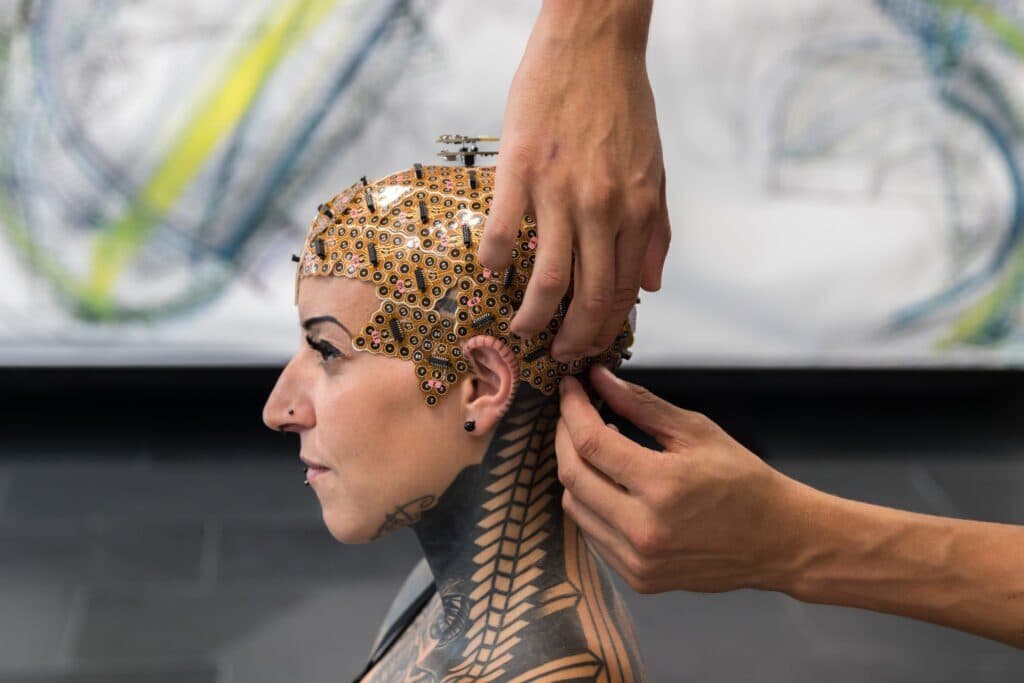
Created with fashion-tech designer Anouk Wipprecht, the Pangolin Scales dress is, according to g.tec, the first 1,024-channel brain-computer interface built into an interactive garment. It shows how flexible ultra-high-density electrode arrays conform to complex surfaces while keeping precise electrode spacing and synchronised recording: for wearable neurotechnology, smart textiles and human-computer interaction.
1,024-channel BCI
Anouk Wipprecht
Smart textiles
Applications
Research
01
The central sulcus at 95.2% accuracy
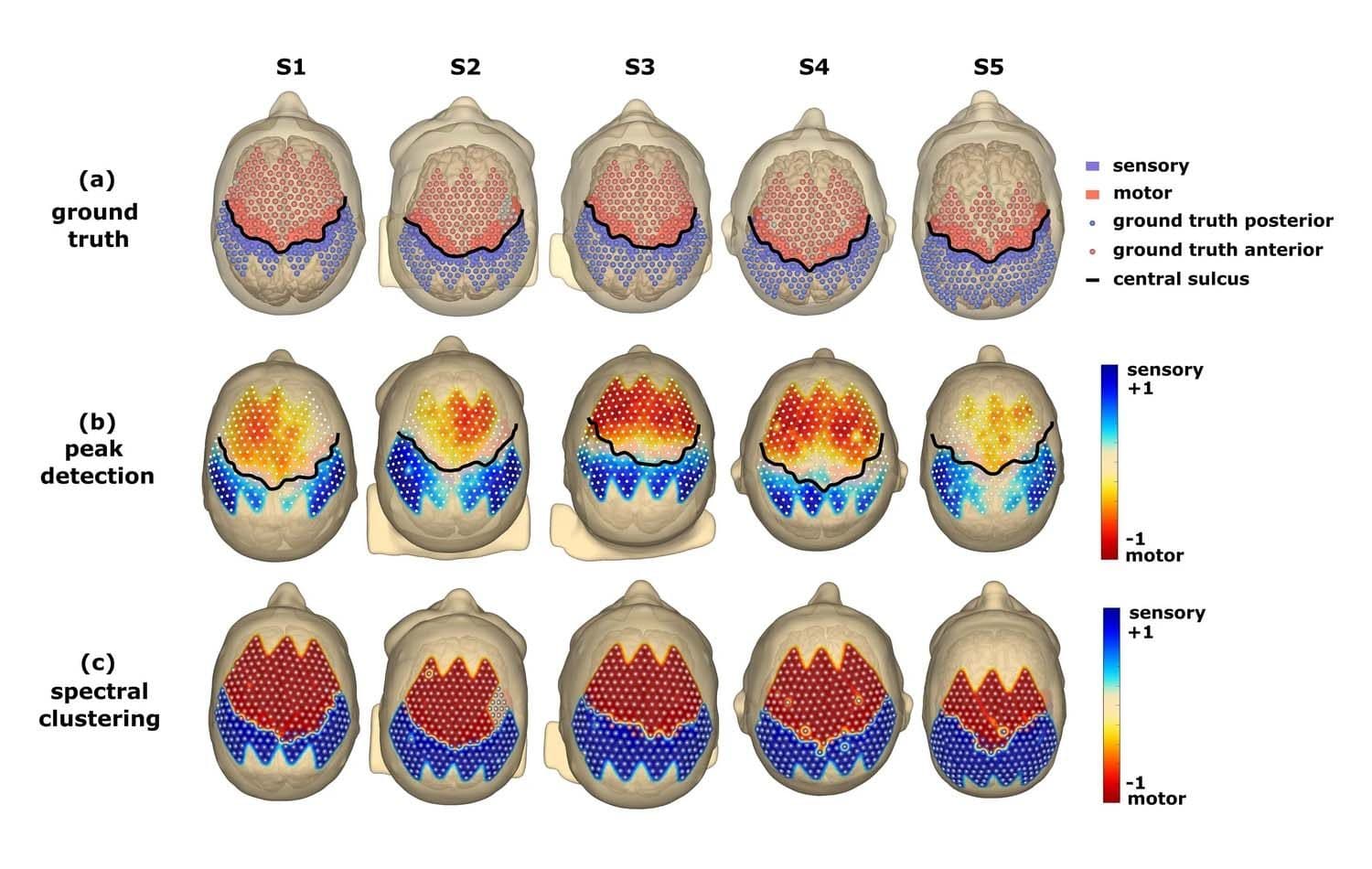
With 256-channel g.Pangolin recordings at 8.6 mm spacing and somatosensory evoked potentials, the central sulcus was localised with 95.2% accuracy, clearly separating motor from somatosensory cortical activity. That precision had previously needed invasive cortical recordings.
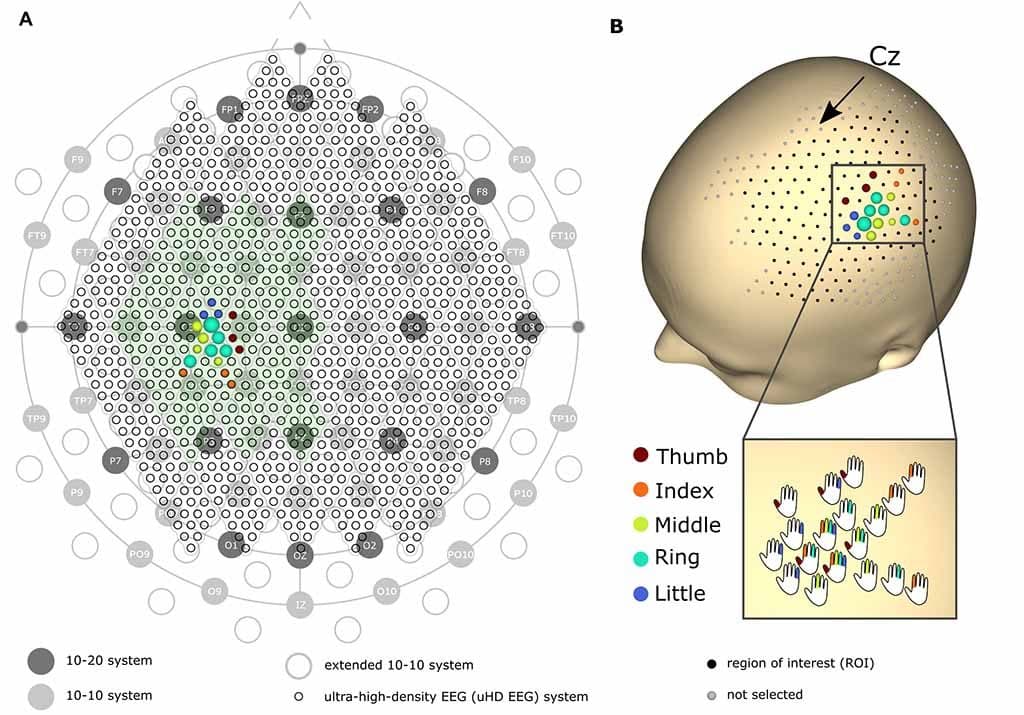
Conventional EEG struggles to tell apart the cortical representation of individual fingers. With 256 recording channels, researchers decoded finger movements and showed focused cortical activation patterns largely invisible to conventional EEG: a foundation for fine motor BCIs, neuroprosthetics and rehabilitation.
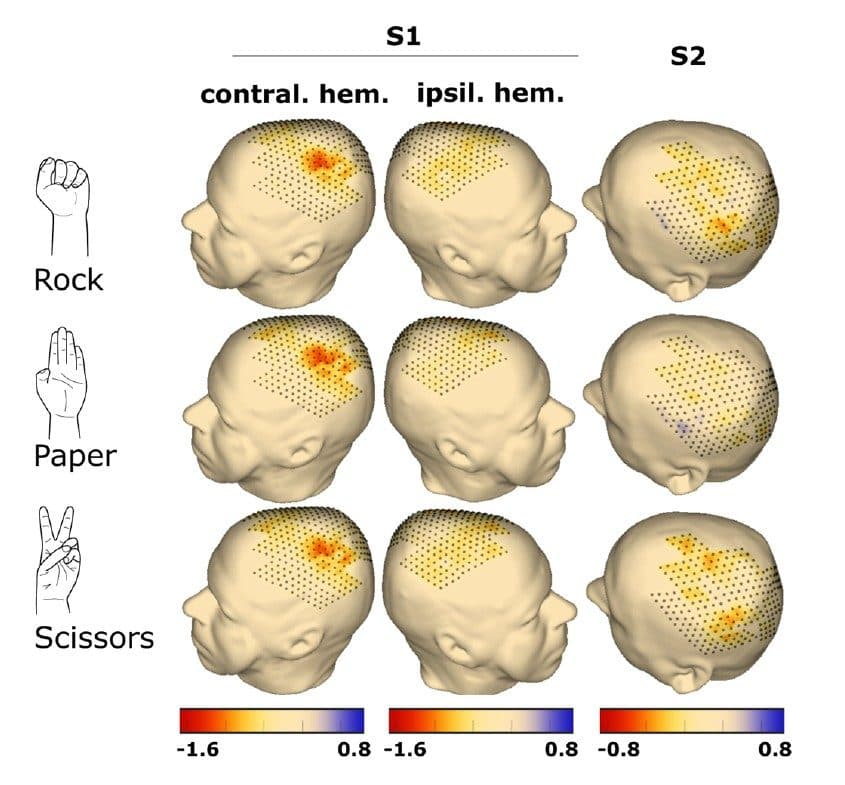
Ultra-high-density EEG improved the classification of hand gestures (rock, paper, scissors) over a conventional 10-10 layout and revealed detailed spatiotemporal activation patterns across the sensorimotor cortex.
04
High-resolution visual cortex mapping
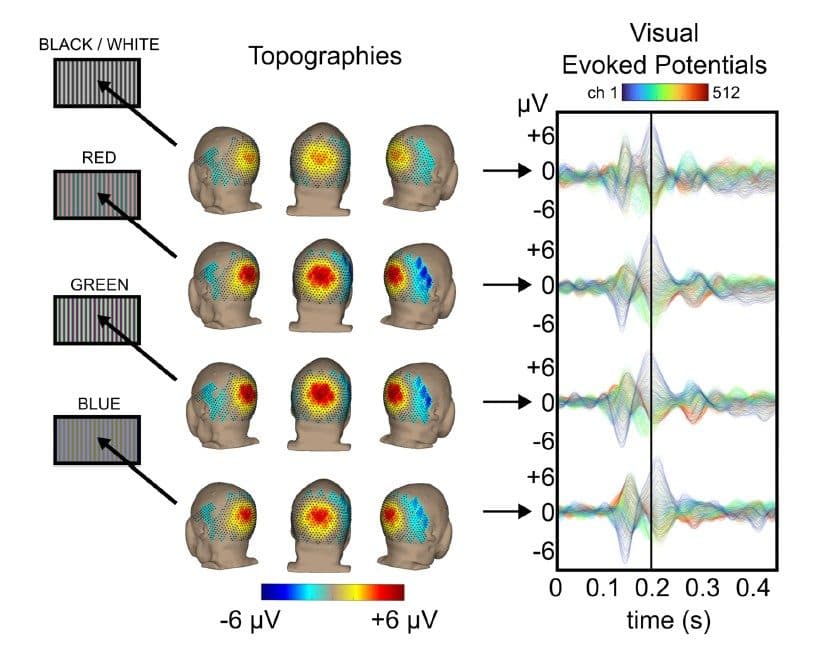
With 512 recording channels over the occipital cortex, visual stimuli were decoded and distinct cortical activation patterns were found for different colours; denser spatial sampling revealed features of visual processing that are hard to see with conventional EEG.
05
Simultaneous ultra-high-density EEG and EMG
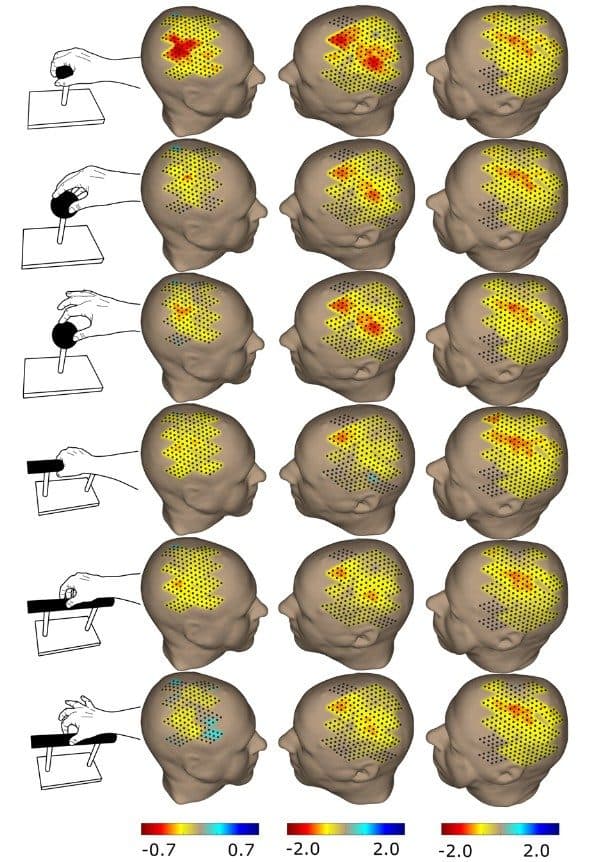
Hundreds of EEG and EMG channels in one synchronised system were used to study how brain activation relates to muscle recruitment during complex grasping tasks: for motor control, neuromuscular coordination, rehabilitation and prosthetics.
06
Decoding speech
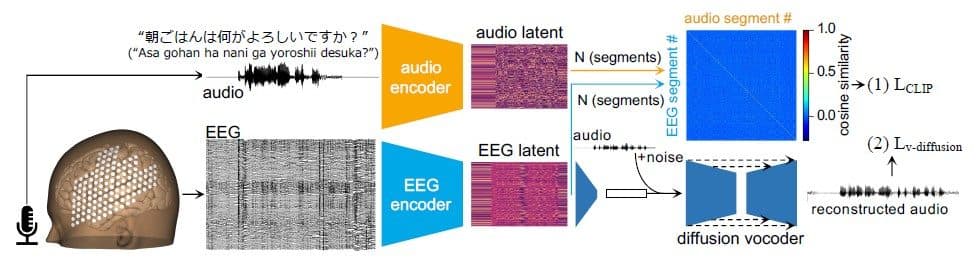
Decoding speech is one of the biggest challenges for non-invasive BCIs. A large-scale study with 175 hours of EEG showed speech decoding improving as more data became available; the spatial resolution of ultra-high-density EEG captures richer cortical information during speech production and perception.
Video
Assembling 512 EEG channels
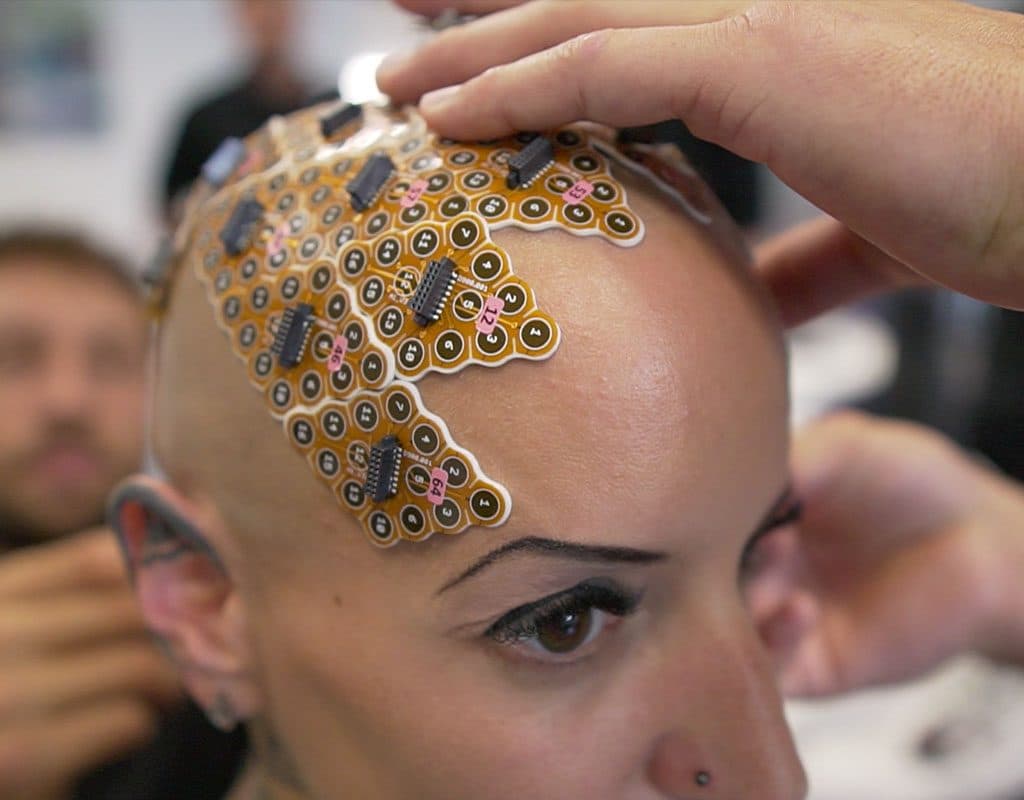
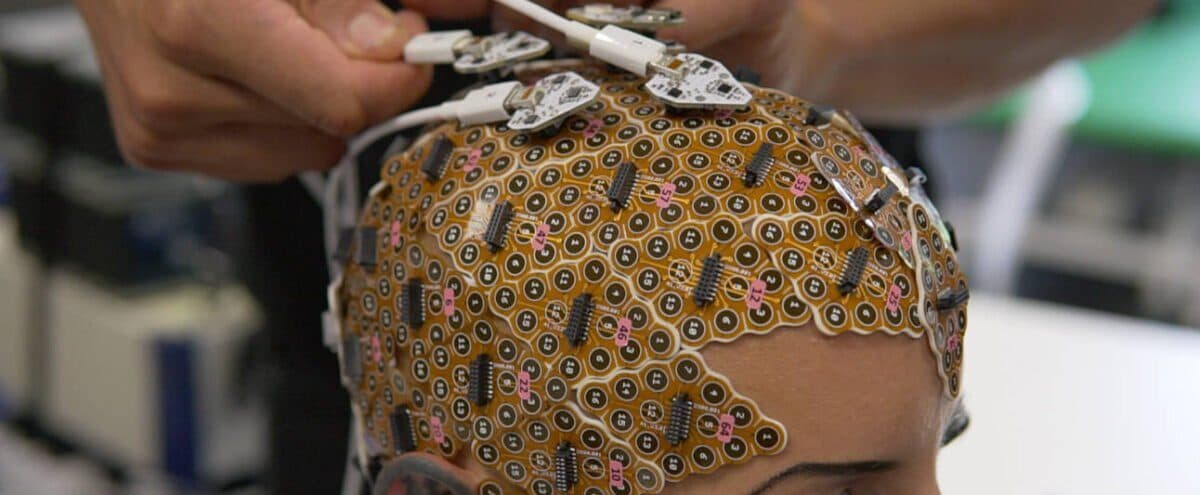
Twenty-five years ago, setting up a 64-channel EEG took 60 minutes; with 512 passive electrodes it would be an 8-hour ordeal. With the g.Pangolin uHD-EEG system, 512 channels are set up in 30 minutes. Small grid electrodes 8.6 mm apart, centre to centre, record at exceptionally high spatial resolution, so any EEG experiment can be repeated at higher resolution.
g.tec's video of a g.Pangolin ultra-high-density EEG experiment.
How to record EEG with 1,024 channels
g.Pangolin is designed for ultra-high-density recordings of EEG, EMG, ECG and other body signals. Precise electrode distances and small contact areas give an unmatched spatial density for advanced source localisation. With g.HIamp and g.HIsys, up to 1,024 channels are acquired, visualised and processed in real time: a powerful tool for non-invasive functional source imaging, online and offline.
g.tec's video on recording 1,024 channels with g.Pangolin.
Up close
Frequently asked questions
What is ultra-high-density EEG?
Ultra-high-density EEG (uHD-EEG) increases the spatial sampling of the brain's electrical activity by using closely spaced electrodes instead of conventional 10-20 or 10-10 layouts. The higher electrode density improves source localisation, cortical mapping, neural decoding and the visualisation of localised brain activity, while keeping EEG non-invasive.
Why ultra-high-density EEG instead of a conventional EEG cap?
Conventional EEG systems with 32, 64 or 128 channels give enough temporal resolution but limited spatial sampling. g.Pangolin's flexible grids, with an 8.6 mm centre-to-centre electrode distance, capture much more spatial information. That improves inverse modelling, functional source imaging, cortical localisation and decoding accuracy in many applications.
How many recording channels does g.Pangolin support?
Each g.Pangolin grid holds 16 active electrodes. Several grids are combined and synchronised with g.HIamp; with four 256-channel g.HIamp, up to 1,024 simultaneously sampled EEG, EMG or ECG channels are recorded in one synchronised system.
Can I repeat my existing EEG studies with g.Pangolin?
Yes. Conventional paradigms such as P300, SSVEP, motor imagery, ERP, resting-state EEG, sleep research and cognitive neuroscience can be repeated with g.Pangolin. Results are compared directly with earlier studies while testing whether ultra-high-density recording reveals more cortical information or improves decoding performance.
Which amplifier is required?
g.Pangolin is designed for the g.HIamp biosignal amplifier platform. Its scalable architecture lets several amplifiers work as one synchronised system: from a single 16-channel grid to 1,024 simultaneously sampled channels.
Has g.Pangolin been scientifically validated?
Yes. g.Pangolin has been used in peer-reviewed publications showing high-resolution brain mapping, central sulcus localisation, decoding of individual finger movements, hand gesture classification, visual cortex mapping and simultaneous ultra-high-density EEG and EMG recordings.
Why is 3D visualisation useful for ultra-high-density EEG?
As channel counts grow from dozens to hundreds or thousands, reading individual EEG traces gets harder. Surface Activity Scope 3D turns synchronised electrode recordings into intuitive cortical activity maps, making it easier to find localised activation, compare the hemispheres' responses and follow brain activity over time.
What is g.Pangolin Surface Activity Scope 3D?
A visualisation module in g.HIsys that projects ultra-high-density EEG activity directly onto a realistic three-dimensional head model. Researchers watch the spatial distribution of cortical activity in real time rather than conventional EEG traces, which makes activation patterns easier to read during experiments and BCI studies.
Can I view 256, 512 or 1,024 EEG channels in real time?
Yes. With g.HIamp and g.HIsys, g.Pangolin supports real-time visualisation of ultra-high-density EEG from scalable grid configurations; the platform processes and displays large numbers of synchronised channels while keeping real-time performance.
How does Surface Activity Scope 3D help BCI development?
Developing a BCI means understanding which cortical regions contribute most to classification. Surface Activity Scope 3D shows spatial activation patterns during P300, motor imagery, SSVEP and other paradigms, supporting feature selection, algorithm optimisation and the validation of decoding strategies.
Is Surface Activity Scope 3D part of the g.tec software ecosystem?
Yes. It is built into the g.HIsys real-time processing environment and works with g.Pangolin, g.HIamp and g.tec Suite 2024. Ultra-high-density biosignals are acquired, visualised, processed, classified and analysed in one synchronised software ecosystem, with no third-party visualisation tools needed.
Talk to our team about device selection, protocol design, installation and software integration. We will work out the technical configuration that best fits your research or clinical goal.