Skip to content
g.tec medical engineering · Amplifiers and electrodes

g.LADYbird

Active and passive EEG electrodes

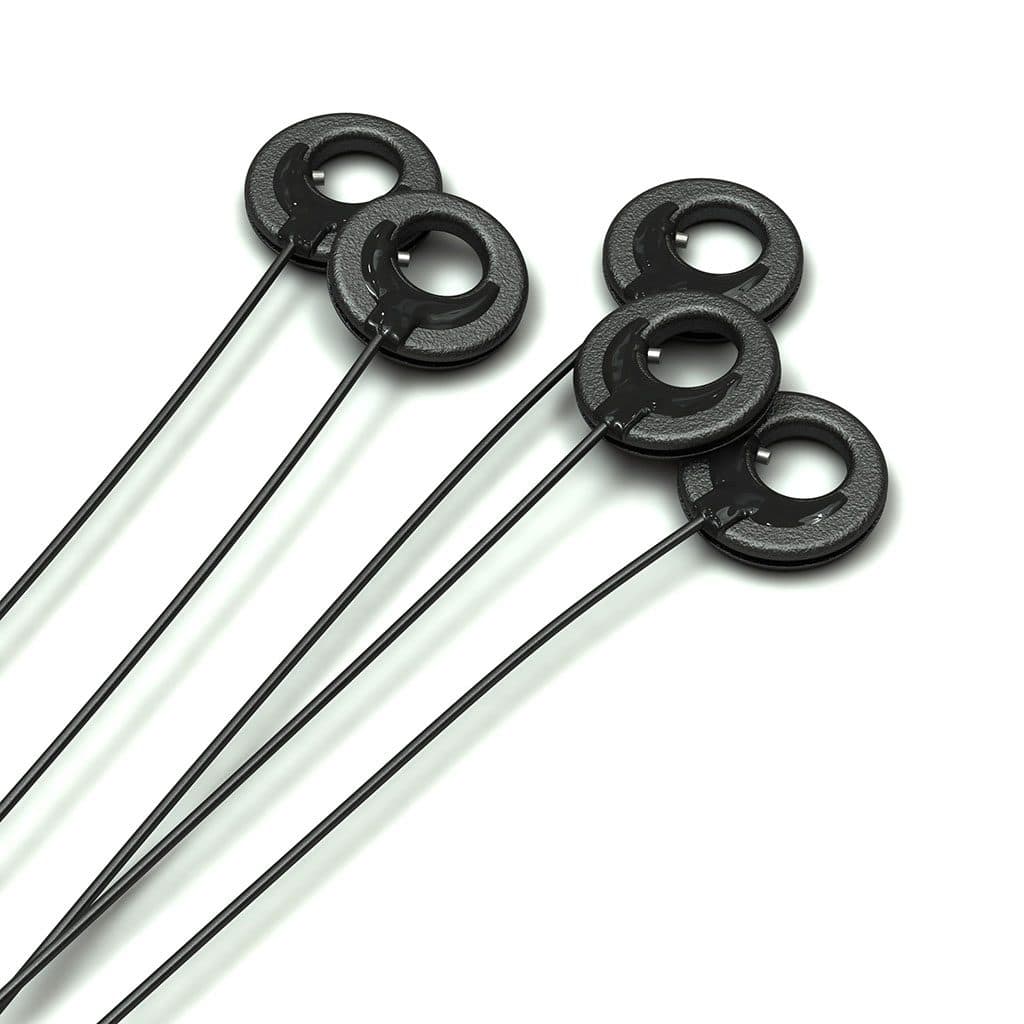
The g.LADYbird electrode family delivers high-quality active and passive EEG electrodes for brain-computer interface research, cognitive neuroscience, neurophysiology, TMS-EEG and multimodal biosignal work. Active electrodes incorporate a miniature amplifier in each electrode to reduce movement artefacts and electromagnetic interference before the signal reaches the main amplifier; according to the manufacturer they give about 10% higher BCI classification accuracy than conventional passive recordings. Passive electrodes, sintered Ag/AgCl without integrated electronics, are optimised for TMS-EEG, where rapid recovery after stimulation matters. Both work with the g.HIamp and g.USBamp amplifiers and g.GAMMAcap caps.

  • Active and passive
  • Sintered Ag/AgCl
  • DC–10 kHz
  • 16–256 channels
  • Reusable
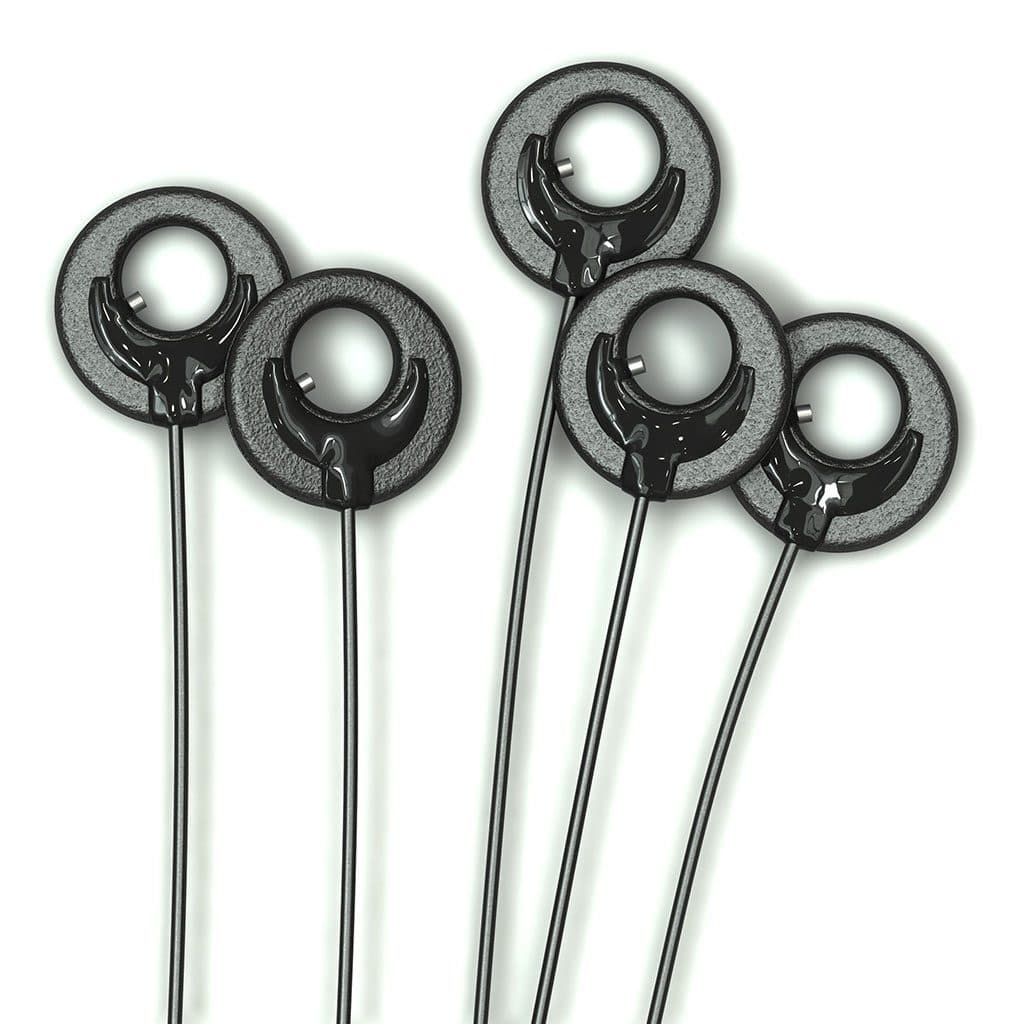
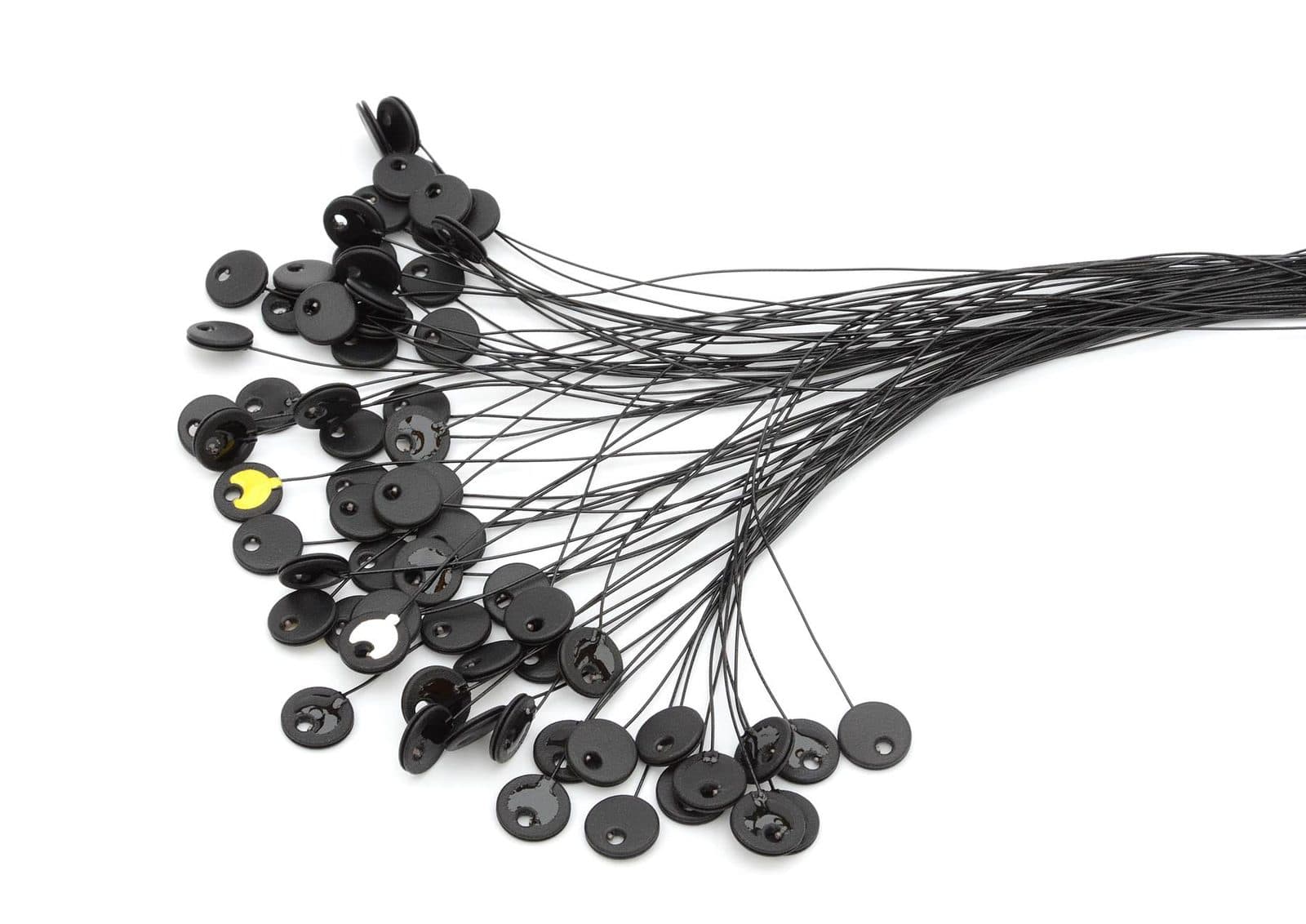
A set of g.LADYbird EEG electrodes

Highlights

  • Active and passive EEG electrodes
  • High-quality EEG, EMG, ECG and EOG recordings
  • A preamplifier inside each active electrode for fewer movement artefacts
  • Passive Ag/AgCl electrodes optimised for TMS-EEG experiments
  • Sintered Ag/AgCl for stable, low-noise recordings
  • Frequency response from DC to 10 kHz
  • For 16–256 channel EEG systems; works with g.HIamp and g.USBamp
  • Compatible with g.GAMMAcap3 electrode caps
  • A large built-in gel reservoir for long recordings; gel applied straight through the electrode opening
  • No abrasive skin preparation
  • Electrodes stay in the cap for faster set-up and cleaning, and are replaced one by one
  • Simultaneous impedance measurement with g.HIamp through the g.LADYbird Z electrode
  • 2-pin touch-proof safety connectors
  • A lightweight design that reduces cable movement artefacts

Technical specifications

Electrode types
Active and passive g.LADYbird EEG electrodes
Electrode material
Sintered Ag/AgCl
Active amplification
A miniature preamplifier in each electrode
Frequency response
DC–10 kHz
Signals
EEG · EMG · ECG · EOG
Channels
16–256 (depending on the amplifier configuration)
Connector
2-pin touch-proof safety connector (active electrodes)
Electrode interface
Gel-filled (wet) electrode
Gel reservoir
Large and built in, for long recordings
Gel application
Through the filling opening in the electrode
Skin preparation
No abrasion needed
Impedance measurement
With g.HIamp, through the g.LADYbird Z electrode on channel 1
Active electrodes work with
g.HIamp active electrode connector box · g.GAMMAsys
Passive electrodes work with
g.HIamp passive electrode connector box
Mounting
Electrodes stay in the cap
Replacement
One by one, without replacing the whole cap
TMS compatibility
Passive electrodes carry no electronics: few TMS artefacts, fast signal recovery
Isolation
1.5 kV (depending on the system's connector configuration)
Cleaning
Cleanable again and again, for long-term laboratory use
Active electrodes

The signal is amplified in the electrode

Active and passive g.LADYbird electrodes

The active g.LADYbird places a miniature preamplifier in each electrode, so movement artefacts, cable interference and electromagnetic noise are reduced before the signal reaches the amplifier. A large gel reservoir supports long recording sessions, and because electrodes stay in the g.GAMMAcap, preparation is faster and electrode placement reproducible across experiments. It tolerates higher impedance and sets up quickly with gel. Suited to BCI, ERP studies, cognitive neuroscience and multimodal EEG research.

  • Built-in preamplifier
  • Fewer artefacts
  • Higher impedance tolerance
  • Long recordings
Passive electrodes

No electronics, for TMS-EEG

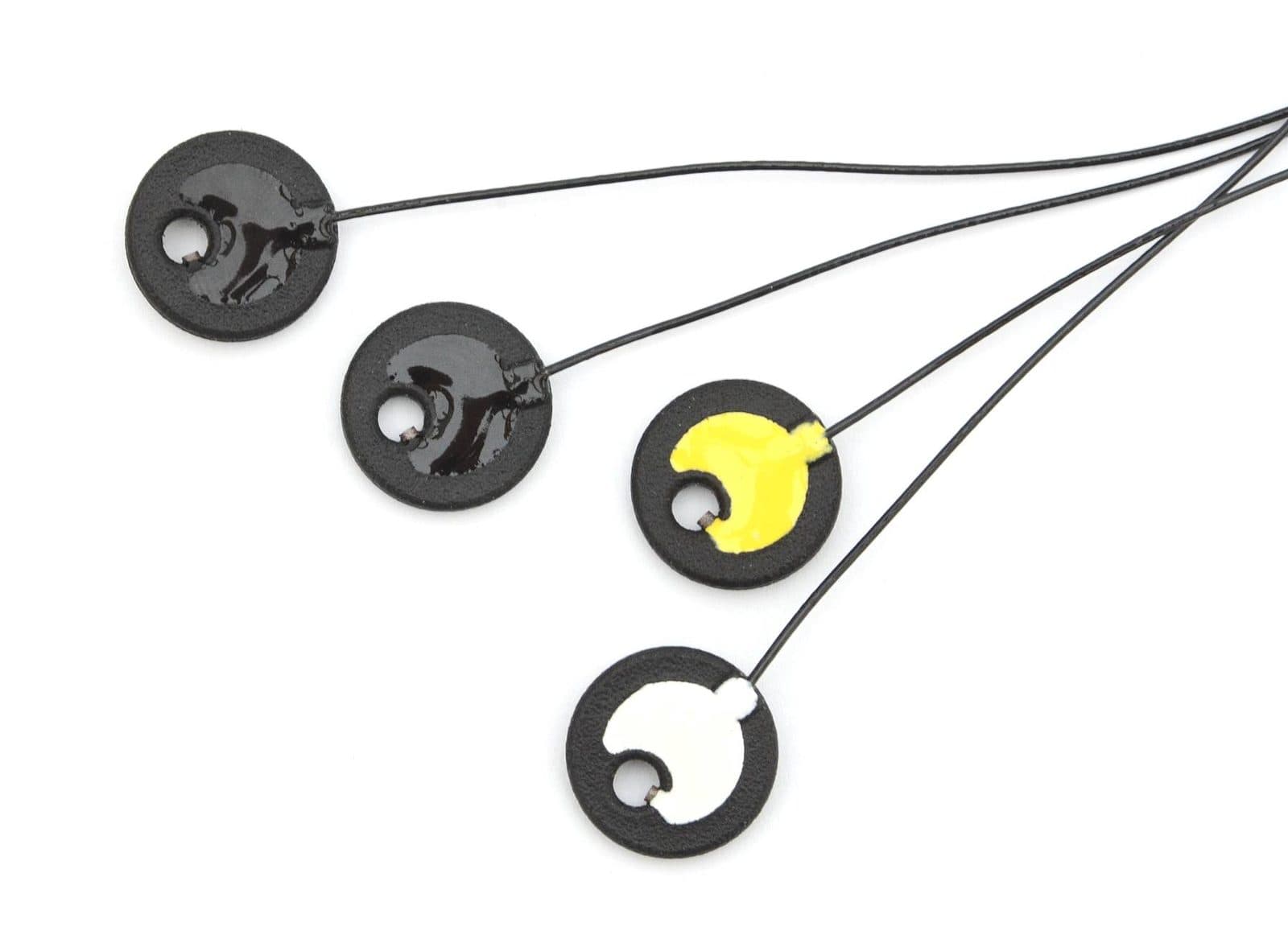
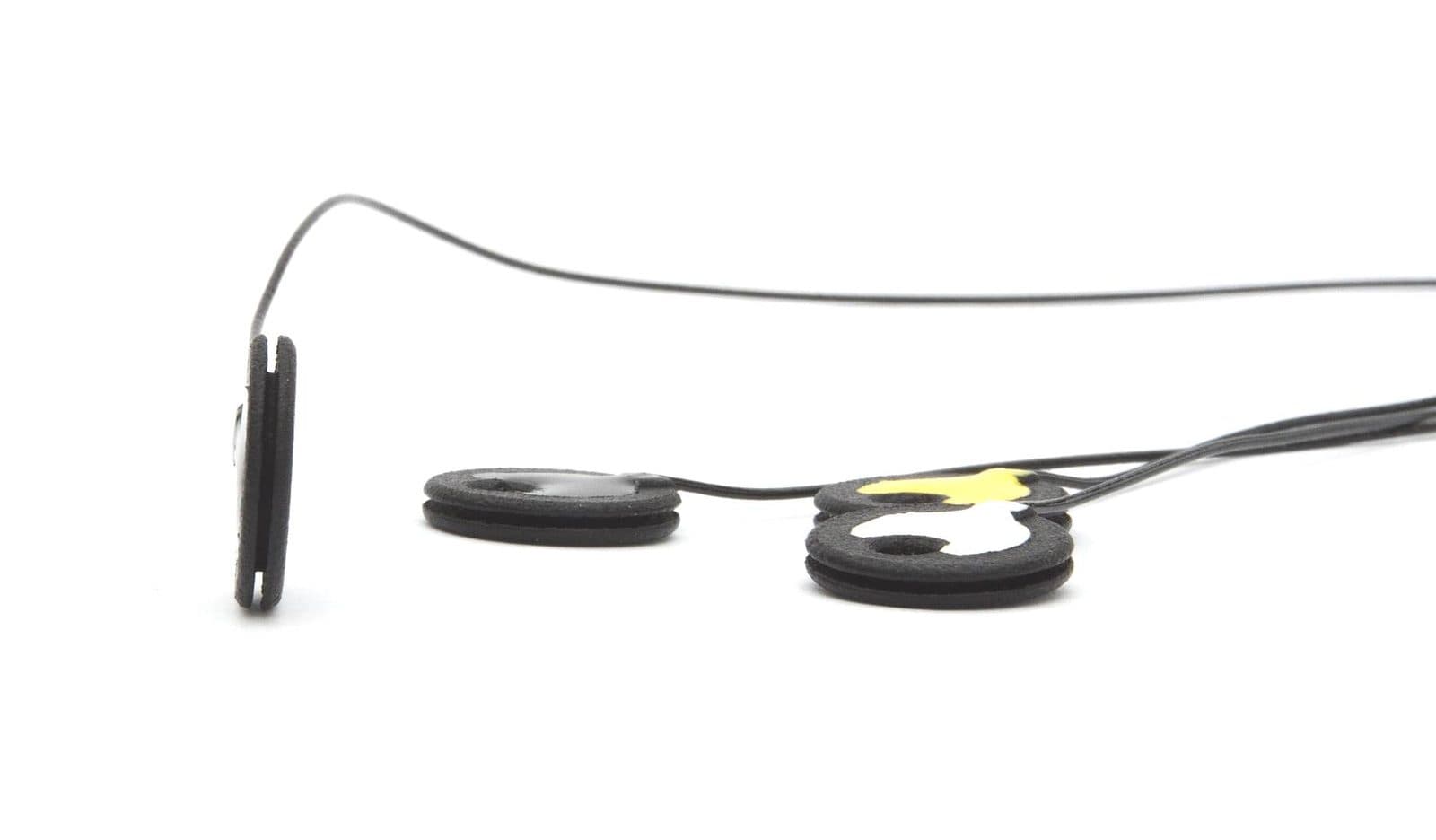
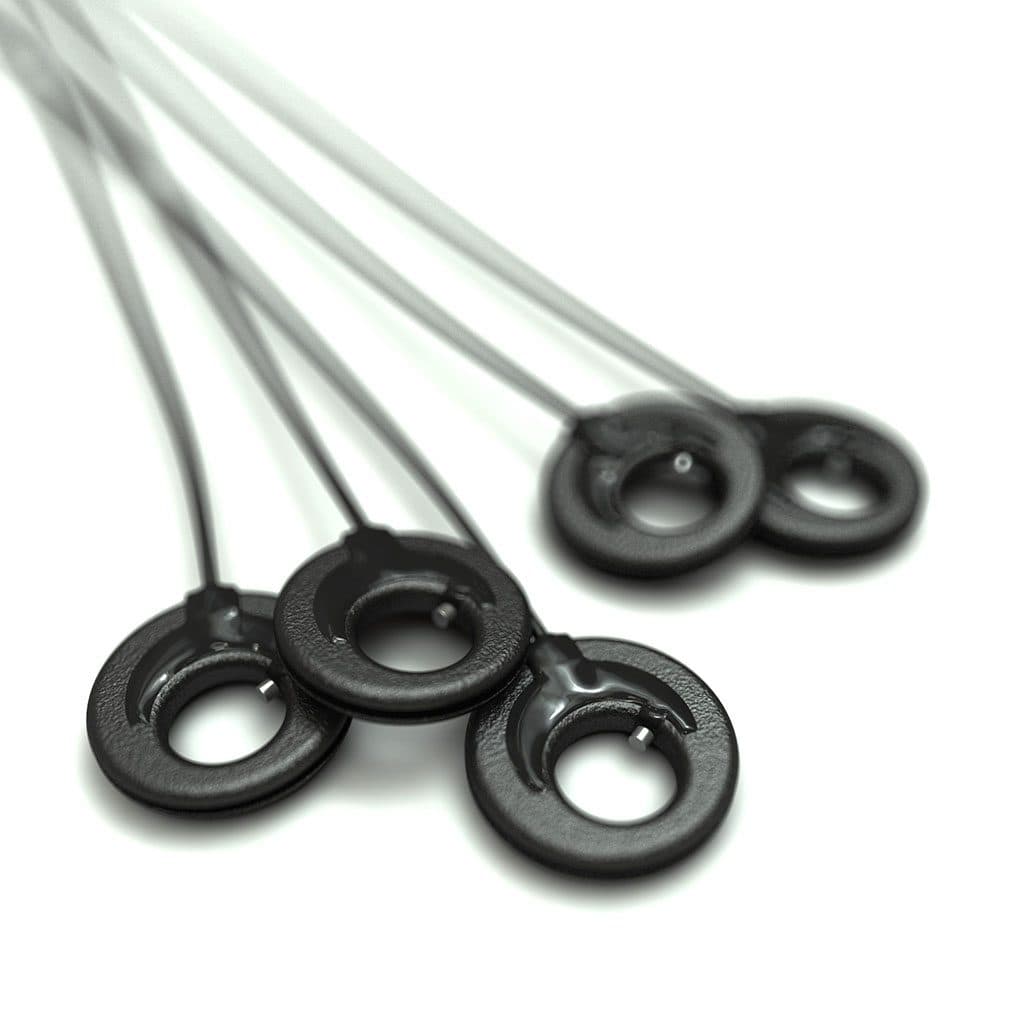
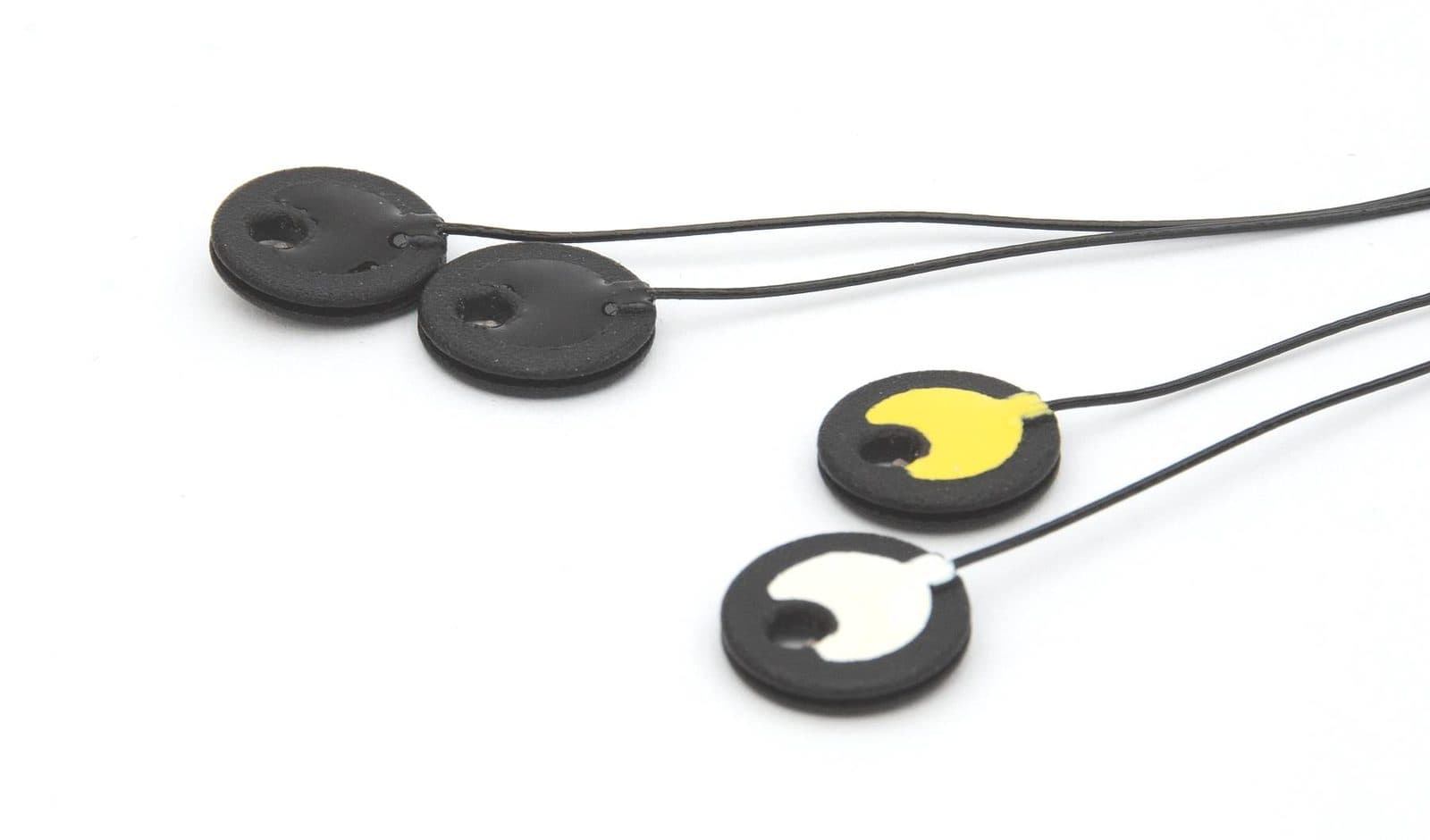
g.LADYbird electrodes, close up

The passive g.LADYbird, sintered Ag/AgCl without integrated electronics, is particularly well suited to TMS-EEG experiments. It minimises stimulation artefacts and lets the EEG signal recover quickly, supporting reliable recordings of TMS-evoked potentials as well as conventional EEG studies. It is used with additional skin preparation using abrasive gel.

  • No electronics
  • Fast recovery after TMS pulses
  • TMS-evoked potentials
Cap and connection

g.GAMMAcap and g.GAMMAbox

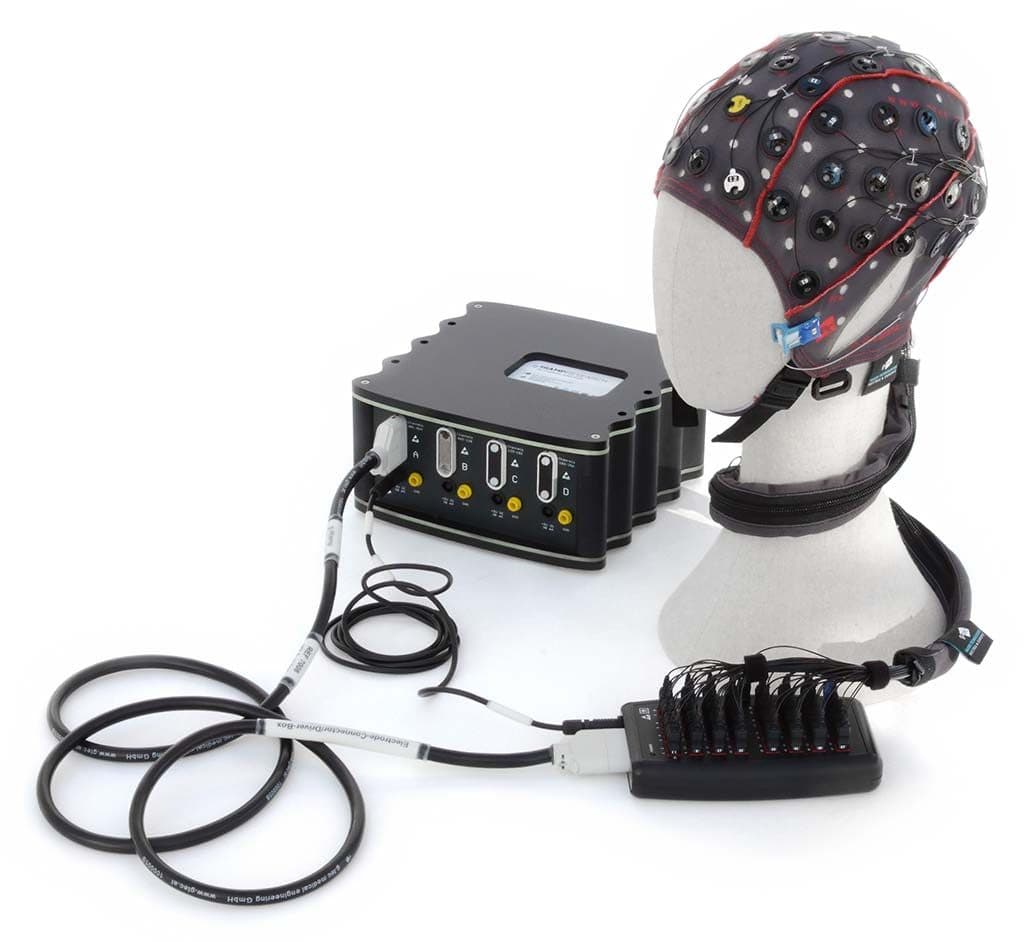
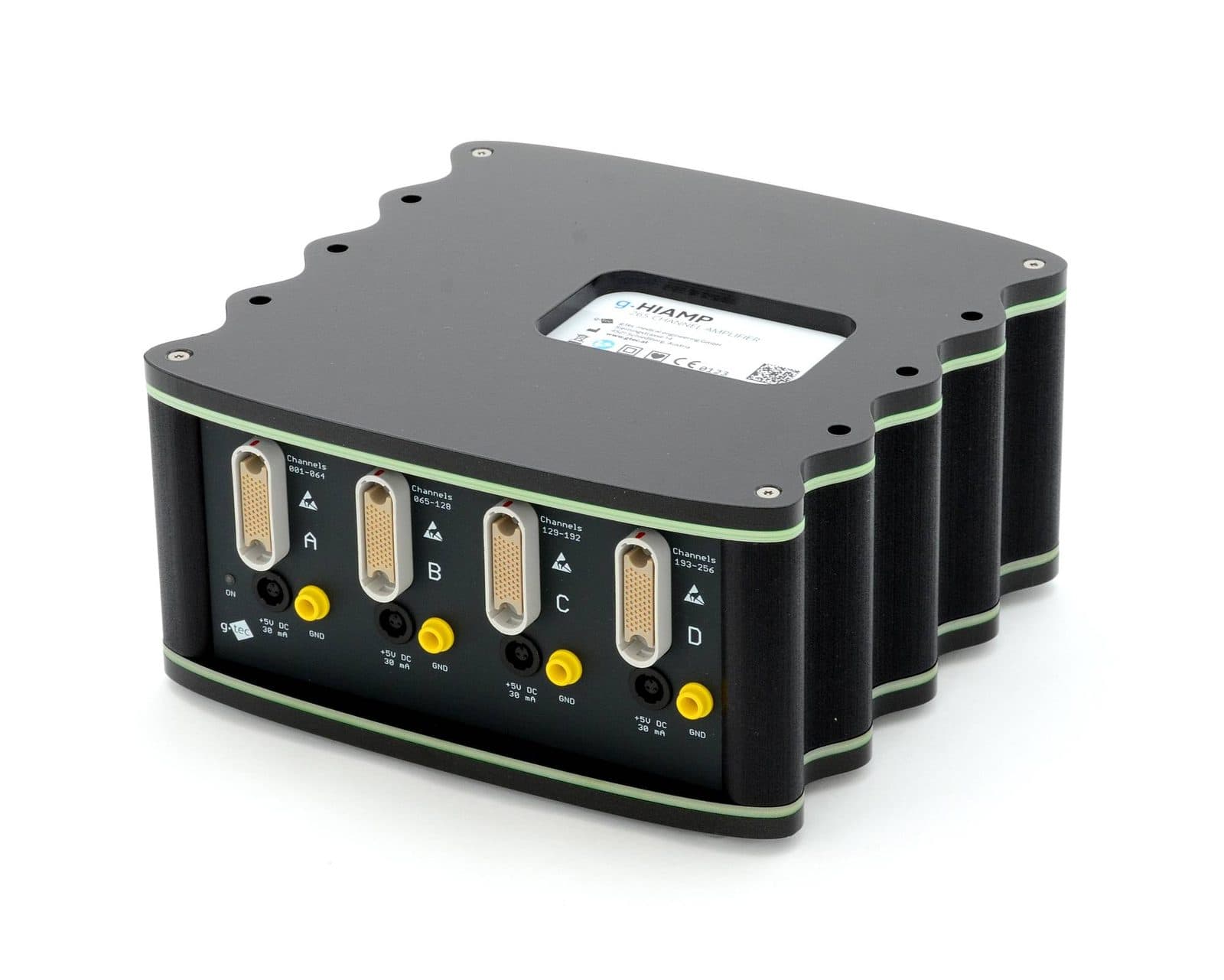
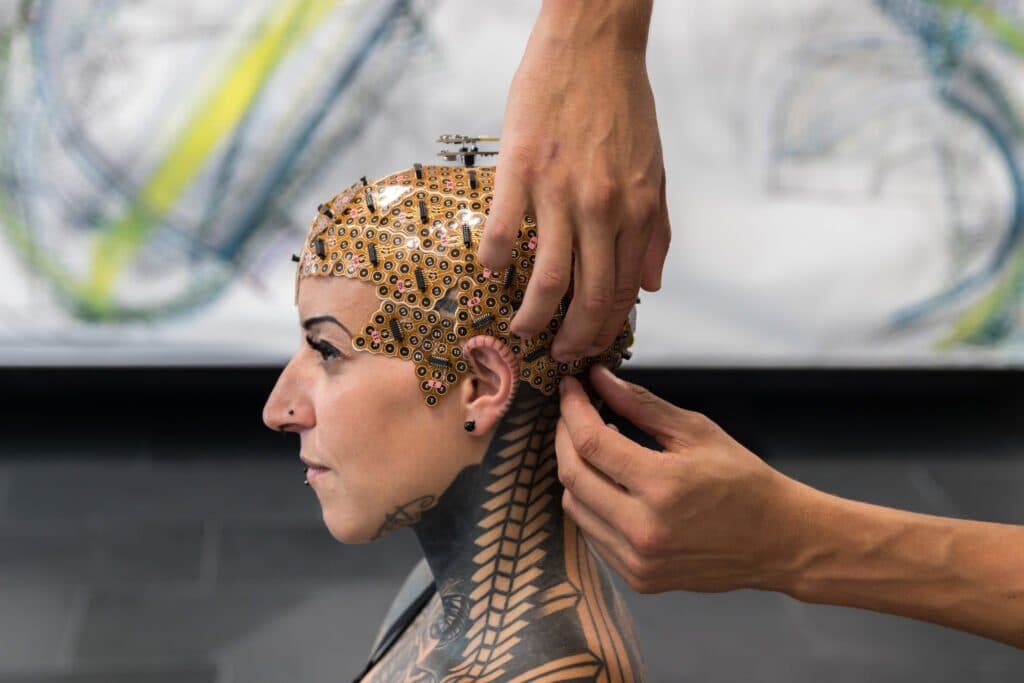
A cap with g.LADYbird electrodes and g.HIamp

The g.GAMMAcap gives reproducible electrode placement on the extended international 10-10 system: 74 labelled and 86 intermediate positions. It is configured for BCI, ERP experiments, high-density EEG and brain mapping, and electrodes stay mounted during cleaning, cutting preparation time and handling errors. The g.GAMMAbox connects fully equipped caps to g.USBamp or g.HIamp; with g.GAMMAclip, ECG, EMG and EOG are recorded with active electrode technology too. The g.GAMMAbox has 16 channels, works from DC to 10 kHz, runs on a 9 V battery and carries 2-pin safety sockets.

  • 74 + 86 positions
  • g.GAMMAbox: 16 channels
  • g.GAMMAclip
Scientific reference

The laboratory reference in comparative studies

g.LADYbird active EEG electrodes appear widely in peer-reviewed neuroscience and have served as the laboratory reference in comparative studies of emerging EEG technologies. A Frontiers in Neuroscience study used g.USBamp with g.LADYbird as the laboratory reference when comparing gel, water and dry EEG systems for decoding natural reach-and-grasp movements, and released its dataset publicly for the international BCI community (Schwarz et al., 2020).

  • Movement decoding
  • Open dataset
  • BCI development

Applications

Up close

Frequently asked questions

What is the difference between active and passive EEG electrodes?

Active EEG electrodes contain a miniature preamplifier directly inside the electrode, amplifying the EEG signal before it travels through the cable. This reduces movement artefacts, cable interference and electromagnetic noise, which makes them ideal for brain-computer interfaces, ERP studies and long recording sessions. Passive EEG electrodes contain no electronics and are particularly well suited to TMS-EEG experiments, where rapid recovery from stimulation artefacts is essential.

When should I choose active rather than passive electrodes?

Active electrodes are recommended when high signal quality, few artefacts and stable recordings are needed, especially for brain-computer interfaces, cognitive neuroscience, neurofeedback and mobile EEG experiments. Passive electrodes remain the choice for TMS-EEG and applications where minimising magnetic stimulation artefacts is critical.

Are g.LADYbird electrodes suitable for BCI research?

Yes. g.LADYbird electrodes are widely used in brain-computer interface research, including P300, SSVEP and motor imagery paradigms. Their signal quality and compatibility with the g.tec hardware and software ecosystem suit both offline analysis and real-time BCI applications.

Can I use g.LADYbird electrodes for TMS-EEG?

Yes. The passive g.LADYbird electrodes are designed specifically for TMS-EEG. Their sintered Ag/AgCl construction recovers quickly after TMS pulses, making them suitable for recording TMS-evoked potentials and other combined EEG-TMS experiments.

Which biosignal amplifiers are compatible?

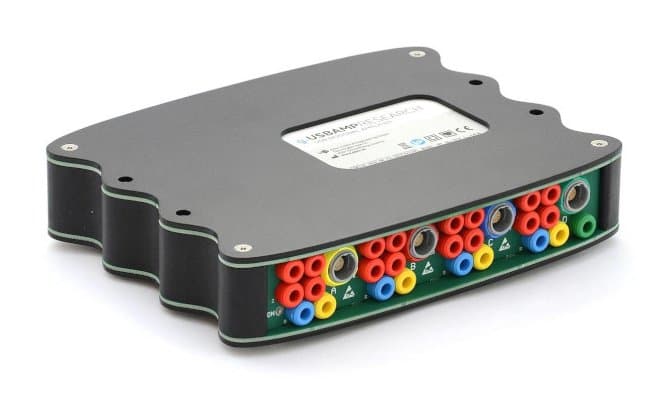
g.LADYbird electrodes work with g.tec biosignal amplifiers, including g.HIamp and g.USBamp. Active electrodes connect through the g.GAMMAbox; passive electrodes connect directly to compatible amplifiers with the appropriate connectors.

Which EEG caps support g.LADYbird electrodes?

g.LADYbird electrodes are designed for the g.GAMMAcap, which follows the extended international 10-10 placement system. The cap supports reproducible electrode positioning and lets electrodes stay mounted between sessions, reducing preparation time.

Can I record other biosignals besides EEG?

Yes. Besides EEG, g.LADYbird electrodes record EMG, EOG and ECG, which suits multimodal neuroscience experiments combining several physiological signals.

Are g.LADYbird electrodes reusable?

Yes. Both active and passive g.LADYbird electrodes are reusable and designed for long-term laboratory use. The durable construction and removable cap system make cleaning and maintenance simple and keep performance consistent across many experiments.

Which research are g.LADYbird electrodes used for?

Worldwide, in brain-computer interfaces, event-related potentials, cognitive neuroscience, TMS-EEG, neurorehabilitation, motor control, hyperscanning, sleep research, virtual and augmented reality, human-computer interaction, neuroergonomics, and multimodal biosignal acquisition combining EEG with EMG, ECG, EOG, eye tracking and other physiological measures.

g.tec
Contact

Let's plan your project together.

Talk to our team about device selection, protocol design, installation and software integration. We will work out the technical configuration that best fits your research or clinical goal.

Request a quote

Call us +90 554 381 46 20Serving all of Türkiye · reply within 24 hours on working days